Railway Spirals: Engineering Marvels for Steep Terrain
In the world of railway engineering, the greatest challenge is often the gradient. Trains, unlike road vehicles, struggle with steep inclines due to the low friction between steel wheels and steel rails. To overcome dramatic changes in elevation without creating slopes that are too steep for locomotives to climb, engineers employ a clever geometric solution: the spiral (also known as a loop).
A railway spiral is a section of track that curves around a hill or through a tunnel, crossing over or under itself to gain or lose altitude gradually. This technique allows a train to climb a steep mountain while maintaining a manageable gradient, effectively "stretching" the distance of the climb over a shorter horizontal area.
Key Facts
- Purpose: Spirals are used to reduce the steepness of a railway line in mountainous regions.
- Design: They often involve a combination of tunnels, viaducts, and open loops.
- Global Presence: These structures are found on every continent except Antarctica, from the Alps in Switzerland to the Andes in Argentina.
- Evolution: Many historic spirals have been replaced by modern, long-distance tunnels to increase efficiency and speed.
Notable Railway Spirals Around the World
Europe: The Alpine Specialists
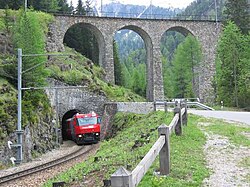
Switzerland is perhaps the most famous proponent of spiral engineering. The RhB Albulabahn features four spirals, mostly hidden in tunnels, while the Brusio spiral viaduct on the Berninabahn serves as a world-renowned example of an open spiral on a metre gauge track.
France also utilizes this design in the Pyrenees and the Alps, including a spiral used by the high-speed TGV at Moûtiers. In Italy, spirals are integrated into both mountain lines and urban infrastructure, such as Line 1 of the Naples Metro.
Other European examples include the Šargan Eight heritage railway in Serbia and the Telgártska slučka in Slovakia, which combines two viaducts with a 1,200-meter tunnel.
Asia: Scaling the Heights
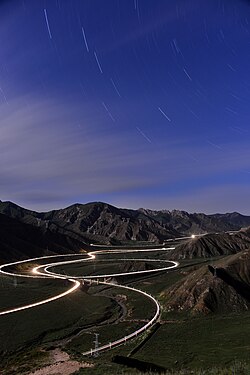
China employs spirals extensively to navigate its rugged interior. The Chengdu–Kunming Railway features six spirals, and the Liupanshui–Hongguo Railway includes three. However, technology continues to evolve; the Guanjiao Spiral on the Qinghai–Tibet Railway was replaced in 2014 by a 32-km tunnel, which was the longest in China at the time of completion.
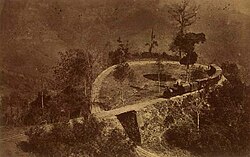
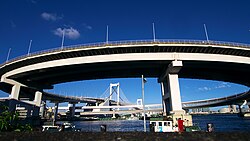
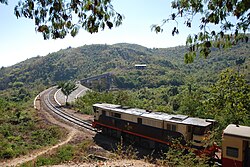
In Japan, spirals are used for both heavy rail and automated transit, such as the loop on the western approach to the Rainbow Bridge in Tokyo. India's Darjeeling Himalayan Railway is another iconic example, featuring the Chunbati, Agony Point, and Batasia loops.
The Americas: Crossing Continents
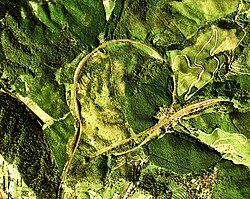
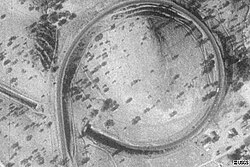
In the United States, the Tehachapi Loop in California is one of the most famous examples of railroad engineering, allowing Union Pacific trains to navigate the Tehachapi Mountains. Colorado also hosts the historic Georgetown Loop, which was rebuilt as a heritage railway after being dismantled in 1939.
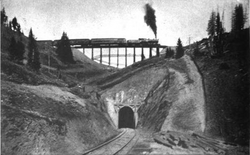
Canada utilizes double spirals at Big Hill on the approach to Kicking Horse Pass. In South America, Argentina's Tren a las Nubes (Train to the Clouds) uses two spirals to reach extreme altitudes in the Salta–Antofagasta section.
Africa and Oceania
From the main line in Madagascar at Anjiro to the Kenya-Uganda railway, spirals have been used to conquer diverse terrains. In New Zealand, the Raurimu Spiral on the North Island Main Trunk is a critical piece of infrastructure, utilizing two short tunnels to navigate a steep hill.
Global Spiral Distribution Summary
| Region | Notable Example | Key Feature |
|---|---|---|
| Switzerland | Brusio Spiral Viaduct | Open metre gauge loop |
| USA | Tehachapi Loop | Major freight artery in California |
| China | Chengdu–Kunming Railway | Series of six spirals |
| India | Darjeeling Himalayan Railway | Includes the Batasia Loop |
| New Zealand | Raurimu Spiral | North Island Main Trunk essential |
| Argentina | Tren a las Nubes | High-altitude Andean crossing |
Technical Variations
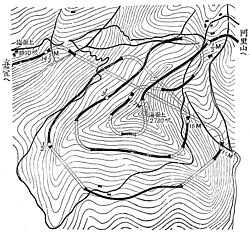
While most spirals are simple loops, some are more complex. The triple spiral loop on the Alishan Forest Railway in Taiwan demonstrates extreme elevation gain in a compact area. Other lines, such as the Eritrean Railways between Asmara and Arbaroba, feature tunnels where the line crosses itself and immediately crosses back.
Frequently Asked Questions
Why do trains need spirals instead of just going straight up?
Trains have very low adhesion between the steel wheel and the rail. If a slope is too steep, the wheels will slip, making it impossible to climb or safely descend. Spirals increase the distance the train travels to reach the same height, thereby reducing the gradient.
What is the difference between a spiral and a zig-zag?
A spiral is a continuous loop where the train maintains a forward direction. A zig-zag (or reverse) requires the train to stop and change direction to move up a steep slope in a series of "Z" shapes.
Are spirals still being built today?
While they are still used in some specialized or heritage contexts, modern engineering prefers long-distance tunnels. Tunnels can create a more direct route with a consistent, gentle gradient, as seen with the replacement of the Guanjiao Spiral in China.
Can a spiral be located entirely underground?
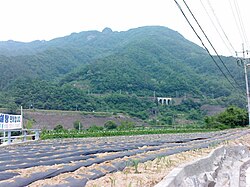
Yes, many spirals are constructed within tunnels to save space or to navigate through solid rock, such as those found on the RhB Albulabahn in Switzerland or the Jungang Line in South Korea.