Railway Gauges: A Comprehensive Overview of Narrow and Standard Track Widths
In the world of rail transport, the track gauge—the distance between the inner edges of the two parallel rails—determines the compatibility, stability, and purpose of a railway line. While standard gauge is the global benchmark, a vast array of narrow gauges have been implemented worldwide to suit specific geographic, economic, and industrial needs. These range from massive regional networks to tiny industrial lines used in mines and parks.
Key Facts
- Standard Gauge: The global benchmark is 4 ft 8+1⁄2 in (1,435 mm).
- Narrow Gauge Range: Common narrow gauges span from 15 in (381 mm) up to 4 ft 8 in (1,422 mm).
- Metre Gauge: A widely used 1,000 mm gauge with approximately 95,000 km of track globally.
- 3 ft 6 in Gauge: One of the most extensive narrow gauges, covering about 112,000 km (70,000 mi) of track.
- Minimum Gauges: Specialized industrial lines can be as narrow as 15 in (381 mm).
Gauges Just Under Standard
Some systems were built only slightly narrower than the standard gauge. For example, the Huddersfield and Glasgow Corporation Tramways utilized a 4 ft 7+3⁄4 in (1,416 mm) gauge. Similarly, the 4 ft 6 in (1,372 mm) gauge, often called Scotch gauge, was common in the Lanarkshire area of Scotland during the early 19th century. Some lines in this region were slightly wider at 4 ft 6+1⁄2 in (1,384 mm), though both were eventually converted to standard gauge.
The 4 ft and 1,200 mm Categories
A significant number of tramways and urban transit systems adopted a 4 ft (1,219 mm) gauge. Notable examples include the Glasgow Subway, the City of Oxford Tramways Company, and the Honolulu Rapid Transit and Land Company. Other systems using this width include the Padarn Railway and the Redruth and Chasewater Railway.
Parallel to this, a 1,200 mm (3 ft 11+1⁄4 in) gauge is frequently used for specialized mountain and urban transport, such as the Zagreb Funicular, the Stoosbahn, and the Rheineck–Walzenhausen mountain railway.
Major Global Narrow Gauges
The 3 ft 6 in Gauge
The 3 ft 6 in (1,067 mm) gauge is one of the most prevalent narrow gauges in the world, with roughly 112,000 kilometres (70,000 mi) of track. Similar widths exist in specific regions, such as the 1,055 mm gauge in Algeria and the 1,050 mm gauge used on the Hejaz railway across Israel, Jordan, Lebanon, Saudi Arabia, and Syria.

Metre Gauge and Italian Variations
Metre gauge refers to a track width of exactly 1,000 mm (3 ft 3+3⁄8 in), boasting about 95,000 km (59,000 mi) of track. However, Italy employed a different measurement standard. Under Italian law, gauges were measured from the center of each rail rather than the inside edges. This resulted in the Italian metre gauge, which measures 950 mm (3 ft 1+3⁄8 in) between the rail edges.
The 3 ft and 900 mm Systems
The 3 ft (914 mm) gauge was widely adopted in North America, utilized by the Denver & Rio Grande and the White Pass and Yukon Route. It was also common in Ireland, South America, and on the Isle of Man. In Europe, 900 mm was a standard choice, while Sweden developed a unique Swedish three-foot gauge (891 mm). Today, the Roslagsbanan commuter line remains the only non-heritage 891 mm line in Sweden.
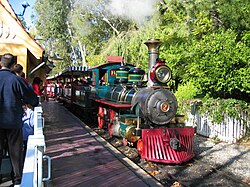
Specialized and Industrial Narrow Gauges
Mid-Range Narrow Gauges
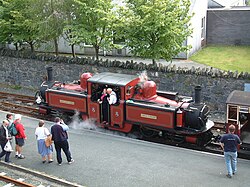
Various smaller gauges served specific regional needs. The 2 ft 9 in (838 mm) gauge was used by the Nankai Main Line (before conversion) and the Seaton Tramway. Meanwhile, 800 mm (2 ft 7+1⁄2 in) is common for rack railways (railways using a toothed rail for steep climbs). The 2 ft 6 in (762 mm) gauge was typical in former British colonies, while 760 mm (Bosnian gauge) and 750 mm gauges are prevalent in Russia and Eastern Europe.
Small and Minimum Gauges
In the UK, gauges between 2 ft 1 in (635 mm) and 2 ft 5 in (737 mm) were often used in Wales and for coal industry transport. Cuba utilized 2 ft 3+1⁄2 in (699 mm) for some sugar cane lines. The 2 ft (610 mm) gauge was common in former British colonies and parts of the US, such as Maine.
The smallest gauges, known as minimum gauges, were typically reserved for restricted environments. Arthur Percival Heywood developed 15 in (381 mm) estate railways, while Decauville produced 400 mm and 500 mm industrial tracks for farms and mines in France. Additionally, 18 in (457 mm) gauge lines were used for British military ammunition depots during World War I.
Gauge Comparison Summary
| Gauge Category | Width (Metric/Imperial) | Primary Use/Region |
|---|---|---|
| Standard Gauge | 1,435 mm / 4 ft 8+1⁄2 in | Global Standard |
| Cape Gauge | 1,067 mm / 3 ft 6 in | Global / 112,000 km of track |
| Metre Gauge | 1,000 mm / 3 ft 3+3⁄8 in | Global / 95,000 km of track |
| Italian Metre | 950 mm / 3 ft 1+3⁄8 in | Italy (measured from center) |
| Three-Foot Gauge | 914 mm / 3 ft | North America, Ireland, Isle of Man |
| Bosnian Gauge | 760 mm / 2 ft 5+1⁄16 in | Russia and Eastern Europe |
| Minimum Gauge | 381 mm / 15 in | Estate and Industrial railways |
Frequently Asked Questions
What is the difference between standard gauge and narrow gauge?
Standard gauge is a specific width of 4 ft 8+1⁄2 in (1,435 mm). Any gauge narrower than this is generally classified as a narrow gauge, which can range from 15 in (381 mm) up to 4 ft 8 in (1,422 mm).
How does the Italian metre gauge differ from the standard metre gauge?
While the standard metre gauge is 1,000 mm between the inside edges of the rails, the Italian metre gauge is 950 mm between the edges because Italian law defined the gauge from the center of each rail.
What are rack railways and what gauge do they typically use?
Rack railways are designed for steep gradients using a toothed rail to provide traction. They commonly utilize an 800 mm (2 ft 7+1⁄2 in) gauge.
Where were 2 ft (610 mm) gauge railways most common?
These were generally constructed in former British colonies and were also used in the United States, specifically in the state of Maine.
What is the purpose of minimum gauge railways?
Minimum gauges, such as those produced by Decauville (400 mm and 500 mm), were used in restricted environments like underground mines, parks, and farms.