Rafael Alberti: The Poetic Voice of Spain's Silver Age
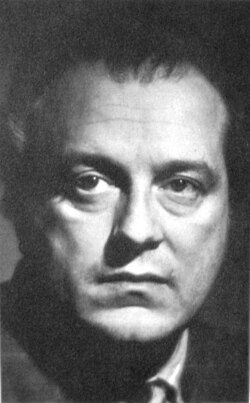
Rafael Alberti Merello (1902–1999) stands as one of the most influential literary figures of the Silver Age of Spanish Literature. A prominent member of the Generation of '27—a group of poets and artists who blended traditional Spanish forms with avant-garde influences—Alberti's work spanned decades of political turmoil, personal crisis, and international exile.
From his early days as a painter in Madrid to his role as the poetic voice of the Spanish Republic, Alberti's life was a mirror of 20th-century Spain. His journey took him from the sherry bodegas of Cádiz to the cultural hubs of Paris, Buenos Aires, and Rome, before finally returning to his homeland.
Key Facts
- Born: December 16, 1902, in El Puerto de Santa María, Cádiz, Spain.
- Died: October 28, 1999, at the age of 96.
- Major Literary Group: Member of the Generation of '27.
- Key Works: Marinero en tierra (Sailor on Dry Land) and Sobre los ángeles (Concerning the Angels).
- Political Affiliation: Committed Marxist and member of the Communist Party of Spain.
- Highest Honor: Recipient of the Premio Cervantes (1983).
Early Life and Artistic Beginnings
Alberti was born into a family of vintners in El Puerto de Santa María, a town central to the sherry trade. Although his family had once been powerful suppliers to European royalty, bad management led to the sale of their bodegas to the Osborne company. This transition from wealth to a declining bourgeois status became a recurring theme in his later poetry.
His education at the Jesuit Colegio San Luis Gonzaga was marked by conflict. As a charity day-boy, Alberti became acutely aware of the class distinctions between himself and the boarders, leading to a rebellious streak that eventually resulted in his expulsion in 1917.
Upon moving to Madrid, Alberti initially pursued painting. He spent countless hours at the Prado Museum and the Casón del Buen Retiro, copying classical works. However, the deaths of his father, the matador Joselito, and the writer Benito Pérez Galdós in 1920 shifted his creative focus toward poetry.
Rise to Literary Fame in Madrid
A diagnosis of tuberculosis in 1921 forced Alberti into a sanatorium in the Sierra de Guadarrama. During his recovery, he immersed himself in the works of Antonio Machado, Juan Ramón Jiménez, and various Ultraist and Vanguardista (avant-garde) writers. It was during this period that he began writing poetry in earnest.
In 1925, his collection Marinero en tierra won the National Poetry Award, catapulting him to artistic prestige. He became closely associated with the Generation of '27, befriending figures such as Vicente Aleixandre and Pedro Salinas. While he met Federico García Lorca at the Residencia de Estudiantes, their relationship was often strained due to differing personal views.
Alberti's work later took a psychological turn. His masterpiece, Sobre los ángeles, signaled a shift in direction for both the author and his peer group. This period, along with works like Sermones y moradas, reflected a psychological breakdown from which he eventually recovered after eloping with writer and activist María Teresa León.
Political Commitment and the Spanish Civil War
Influenced by María Teresa León and the establishment of the Second Spanish Republic in 1931, Alberti converted to Marxism and joined the Communist Party of Spain. He became a dedicated party emissary, using his poetry as a tool for political mobilization.
During the Spanish Civil War, Alberti served as a poetic voice for the left. He founded the magazine El Mono Azul with his wife and led the Alianza de Intelectuales Anti-fascistas (Alliance of Anti-Fascist Intellectuals) from the Palacio de Zabálburu in Madrid. His poems praising the defenders of the city were frequently broadcast and published in international brigade newspapers.
Exile and Final Years
Following the defeat of the Republic in 1939, Alberti and his wife fled to Paris, where they lived briefly with Pablo Neruda. They later moved to Buenos Aires, Argentina, where they remained until 1963. In Argentina, Alberti continued to paint and write, and even worked in the film industry, adapting Pedro Calderón de la Barca's La dama duende.
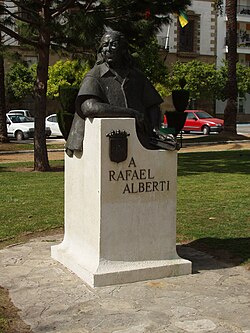
After a period in Rome, Alberti returned to Spain on April 27, 1977. He was elected as a deputy for Cádiz in the constituent Congress on the Communist Party ticket. He spent his final years recognized as a national treasure, receiving the title of Hijo Predilecto de Andalucía in 1983.
Literary Contributions and Legacy
Alberti's body of work is characterized by its evolution from lyrical nostalgia to political urgency. His later collections, such as Retornos de lo vivo lejano, returned to themes of memory, recalling his childhood and lost friends with a sense of sadness.
Beyond poetry, Alberti ventured into theater. His play El hombre deshabitado (1930) served as a modern allegorical piece, while his work on the life of Fermín Galán addressed the struggle for the Spanish Republic.
| Category | Key Examples / Awards | Year/Period |
|---|---|---|
| Major Poetry Collections | Marinero en tierra, Sobre los ángeles | 1925, 1929 |
| Literary Awards | National Poetry Award, Premio Cervantes | 1925, 1983 |
| International Honors | Lenin Peace Prize, International Botev Prize | 1964, 1981 |
| Academic Honors | Doctor Honoris Causa (Univ. of Cádiz) | 1985 |
Frequently Asked Questions
What was the Generation of '27?
The Generation of '27 was a group of influential Spanish poets and artists who emerged around 1927. They are known for blending traditional Spanish poetic forms with the experimental styles of the European avant-garde.
Why did Rafael Alberti go into exile?
Alberti went into exile following the Spanish Civil War due to his Marxist beliefs and his active support for the Spanish Republic, which put him at odds with the victorious Francoist regime.
What is considered Alberti's masterpiece?
Sobre los ángeles (Concerning the Angels) is generally considered his masterpiece, marking a significant shift toward a more psychological and complex style of poetry.
How did painting influence his poetry?
Alberti began his artistic career as a painter, spending years copying works at the Prado. This visual sensibility persisted in his writing, particularly in his later works like A la pintura, which explore color and line.
What was the significance of the Premio Cervantes to Alberti?
The Premio Cervantes is the highest literary honor in the Spanish-speaking world. Receiving it in 1983 served as a definitive recognition of his lifetime contribution to literature after decades of exile.