Radiosonde History: The Evolution of Atmospheric Sounding
For centuries, humans have looked to the skies to predict the weather, but the ability to measure the atmosphere in real-time at high altitudes changed the face of meteorology. This journey began with simple kites and evolved into the sophisticated radiosonde—a battery-powered telemetry instrument carried by a weather balloon that measures various atmospheric parameters and transmits them back to a ground receiver.
The Early Era: Kites and Meteographs
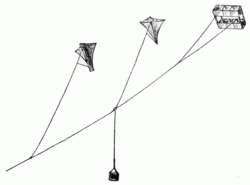
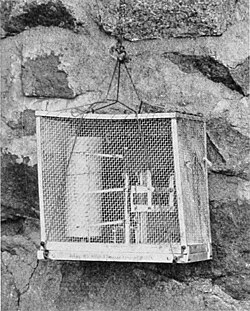
In the second half of the 19th century, the first attempts at aerological measurements utilized kites equipped with meteographs. A meteograph is a recording device designed to measure pressure and temperature, which scientists would recover after the flight to analyze the data. However, this method faced significant hurdles; the physical link to the ground made kites difficult to maneuver in gusty winds and strictly limited the altitudes that could be reached.
The transition to balloons marked a turning point. In 1892, Gustave Hermite and Georges Besançon of France first used a balloon to carry a meteograph. By 1898, Léon Teisserenc de Bort established the first regular daily balloon launches at the Observatoire de Météorologie Dynamique de Trappes.
These systematic launches led to a groundbreaking discovery. De Bort observed that temperature decreased with height up to a certain point—which varied by season—and then stabilized. This discovery of the tropopause (the boundary between the troposphere and the stratosphere) and the stratosphere was formally announced to the French Academy of Sciences in 1902. During this same period, researchers Richard Aßmann and William Henry Dines were conducting similar work with comparable instruments.
The Invention of the Radiosonde
The shift from recovering physical recordings to receiving live data began in 1924, when Colonel William Blaire of the U.S. Signal Corps experimented with weather measurements based on the temperature dependence of radio circuits. However, the first true radiosonde—capable of sending precise encoded telemetry—was invented in France by Robert Bureau, who flew the first instrument on January 7, 1929, and coined the term "radiosonde."
Shortly after, on January 30, 1930, Pavel Molchanov developed an independent design. Molchanov's version became the global standard due to its simplicity and its ability to convert sensor readings into Morse code, allowing operators to receive data without needing specialized training or expensive equipment.
Expanding into Cosmic Research
The utility of the radiosonde soon extended beyond weather. Sergey Vernov modified the Molchanov design to measure cosmic rays at high altitudes. On April 1, 1935, Vernov reached 13.6 km (8.5 mi) using Geiger counters in an anti-coincidence circuit to filter out secondary ray showers. His subsequent flights over land and sea helped scientists understand how the Earth's magnetic field causes radiation to vary by latitude.
American Innovations and the NBS System
In 1936, the U.S. Navy tasked the U.S. Bureau of Standards (NBS) with developing an official radiosonde. The project was led by Harry Diamond, a pioneer in radio navigation. In 1937, Diamond and his colleagues, Francis Dunmore and Wilbur Hinmann, Jr., created a device using a resistance-capacity relaxation oscillator for audio-frequency subcarrier modulation. This NBS model utilized electric sensors, allowing it to measure temperature and humidity at higher altitudes than previous models.
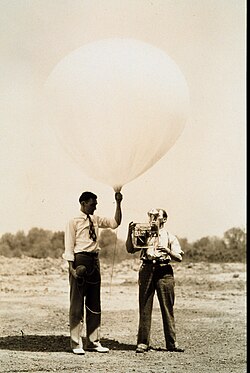
By 1938, Diamond developed the first ground receiver, leading to the Navy's first service use of the system. In 1939, he introduced the "remote weather station," a ground-based radiosonde for automatic data collection in inhospitable regions. By 1940, the system could measure temperature and humidity as functions of pressure, as well as light intensity and cloud thickness.
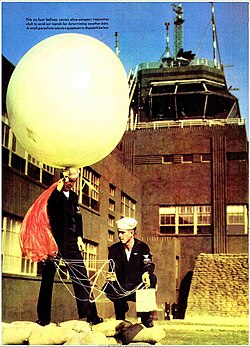
With a production cost of approximately $25 and a weight exceeding 1 kilogram, hundreds of thousands of NBS-style radiosondes were produced. The system was eventually adopted by the U.S. Weather Bureau, and Harry Diamond was honored with the Washington Academy of Sciences Engineering Award (1940) and the IRE Fellow Award (1943).
Modern Applications and Safety
The need for accurate government forecasting drove many nations to adopt regular radiosonde programs throughout the 1930s. The technology even reached other planets; in 1985, the Soviet Union's Vega 1 and Vega 2 probes each dropped a radiosonde into the atmosphere of Venus, tracking them for two days.
While satellites and aircraft now provide vast amounts of data, radiosondes remain indispensable. They offer a vertical resolution of 30 m (98 ft) or less and altitude coverage up to 30 km (19 mi), which modern remote sensing cannot match.
Despite their utility, there have been rare accidents. In 1943, a U.S. lineman was electrocuted while trying to free a sonde from power lines. In 1970, Aeroflot Flight 1661 crashed after an Antonov 24 struck a radiosonde in flight, resulting in 45 fatalities.
Key Facts
- First Balloon Meteograph: Launched in 1892 by Gustave Hermite and Georges Besançon.
- Major Discovery: Léon Teisserenc de Bort discovered the tropopause and stratosphere in 1902.
- First Radiosonde: Invented by Robert Bureau and flown on January 7, 1929.
- Standardization: Pavel Molchanov's 1930 design popularized Morse code telemetry.
- NBS Contribution: Harry Diamond developed high-altitude electric sensors and the first ground receiver.
- Interplanetary Use: The Soviet Vega program used radiosondes on Venus in 1985.
- Performance: Radiosondes provide vertical resolution of 30m or less up to 30km altitude.
| Era/Year | Technology | Key Figure(s) | Primary Limitation/Advantage |
|---|---|---|---|
| Late 19th Century | Kites & Meteographs | Various | Limited altitude; difficult to maneuver |
| 1892-1902 | Balloons & Meteographs | Hermite, Besançon, De Bort | Discovered stratosphere; required recovery |
| 1929-1930 | Early Radiosondes | Robert Bureau, Pavel Molchanov | Live telemetry via radio/Morse code |
| 1936-1940 | NBS Radiosonde | Harry Diamond | High-altitude electric sensors; mass produced |
| Modern Era | Advanced Radiosondes | Global Agencies | Superior vertical resolution vs satellites |
Frequently Asked Questions
What is the difference between a meteograph and a radiosonde?
A meteograph is a recording device that must be physically recovered after a flight to retrieve data. A radiosonde is a telemetry instrument that transmits data wirelessly to a ground receiver in real-time.
Who discovered the stratosphere?
Léon Teisserenc de Bort discovered the stratosphere and the tropopause through regular daily balloon launches, announcing his findings to the French Academy of Sciences in 1902.
Why was Pavel Molchanov's radiosonde design so popular?
His design was highly valued for its simplicity and its use of Morse code to transmit sensor readings, which meant it could be operated without specialized equipment or extensive training.
How did Harry Diamond improve the radiosonde?
Diamond introduced audio-frequency subcarrier modulation and electric sensors, which allowed for the measurement of temperature and humidity at higher altitudes than previous models. He also developed the first ground receiver and remote weather stations.
Are radiosondes still used in the age of satellites?
Yes. While satellites provide broad coverage, radiosondes are still essential because they offer superior vertical resolution (30 meters or less) and altitude coverage up to 30 kilometers.