Racial Vilification in Australian Sport
The history of Australian sport is marked by significant achievements, but it also contains a troubling legacy of racial vilification—the act of using language or behavior to demean someone based on their race or ethnicity. While many incidents occur at the elite level involving professional athletes, commentators, and spectators, there is substantial anecdotal evidence that such behavior persists in community sports.
In recent years, there has been a noticeable shift in how these incidents manifest, with an increase in abuse directed at players via social media and by fans during live events. This evolution has forced sporting bodies to implement stricter codes of conduct and legislative rules to protect athletes.
Key Facts
- AFL Rule 30: Introduced on June 30, 1995, specifically to combat racial and religious vilification following a dispute involving Michael Long.
- Systemic Exclusion: Early Australian athletics saw attempts to bar Indigenous runners entirely, such as the 1903 Queensland Amateur Athletic Association's failed attempt to disbar Aboriginal athletes.
- Iconic Protests: Nicky Winmar's 1993 gesture of pointing to his skin remains one of the most powerful images of resistance against racism in Australian sport.
- Modern Trends: There is a rising trend of "cyber racism," with players like Nic Naitanui and Greg Inglis facing abuse on platforms like Twitter and Instagram.
- Institutional Response: In 2019, the AFL and all 18 clubs issued an unreserved apology to Adam Goodes for the sustained racism he endured.
Australian Rules Football (AFL)
The AFL has been a primary battleground for addressing racial abuse. Early instances include Doug Nicholls being rejected by the Carlton Football Club in 1927 due to his skin color and smell, before eventually playing for Fitzroy.
Between 1960 and 1990, players such as Syd Jackson, Phil and Jim Krakouer, and Michael McLean reported frequent racial slurs. The Krakouer brothers were notably suspended for retaliating against such abuse. In 1993, Nicky Winmar became a symbol of defiance after being vilified by Collingwood supporters at Victoria Park.
The introduction of Rule 30 in 1995 was a watershed moment, triggered by Michael Long's accusation against Damian Monkhorst. Despite this, incidents continued. In 2013, Adam Goodes was called an "ape" by a 13-year-old fan; while the fan was ejected, Goodes faced criticism from commentators for his reaction.
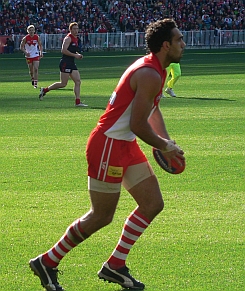
The treatment of Adam Goodes culminated in years of sustained booing by spectators, which the AFL later acknowledged as racism in a 2019 apology. More recently, the league has tackled systemic issues, such as the 2024 "social inclusion clause" requiring that commentator panels not consist solely of white men.
Cricket and Athletics
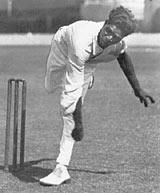
In athletics, discrimination dates back to 1888, when white sprinters boycotted the Sheffield Handicap in Queensland, refusing to race against Indigenous runners. In 1903, the Queensland Amateur Athletic Association attempted to ban Aboriginal athletes by claiming they lacked "moral character" and "intelligence," though this was rejected by the national body.
Cricket has seen various incidents of crowd-based and player-led abuse. In 2003, Darren Lehmann was banned for five games for a racially motivated obscenity. International tensions flared in 2008 when Harbhajan Singh was fined following allegations he called Andrew Symonds a "monkey." Crowd behavior has also been a concern, with fans being ejected from the MCG in 2018 and 2021 for racist chants directed at Indian players.
Rugby League and Rugby Union
Rugby League (NRL) has faced numerous high-profile cases. In 2005, South Sydney captain Bryan Fletcher was sacked as captain and fined $10,000 for a racist "spray" directed at Dean Widders. Other notable cases include the 1998 fine of Barry Ward for abusing Anthony Mundine and the 2010 resignation of assistant coach Andrew Johns following allegations of vilifying Greg Inglis.
In Rugby Union, the 2005 Super 12 match saw Justin Harrison receive a three-game suspension after admitting to a racial slur against Chumani Booithen.
Other Sporting Codes
Racism has permeated various other sports, including:
- Soccer: Incidents range from the 2012 banning of an Adelaide United fan for abusing Paul Ifill to the 2022 controversy involving Sydney United fans who displayed Nazi salutes and Ustaše banners.
- Tennis: In 2009, Brydan Klein was suspended for six months and fined after using a racial slur against Raven Klaasen.
- Hockey: Olympic gold medalist Nova Peris reported encountering racial abuse during the National Championships in 1993.
Summary of Notable Incidents
| Year | Sport | Key Figure(s) | Outcome/Action |
|---|---|---|---|
| 1993 | AFL | Nicky Winmar | Iconic protest against crowd abuse |
| 1995 | AFL | Michael Long | Implementation of AFL Rule 30 |
| 2005 | NRL | Bryan Fletcher | Sacked as captain; $10,000 fine |
| 2009 | Tennis | Brydan Klein | 6-month suspension; $24,000 total fines |
| 2019 | AFL | Adam Goodes | Unreserved apology from AFL and 18 clubs |
Frequently Asked Questions
What is AFL Rule 30?
Rule 30 is a regulation introduced by the AFL on June 30, 1995, specifically designed to combat racial and religious vilification within the sport. It was established following a high-profile dispute involving player Michael Long.
How has social media impacted racial abuse in sports?
Social media has extended the reach of vilification beyond the stadium. Players like Nic Naitanui and Ben Barba have been targets of cyber racism on Twitter and Instagram, leading to legal actions and bans for the offenders.
What happened in the case of Adam Goodes?
Adam Goodes faced years of racial abuse, including being called an "ape" by a young fan in 2013 and sustained booing by crowds. This eventually led to his exit from the game, for which the AFL and all its clubs issued a formal apology in 2019.
Have there been systemic attempts to exclude Indigenous athletes?
Yes. In 1888, white sprinters boycotted a race against Indigenous runners in Queensland, and in 1903, the Queensland Amateur Athletic Association tried to disbar all Aboriginal athletes based on claims regarding their intelligence and character.
What sanctions are typically applied for racial vilification?
Sanctions vary by sport and severity but have included match suspensions, heavy fines (such as the $10,000 fine for Bryan Fletcher), mandatory racial awareness training, and bans from stadiums or social media platforms.