Quinarius: The Silver Half-Denarius of Ancient Rome
In the complex monetary system of ancient Rome, the quinarius (symbol: 𐆗) served as a vital fractional unit of currency. As a small silver coin valued at exactly half of a denarius, it provided the flexibility needed for daily transactions and military payments across the expanding Roman territories.
The Evolution of the Quinarius
The quinarius first appeared shortly after the introduction of the denarius in 211 BC. During this early period, it was struck alongside the silver sestertius. At its inception, the coin held a value of 5 asses, the basic copper unit of the Roman monetary system.
After a period of absence, the coin was reintroduced in 101 BC. This revival served a specific economic purpose: to replace the victoriatus, another silver coin used primarily for trade. However, the value of the quinarius had shifted by this time. Because the denarius had been retariffed to 16 asses in 118 BC, the quinarius was now valued at 8 asses.
Following its reintroduction, the Roman state produced the quinarius in large quantities. Much of this production was intended for circulation in Gaul, reflecting the coin's importance in provincial commerce. While it remained in use, production became sporadic until the 3rd century.
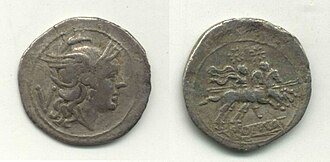
Variations and Later Issues
While primarily known as a silver coin, the quinarius designation appears in different contexts throughout Roman history. For instance, later issues were minted in different metals and locations to suit local administrative needs.
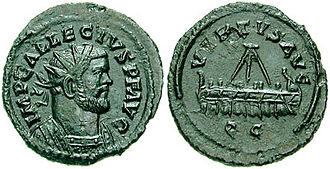
Key Facts
- Value: Always equal to half of one denarius.
- Initial Value: 5 asses (introduced 211 BC).
- Revised Value: 8 asses (reintroduced 101 BC).
- Primary Use: Large quantities were minted specifically for circulation in Gaul.
- Symbol: Represented by the character 𐆗.
- Duration: Produced sporadically from the 3rd century BC through the 3rd century AD.
Summary of Quinarius Value Changes
| Period | Value in Asses | Relation to Denarius | Context |
|---|---|---|---|
| 211 BC | 5 asses | 1/2 Denarius | Initial introduction |
| 101 BC | 8 asses | 1/2 Denarius | Replacement for victoriatus |
Frequently Asked Questions
What was the quinarius?
The quinarius was a small silver coin used in ancient Rome, valued at half of a denarius.
Why did the value of the quinarius change from 5 to 8 asses?
The change occurred because the denarius itself was retariffed to 16 asses in 118 BC; since the quinarius remained half a denarius, its value rose to 8 asses.
Where were large quantities of quinarii circulated?
Following its reintroduction in 101 BC, large amounts of the coin were produced primarily for use in Gaul.
What is a gold quinarius?
The term "gold quinarius" or "quinarius aureus" is sometimes used to describe a half-aureus valued at 12.5 denarii, though this terminology has no ancient authority.
Which coin did the quinarius replace in 101 BC?
The quinarius was reintroduced in 101 BC as a replacement for the victoriatus.