PubMed: The Essential Gateway to Global Biomedical Literature
For researchers, clinicians, and students worldwide, accessing reliable scientific information is the cornerstone of medical progress. PubMed serves as this critical gateway, providing a massive, searchable repository of peer-reviewed biomedical literature. Managed by the United States National Library of Medicine (NLM), it has evolved from a specialized institutional tool into a free, global resource that powers modern scientific inquiry.
Since its release in January 1996, PubMed has revolutionized how we interact with medical data. Before the internet era, accessing the MEDLINE database—the core collection of biomedical citations—required physical presence at university libraries or specialized computer terminals using phone lines. Today, PubMed offers seamless, web-based access to millions of records from any location.
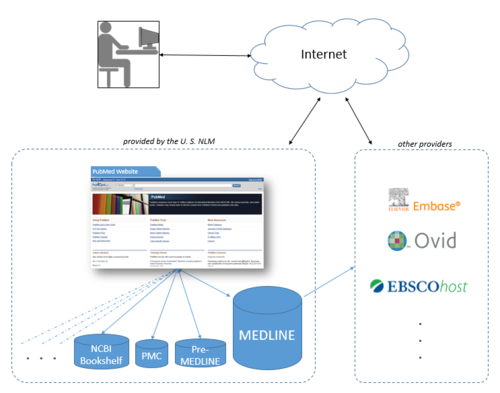
Key Facts
- Core Database: Provides primary access to MEDLINE, a highly curated collection of biomedical citations.
- Massive Scale: Contains over 40 million citations and abstracts as of March 2025.
- Historical Depth: Records date back to 1966, with selective coverage reaching as far back as 1809.
- Free Access: The system has been offered free to the public since June 1997.
- Global Reach: Used by researchers worldwide, though it relies on stable digital infrastructure.
The Scope of PubMed Content
While MEDLINE is the primary engine, PubMed is much more than a single database. It acts as a central hub for various scientific resources, including:
- Index Medicus: Older references from the print version of this publication, dating back to 1951 and earlier.
- NCBI Bookshelf: A collection of books available in full-text format.
- PMC Citations: Links to PubMed Central (PMC) records.
- NLM Catalog: Detailed information regarding the journals indexed within MEDLINE.
The database is growing rapidly. Over the decade ending in 2019, PubMed added an average of nearly one million new records every year. As of 2023, the platform held 24.6 million records with abstracts and 26.8 million records with full-text links, of which 10.9 million articles are available for free.
Advanced Search and User Features
To manage such a vast amount of data, PubMed provides several sophisticated tools to help users find exactly what they need.
Search Functionality
The interface supports various search styles, including "telegram" searches—quick, Google-like formulations. Users can sort results by several parameters, such as Most Recent (the default), Best Match, Publication Date, First Author, Last Author, Journal, or Title.
My NCBI and LinkOut
For frequent users, the My NCBI facility allows for free registration to save searches, set up automatic email updates, and configure display formats. Additionally, the LinkOut facility connects users to full-text holdings at their own academic institutions. If a journal is held by a user's library, the institution's logo will appear within the search results to facilitate easy access.
Secondary Identifiers
Since 2005, the indexing process has included Secondary Identifiers (SI). These are extracted from abstracts to link PubMed records to other vital data, such as molecular sequence databases, chemical compound registries, and clinical trial IDs from registries like ClinicalTrials.gov.
Understanding Identifiers: PMID vs. PMCID
Navigating PubMed requires understanding two distinct types of identification numbers:
- PMID (PubMed Identifier): A unique integer assigned to every individual PubMed record.
- PMCID (PubMed Central Identifier): A specific identifier used for works published in PubMed Central, which is the repository for free, full-text access.
Reliability and the Future of Research Infrastructure
Because the global scientific community depends so heavily on this resource, its stability is paramount. In March 2025, a temporary global outage lasting approximately one day highlighted the vulnerabilities of essential research infrastructure. While the disruption was not deliberate and services were restored, it sparked discussions regarding the need for robust contingency planning.
Looking forward, the landscape of biomedical searching continues to evolve. In 2025, the German National Library of Medicine (ZBMed) announced plans to develop an internationally supported, open-source version of PubMed to ensure continued access to scientific knowledge.
Summary of PubMed Statistics
| Metric | Value/Detail |
|---|---|
| Total Citations/Abstracts | Over 40 million |
| Records with Abstracts (2023) | 24.6 million |
| Records with Full-Text Links (2023) | 26.8 million |
| Free Full-Text Articles | 10.9 million |
| Average Annual Growth (last 10 years) | ~1 million records/year |
Frequently Asked Questions
Is PubMed free to use?
Yes, the PubMed system has been offered free to the public since June 1997.
What is the difference between MEDLINE and PubMed?
MEDLINE is a specific, highly curated database of biomedical citations. PubMed is the search engine and interface that provides access to MEDLINE, as well as other resources like PMC citations and NCBI Bookshelf.
Can I correct errors in a PubMed article?
Since 2016, the NLM has updated its indexing system to allow publishers to directly correct typos and errors in PubMed-indexed articles.
How can I stay updated on new research?
By using the My NCBI feature, you can set up automatic updates that are sent directly to your email based on your saved searches.
What is a PMID?
A PMID, or PubMed Unique Identifier, is a unique integer assigned to every individual record in the PubMed database.