Public Works: Infrastructure, Economic Impact, and Global Implementation
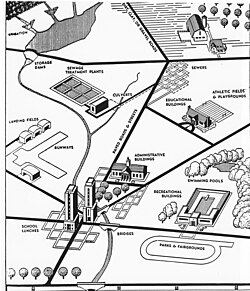
Public works are large-scale infrastructure projects financed and procured by government bodies to enhance employment, health, safety, and recreation for the community. These projects encompass a wide array of physical assets and facilities designed for long-term use, ranging from the roads we drive on to the systems that provide our drinking water. While the term is often used interchangeably with public infrastructure or public capital, public works is a broader term that does not necessarily require an economic component.
The construction of these assets can be carried out through directly employed government labor or contracted to private operators. This practice is not a modern invention; it has been encouraged since antiquity, with the Roman emperor Nero promoting infrastructure projects to combat widespread deflation.
Key Facts
- Scope: Includes transport, public buildings, utilities, environmental protection, and public spaces.
- Purpose: Serves as both a community utility and a social safety net through employment programs.
- Modern Evolution: Now includes digital public infrastructure, such as open-source e-voting platforms.
- Economic Risk: Research indicates that 86% of public works projects experience cost overruns.
- Sustainability: Developed nations, particularly in Canada and the EU, are shifting toward sustainable municipal infrastructure.
The Dimensions of Public Works
Public works is a multi-dimensional concept that intersects with various sectors of society. It represents any constructed object that augments a nation's physical infrastructure, impacting several key areas:
- Recreation and Aesthetics: The creation of parks, beaches, trails, and green spaces.
- Economy: Facilitating the movement of goods and people and managing energy.
- Law and Order: The construction of police stations and courts.
- Community: Building social services facilities and community centers.
Distinguishing Infrastructure Terms
While terms like municipal infrastructure, urban infrastructure, and rural development are often used similarly, they typically reflect the specific concerns of large cities or developing nations. Similarly, critical infrastructure is a term used from a national security perspective. While it includes public works like dams and bridges, it also encompasses banks and telecommunications systems, focusing on the community impact if such facilities were lost.
Public Works Programmes and Economic Stimulus
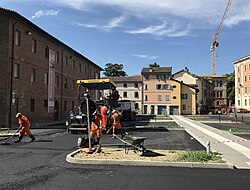
A public works programme is a form of social safety net where the state provides employment at a prescribed wage for those unable to find alternative work. These programs create public goods—assets that are available for use by all members of society. In regions like Sub-Saharan Africa, short-term employment programs are frequently used to respond to acute labor market crises and transient shocks.
Historically, governments have used public works to stimulate the general economy during crises. A landmark example is the New Deal in the United States, spearheaded by Frances Perkins, the first female Cabinet member. This initiative created the Civilian Conservation Corps, the Public Works Administration, and the Works Progress Administration.
More recent global examples of stimulus through infrastructure include:
- The 2008–2009 Chinese economic stimulus program.
- The 2008 European Union stimulus plan.
- The American Recovery and Reinvestment Act of 2009.
- India's National Infrastructure Pipeline of 2020.
The Utility and Challenges of Investment
The debate over public works often centers on efficiency. Opponents argue that these projects should be handled by the private sector to avoid inefficiency and the burden of "tax and spend" policies. However, private entrepreneurs typically avoid projects that lack a clear revenue stream or carry excessive risk. Governments step in to invest when the overall benefit to society outweighs the lack of direct profit.
The Issue of Cost Overruns
Research from Aalborg University highlights a significant challenge in the sector: 86% of public works projects exceed their budgets. Interestingly, the research found that technically difficult projects were not more likely to exceed budgets than simpler ones. Instead, projects that affected a larger number of people were more susceptible to cost overruns. Furthermore, the study noted that project managers generally failed to learn from past similar projects.
To mitigate this, most public tender contracts include a provision for unexpected expenses, typically amounting to 10% of the contract value, which requires written justification for use.
| Category | Examples | Primary Goal |
|---|---|---|
| Transport | Airports, bridges, roads, railroads, ports | Mobility and Logistics |
| Public Services | Dams, electrical grids, sewage treatment | Essential Utility Provision |
| Public Buildings | Schools, hospitals, municipal offices | Community Services |
| Environmental | Wetland restoration, soil erosion reduction | Ecological Preservation |
| Public Spaces | Parks, beaches, public squares | Recreation and Aesthetics |
| Digital | Open source e-voting platforms | Modern Governance |
Frequently Asked Questions
What is the difference between public works and critical infrastructure?
Public works is a broad term for government-funded infrastructure. Critical infrastructure is a narrower term viewed through a national security lens, including public works as well as private facilities like banks and telecommunications that would cause severe community impact if lost.
Why does the government fund projects that don't make money?
Governments invest in public works when there is a significant benefit to society but no direct revenue stream or too much risk for a private company to undertake the project alone.
What are digital public works?
Digital public works are modern infrastructure projects involving software and digital platforms. An example is the effort in the United States to create an open-source software platform for e-voting.
Why do so many public works projects go over budget?
According to research, cost overruns are common (86% of projects), often linked to the number of people affected by the project rather than the technical difficulty of the construction itself.
How do public works act as a social safety net?
Through public employment programmes, the state provides wages to individuals who cannot find alternative employment, paying them to create public goods for the community.