Princeton Theological Seminary: A Legacy of Faith and Scholarship
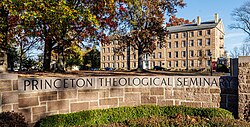
Founded in 1812, Princeton Theological Seminary stands as a premier institution for theological education in the United States. Located on a 23-acre campus in Princeton, New Jersey, the seminary has evolved from a small gathering of three students into a globally recognized center for academic excellence and spiritual formation. Affiliated with the Presbyterian Church (USA), it continues to shape leaders across various denominations and professional fields.
While the institution saw a peak enrollment of approximately 900 students in the 1980s, it currently maintains a focused community of about 285 full-time equivalent (FTE) students. Interestingly, only 26 percent of these students are candidates for ministry within the Presbyterian Church; the remainder pursue careers in other denominations, academia, or non-theological professional sectors.
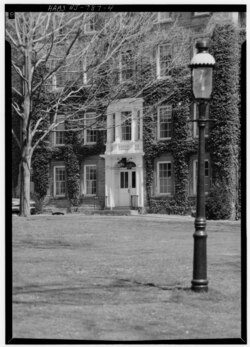
Key Facts
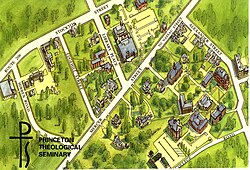
- Established: 1812
- Accreditation: MSCHE and ATS
- Endowment: $1.56 billion (as of 2025)
- President: Jonathan L. Walton (the first Black and first non-Presbyterian president)
- Campus Size: 23 acres
- Total Graduates: Approximately 14,000 men and women
Historical Evolution
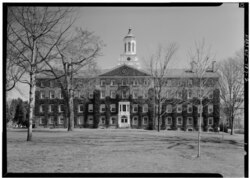
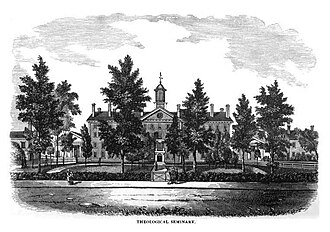
The seminary began its journey with Archibald Alexander as its first professor. By 1817, the institution opened Alexander Hall, designed by New York architect John McComb Jr. and patterned after Nassau Hall. This building served as the primary identity of the school, simply called "Seminary" until it was officially named Alexander Hall in 1893.
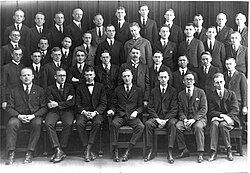
The early 20th century brought significant ideological shifts. During the 1920s and 1930s, the seminary became a focal point of the fundamentalist–modernist controversy. This tension culminated in 1929 when the seminary reorganized along modernist lines. In response, J. Gresham Machen and colleagues Oswald T. Allis, Robert Dick Wilson, and Cornelius Van Til resigned to found the Westminster Theological Seminary in Pennsylvania.
Over the decades, the seminary's affiliations shifted through various mergers. It became part of the United Presbyterian Church in the U.S.A. in 1958 and eventually the Presbyterian Church (U.S.A.) in 1983.
Campus Architecture and Landmarks
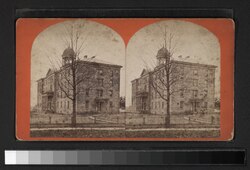
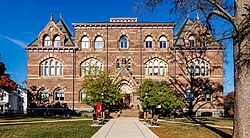
The campus is characterized by its blend of historical and modern architecture. Stuart Hall, built in 1876 and designed by William Appleton Potter, serves as the main classroom building in the Venetian Gothic style.
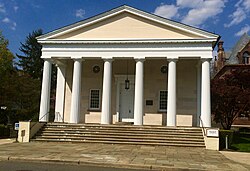
Another architectural gem is Miller Chapel. Built in 1834 and designed by Charles Steadman in the Greek Revival style, the chapel honors Samuel Miller, the seminary's second professor. Originally located next to Alexander Hall, it was moved to the center of the campus in 1933 and renovated in 2000 to include the Joe R. Engle Organ.
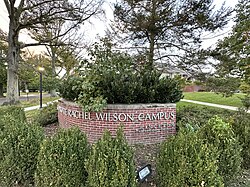
For residential needs, the seminary utilizes the physically separate Charlotte Rachel Wilson Campus.
Academic Excellence and Research
Princeton Theological Seminary offers a diverse array of graduate programs designed to equip students for ministry and scholarship. These include:
- Master of Divinity (M.Div.)
- Master of Arts (MA) and Master of Arts in Theological Studies (MATS)
- Master of Theology (Th.M.)
- Doctor of Philosophy (Ph.D.) in various fields, including Practical Theology (which replaced the Doctor of Ministry in 2005)
- Dual Degrees: M.Div./MA in Christian Education and a partnership with Rutgers School of Social Work for a dual M.Div./MSW
The Wright Library
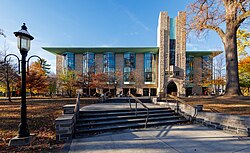
A cornerstone of the institution is the Wright Library, renamed in 2021 to honor Theodore S. Wright, the first African American graduate of the seminary. Completed in 2013, the library houses over 1.25 million bound volumes, pamphlets, and microfilms, making it a global destination for visiting scholars.
Research and Publications
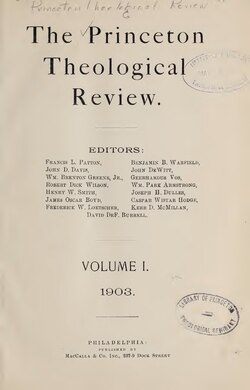
The seminary fosters deep intellectual inquiry through specialized centers, including the Center for Barth Studies and the Abraham Kuyper Center for Public Theology. Historically, the Princeton Theological Review served as a vital journal for students and the wider theological community from 1903 to 1929, with a later revival from 1994 to 2019.
Notable Figures and Legacy
The seminary has been led by distinguished principals and presidents, from early leaders like Charles Hodge and B.B. Warfield to the current president, Jonathan L. Walton. Its faculty and alumni lists read like a directory of influential religious thinkers and leaders.
Notable alumni include Theodore S. Wright, Francis James Grimké (co-founder of the NAACP), and Bart D. Ehrman. The institution's influence extends globally, with graduates serving as missionaries in China, Hawaii, and Taiwan, as well as leaders in the U.S. Senate and House of Representatives.
| Category | Details |
|---|---|
| Founded | 1812 |
| Current President | Jonathan L. Walton |
| Endowment (2025) | $1.56 billion |
| Student Body (2025) | 285 FTE |
| Key Library | Wright Library |
| Primary Affiliation | Presbyterian Church (USA) |
Frequently Asked Questions
Who is the current president of Princeton Theological Seminary?
The current president is Jonathan L. Walton, who took office in 2023. He is the first Black president and the first non-Presbyterian to lead the institution.
What is the significance of the Wright Library?
The Wright Library is a world-class research facility containing over 1.25 million volumes. It is named after Theodore S. Wright, the seminary's first African American graduate.
What degrees can students earn at the seminary?
Students can pursue several degrees, including the Master of Divinity (M.Div.), Master of Arts (MA), Master of Theology (Th.M.), and a Doctor of Philosophy (Ph.D.). Dual degree options are also available in partnership with other institutions.
What was the fundamentalist-modernist controversy?
This was a theological conflict in the 1920s and 1930s regarding the interpretation of scripture and modern science. It led to a reorganization of the seminary in 1929 and the subsequent founding of Westminster Theological Seminary by resigning faculty.
Is the seminary only for Presbyterian students?
No. While affiliated with the Presbyterian Church (USA), the majority of current students are either from other denominations or are pursuing careers in academia and other non-theological fields.