Prince: The History, Titles, and Global Evolution of Princely Rank
The term prince carries a weight of authority and prestige that spans millennia and continents. At its most basic level, a prince is a male ruler ranked below a king, grand prince, or grand duke, or a male member of a monarch's family. The word itself finds its roots in the Latin prīnceps, derived from primus (first) and caput (head), literally meaning "the first" or "the chief." While often viewed today as a familial title, the history of the prince is a complex tapestry of sovereign power, diplomatic courtesy, and religious symbolism.
Historically, in the realm of international diplomacy, "princes" served as a collective noun for all sovereign rulers of a state, regardless of whether their specific title was king or duke. This generic usage was particularly prevalent among the rulers of the Holy Roman Empire.
Key Facts
- Etymology: Derived from Latin prīnceps, meaning "the first" or "foremost."
- Rank: Generally ranked below kings, grand princes, and grand dukes.
- Versatility: Can be a substantive title (a ruler of a principality) or a dynastic title (a member of a royal house).
- Global Reach: Used in European, Asian, and Middle Eastern traditions, often adapted to local languages (e.g., Knyaz in Slavic languages, Emir in Arabic).
- Religious Use: Applied symbolically in Christianity to figures such as Jesus Christ (Prince of Peace) and Satan (Prince of Darkness).
The Evolution of the Title in Europe
The Holy Roman Empire and Germany
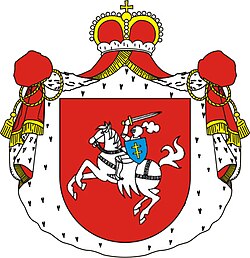
In German traditions, a distinction evolved between the Fürst (a reigning prince or head of a princely house) and the Prinz (a cadet member of that house). By the 19th century, the children of a Fürst were commonly known as Prinzen.
The rank of gefürsteter Graf (princely count) allowed certain nobles in the Holy Roman Empire to elevate their status. Following the Peace of Westphalia in 1648, these nobles exercised sovereign prerogatives, including the right to mint money, muster military troops, wage war, contract treaties, and maintain local judicial authority.
French and Spanish Traditions
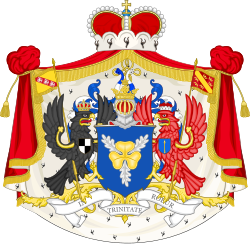
From the 16th century, French kings began bestowing the style of prince by elevating a seigneurie (a landed estate) to a nominal principality. While these titles lacked actual sovereign power, they were highly prestigious. Some were recognized by the king, while others were "unrecognized" titles used by courtesy or tradition, such as those used by the heirs of the Dukes of Rohan or the House of La Tour d'Auvergne.
In Spain, the title was occasionally used for exceptional merit. For example, Manuel Godoy was created Principe de la Paz (Prince of Peace) for his role in negotiating the 1795 peace treaties with France and Prussia.

Eastern Europe and the Slavic Tradition
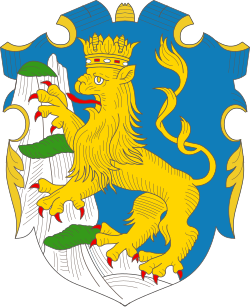
In Ukraine and the Kievan Rus', rulers were known as knjazʹ (translated as prince). The Rurik Dynasty followed a system where the oldest brother held the title of Grand Prince of Kiev. Later, Lithuanian princes assumed the title of Grand Prince of Lithuania and Ruthenia. Over time, many of these figures were integrated into the Cossack nobility.
Global Variations and Non-European Princes
The Middle East and Asia
In the Arab world, the title of Emir serves as the equivalent of a prince. Today, several sovereign principalities and emirates exist, including Kuwait, Qatar, and the member states of the United Arab Emirates (such as Abu Dhabi and Dubai).

The Indian Princely States
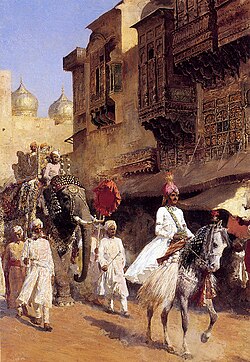
During the British Colonial Era, the Emperor of India conferred the title of Prince upon hereditary rulers of various "princely states." These rulers governed their territories in the name of the Emperor until the empire's dissolution in 1947, after which they acceded to the Union of India or the Dominion of Pakistan.
Religious and Symbolic Titles
Beyond political power, the title "prince" is used extensively in religious contexts to denote spiritual authority or symbolic status:
- Christianity: Jesus Christ is hailed as the Prince of Peace, Prince of Life, and Prince of the Kings of the Earth. Conversely, Satan is referred to as the Prince of Darkness or the Prince of this World. The Archangel Michael is called the Prince of Light, and Saint Peter is known as the Prince of the Apostles.
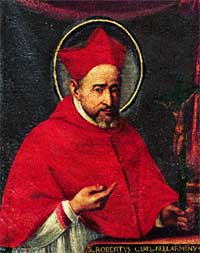
- The Church: High-ranking officials, such as Cardinals, have historically been referred to as princes of the Roman Catholic Church.
Summary of Current Sovereign Principalities
| State | Current Ruler/Title | Region |
|---|---|---|
| Liechtenstein | Prince Hans-Adam II | Europe |
| Monaco | Prince Albert II | Europe |
| Kuwait | Emir Mishal Al-Ahmad Al-Jaber Al-Sabah | Middle East |
| Qatar | Emir Tamim bin Hamad Al Thani | Middle East |
| Abu Dhabi | Emir Mohamed bin Zayed Al Nahyan | UAE |
| Dubai | Emir Mohammed bin Rashid Al Maktoum | UAE |
| Sovereign Military Order of Malta | Prince and Grand Master John T. Dunlap | International |
Frequently Asked Questions
What is the difference between a Prince and a King?
Generally, a king is the highest sovereign ruler of a kingdom, while a prince is either a ruler of a smaller territory (a principality) or a male member of a royal family who ranks below the king.
What does the term "Prince of the Blood" mean?
This refers to a prince who is a direct descendant of a royal dynasty, emphasizing their biological claim to the throne rather than a title granted by appointment or marriage.
Are there still sovereign princes today?
Yes. Rulers in Monaco and Liechtenstein hold the title of Prince, while the rulers of Kuwait, Qatar, and the UAE states hold the equivalent title of Emir.
How did the title of prince evolve in the Holy Roman Empire?
It evolved into a distinction between the Fürst (the reigning head of the house) and the Prinz (the cadet members), with some counts also achieving "princely" status by exercising sovereign rights like minting currency.
Is "Prince" used in non-political ways?
Yes, it is frequently used in religious contexts. In Christianity, it is used to describe divine figures (Jesus as the Prince of Peace), angelic beings (Michael as the Prince of Light), and even the adversary (Satan as the Prince of Darkness).