Prince Bernhard: A Legacy of Royal Scandals and Controversies
While Prince Bernhard of the Netherlands was often praised for his efforts to promote the economic well-being of his country and his leadership in global conservation, his public image was frequently clouded by a series of high-profile scandals. From military misconduct during World War II to international bribery and clandestine paramilitary operations, Bernhard's life was marked by a tension between royal duty and personal controversy.
Key Facts
- Military Misconduct: Led the Binnenlandse Strijdkrachten (BS) militia, which was linked to violent incidents during the liberation of the Netherlands.
- The Hofmans Affair: A domestic crisis involving a faith healer that strained his marriage to Queen Juliana.
- Lockheed Scandal: Accepted a US$1.1 million bribe from the Lockheed Corporation to influence aircraft purchases.
- Project Lock: A controversial WWF-funded operation involving mercenaries in Africa.
- Personal Life: Fathered two illegitimate daughters and faced allegations regarding his private conduct.
The Binnenlandse Strijdkrachten (BS) Militia
Towards the end of World War II, Queen Wilhelmina unified several Dutch resistance groups into the Binnenlandse Strijdkrachten (BS, or Domestic Armed Forces), appointing Prince Bernhard as its commander in September 1944. Despite its purpose, the militia gained a reputation for being unruly and out of control, with reports of pillaging and plundering during the liberation from Nazi occupation.
The most notorious incident occurred on May 7, 1945, at Dam square in Amsterdam. Although the armistice agreement specified that only Allied units should disarm German troops, the BS militia ignored orders and arrested two German soldiers. When one soldier resisted and fired a shot, he was killed by the militia. This triggered a retaliatory attack by German soldiers stationed in the Groote Club building, who opened fire on celebrating crowds with machine guns. The resulting chaos lasted two hours and left over three dozen bystanders dead.
The Hofmans Affair and Marital Strain
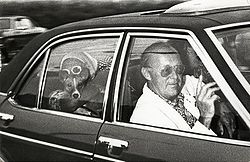
In the mid-1950s, the marriage of Queen Juliana and Prince Bernhard was severely tested by the influence of Greet Hofmans, a faith healer and "layer-on of hands." Introduced by Bernhard in 1948 to treat their daughter Princess Christina's eye illness (caused by rubella during pregnancy), Hofmans eventually became a close confidante to the Queen.
Hofmans encouraged pacifist views in Queen Juliana, which created a crisis within the Royal Household during the Cold War. To remove Hofmans, Prince Bernhard leaked information to the German magazine Der Spiegel, which published a critical article in 1956 comparing Hofmans to Rasputin. Following the intervention of a committee of "three wise men" (elder statesmen), Hofmans and her allies were banished from the court.
The Lockheed Bribery Scandal
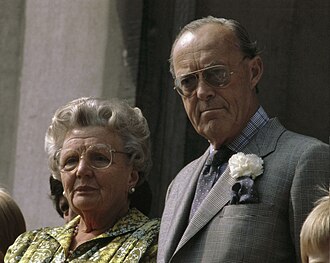
The most damaging blow to Bernhard's reputation came in 1976 when it was revealed that he had accepted a US$1.1 million bribe from the Lockheed Corporation. The U.S. aircraft manufacturer paid the Prince to influence the Dutch government's purchase of fighter jets. Prime Minister Joop den Uyl ordered an inquiry, during which Bernhard initially dismissed the allegations, claiming he was "above such things."
The scandal opened a floodgate of media scrutiny into Bernhard's past, including his Reiter SS membership and his extramarital affairs. It was revealed he had fathered two illegitimate daughters: Alexia (with Hélène Grinda) and Alicia (born in the United States). A 1974 letter proved Bernhard had demanded "commissions" on aircraft purchases, which was particularly egregious given his role as Inspector-General of the Dutch Armed Forces.
To protect the monarchy, the government did not press criminal charges, but Bernhard resigned as Inspector-General and stepped down from various corporate and charitable boards, including the presidency of the World Wildlife Fund (WWF), which he passed to Prince Philip. In a 2004 posthumous interview, Bernhard admitted to the bribes, claiming the money went to the WWF.
Project Lock and Paramilitary Operations
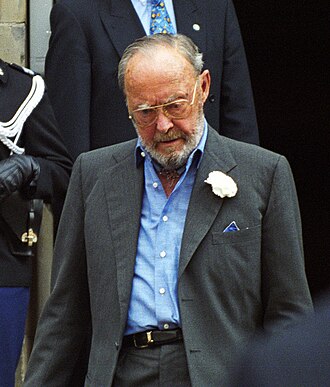
In the late 1980s, Bernhard was involved in "Project Lock." After selling two paintings for £700,000 to benefit the WWF, £500,000 was later transferred back to Bernhard for a "private project." This operation hired KAS International, a contractor owned by SAS founder Sir David Stirling, to use mercenaries to fight poachers in African nature reserves.
The project backfired when it was discovered that the mercenaries were participating in the illegal ivory trade and using the WWF project as cover for secret paramilitary operations. A later investigation by the Kumleben Commission suggested these mercenaries may have planned assassinations of ANC members and trained rebel groups like UNITA in Angola and Renamo in Mozambique.
Summary of Major Controversies
| Event | Period | Primary Issue | Outcome |
|---|---|---|---|
| BS Militia | 1944–1945 | Lack of discipline; Dam square massacre | Loss of life; damaged military reputation |
| Hofmans Affair | 1948–1956 | Influence of a faith healer on the Queen | Hofmans banished; marital strain |
| Lockheed Scandal | 1976 | Acceptance of US$1.1 million in bribes | Resignation as Inspector-General |
| Project Lock | 1988–1995 | Use of mercenaries in Africa | Reputational damage; links to rebel training |
Additional Allegations
Beyond these major events, other claims have surfaced over the years. Historian Harry Veenendaal alleged that in 1950, Bernhard attempted to oust the government of the Republic of Indonesia to serve as its viceroy. More recently, a 2016 biography of Queen Juliana mentioned rumors of sexual assault of a minor and claims that Bernhard prohibited the Queen from seeing him in their final years.
Frequently Asked Questions
What was the Lockheed scandal?
The Lockheed scandal was a 1976 revelation that Prince Bernhard accepted US$1.1 million in bribes from the Lockheed Corporation to influence the Dutch government to purchase their aircraft.
Who was Greet Hofmans?
Greet Hofmans was a faith healer and "layer-on of hands" who became a close advisor to Queen Juliana, leading to a domestic crisis and a public scandal after Prince Bernhard leaked information about her to the press.
What happened during the Dam square incident?
In May 1945, the BS militia under Prince Bernhard's command ignored orders and arrested German soldiers, provoking the Germans to open fire on celebrating crowds, resulting in over three dozen deaths.
What was Project Lock?
Project Lock was a paramilitary operation ostensibly designed to fight poachers in Africa using mercenaries, but it was later revealed that the mercenaries were involved in illegal trade and supporting rebel groups.
Did Prince Bernhard face criminal charges for the Lockheed bribes?
No. Out of respect for Queen Juliana, the Dutch government and the States-General voted against criminal prosecution, though he was forced to resign from several high-profile positions.