Prime Minister of the Republic of Korea: Roles, Responsibilities, and History
In the political structure of the Republic of Korea, the Prime Minister holds the second-highest political office in the nation. Serving as the deputy head of government, the Prime Minister acts as the principal executive assistant to the President, who serves as both the head of state and the head of government. While the role may resemble a Prime Minister in a parliamentary democracy to some, in South Korea, the position is more functionally similar to the Vice President of the United States.
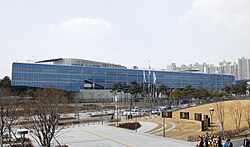
The current incumbent is Han Seong-sook, who assumed office on 1 July 2026 following an appointment by President Lee Jae Myung. The office is seated in Sejong City and carries significant weight in the administration of state affairs.
Key Facts
- Current Incumbent: Han Seong-sook (since 1 July 2026)
- Primary Role: Deputy head of government and principal executive assistant to the President
- Succession: First in line to serve as Acting President if the President is removed or incapacitated
- Appointment Process: Nominated by the President and subject to approval by the National Assembly
- Official Residence: Chongni Gonggwan
- Annual Salary: ₩191,000,000 (approximately US$163,000)
The Functions and Powers of the Office
The Prime Minister plays a vital role in the State Council, which serves as the nominal cabinet of South Korea. As the vice-chairperson of the Cabinet, the Prime Minister assists the President by supervising various ministries and providing recommendations for ministerial appointments.
Succession and Acting Capacity
One of the most critical duties of the Prime Minister is ensuring continuity of government. If the President is unable to discharge their duties, the Prime Minister assumes the presidency in an acting capacity. A notable recent example occurred during the suspension of Yoon Suk Yeol due to impeachment on 14 December 2024, during which Han Duck-soo served as Acting President.
Administrative Support Structures
The Prime Minister's Office is comprised of two primary organizations that facilitate the execution of national policy:
- Office for Government Policy Coordination: Responsible for directing and overseeing central administrative authorities, planning national policies, managing social risks, and implementing regulatory reforms.
- Prime Minister's Secretariat: Handles activities related to the National Assembly, provides counsel on state affairs, manages civil complaints, and oversees official protocols and the maintenance of the official residence.
Historical Evolution
The position was established on 31 July 1948, shortly before the formal founding of the South Korean government. The inaugural holder of the office was Lee Beom-seok. Over the decades, the power of the office has fluctuated based on the governing system.
During the Second Republic, a parliamentary system was implemented, making the Prime Minister the most powerful position while the President became a figurehead. This era saw Chang Myon serve as the only Prime Minister elected under that specific system before the military coup of 1961. Following a period where the role was titled Chief Cabinet Minister, the title of Prime Minister was restored with the commencement of the Third Republic.
Impeachment and Removal
The procedure for removing a Prime Minister is governed by the 10th Constitution of South Korea (1987). Under Article 65, Clause 1, the National Assembly may propose impeachment if a Prime Minister violates the Constitution or other laws in the performance of their official duties.
For an impeachment motion to pass, it must be proposed by one-third of the National Assembly members and approved by a majority. Once a motion is passed, the individual is suspended from exercising power until the Constitutional Court of Korea reaches a final decision. The Court is required to make a decision within 180 days. If the individual leaves office before the decision is rendered, the case is dismissed.
Summary of the Prime Minister's Office
| Category | Details |
|---|---|
| Official Title | Prime Minister (Gungmuchongni) |
| Status | Deputy head of government |
| Appointer | President (subject to National Assembly approval) |
| Term Length | At the president's pleasure |
| Key Memberships | State Council, National Security Council |
| Post-Service Benefits | Lifelong pension and Presidential Security Service detail |
Frequently Asked Questions
Is the Prime Minister the head of government in South Korea?
No. In South Korea, the President serves as both the head of state and the head of government. The Prime Minister is the deputy head of government and the principal executive assistant to the President.
How is a Prime Minister appointed?
The President nominates the candidate, but the appointment is subject to the formal approval of the National Assembly.
What happens if the President is unable to serve?
The Prime Minister is first in the order of succession and assumes the duties of the presidency in an acting capacity.
Who supports the Prime Minister in their daily duties?
The Prime Minister is supported by two deputy prime ministers, as well as the Office for Government Policy Coordination and the Prime Minister's Secretariat.
What are the benefits for a former Prime Minister?
Former Prime Ministers are entitled to a lifelong pension and may receive a Presidential Security Service detail, though acceptance of protection is optional.