Pressurized Water Reactors: Engineering, Design, and Global Application
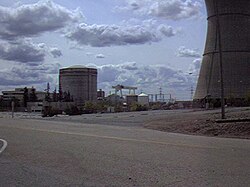
A Pressurized Water Reactor (PWR) is a specific type of light-water nuclear reactor that serves as the backbone of global nuclear energy. Currently, PWRs are the most prevalent design in the world, accounting for nearly 70% of the commercial reactor fleet. While some nations, such as Canada and the United Kingdom, have historically utilized heavy-water or gas-cooled designs, the PWR remains the dominant choice for countries like the United States, France, China, and South Korea.
At its most basic level, a PWR uses water to perform two critical roles: acting as a neutron moderator (slowing down neutrons to sustain the fission chain reaction) and as a coolant (carrying heat away from the reactor core). By maintaining the primary coolant under immense pressure, the system prevents the water from boiling, allowing it to reach temperatures far beyond the normal boiling point.
Key Facts
- Global Dominance: Represents nearly 70% of the world's commercial nuclear reactors.
- Primary Pressure: Operates at approximately 155 bar (2,250 psi) to keep coolant liquid.
- Dual-Loop System: Uses a primary loop for heat extraction and a secondary loop for steam production to prevent radioactivity from reaching the turbines.
- Fuel Type: Utilizes enriched uranium dioxide (UO2) pellets clad in Zircaloy.
- Safety Feature: Employs passive scramming where control rods drop by gravity if power is lost.
The Evolution of PWR Technology
The development of the PWR began in 1946 through the US Naval Nuclear Propulsion Program at Oak Ridge National Laboratory. Originally intended for nuclear marine propulsion in submarines, the design's compactness and efficiency made it ideal for naval use. This military foundation led to the creation of the Shippingport Atomic Power Station, the first purely commercial PWR plant.
Over the decades, the technology has evolved through several generations. Most current plants are Generation II, but newer Generation III and III+ designs—such as the AP1000, Hualong One, APR-1400, and EPR—offer enhanced safety and efficiency. In 2018, the first AP1000 and EPR reactors were connected to the grid in China. More recently, the industry has moved toward small modular reactors (SMRs), with NuScale Power receiving NRC approval in 2020 for a modified PWR design.
Technical Design and Operation
The operation of a PWR relies on the separation of the heat source from the power-generating turbine. This is achieved through two distinct coolant loops.
The Primary Coolant Loop
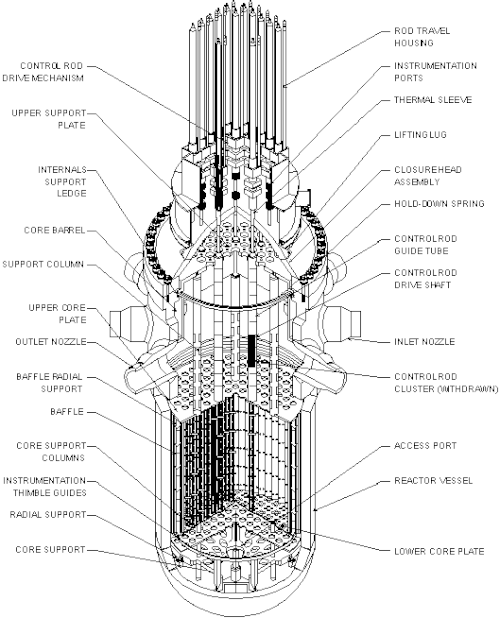
Inside the reactor pressure vessel, nuclear fuel undergoes controlled fission, releasing heat. This heat is transferred via thermal conduction through the fuel cladding to the primary coolant. To prevent the water from vaporizing despite temperatures reaching roughly 315 °C (588 K), the system is pressurized to about 155 bar.
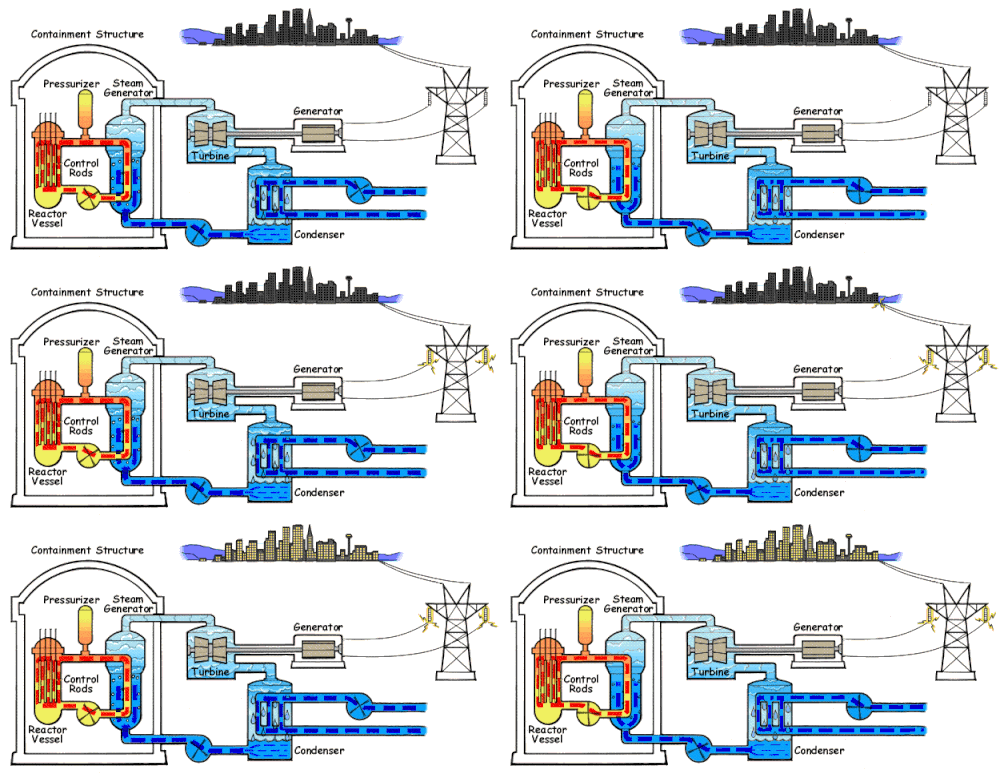
A critical component called the pressurizer maintains this pressure. It is a separate vessel partially filled with water and heated by electrical elements. By controlling the temperature in the pressurizer, operators can manage pressure transients and ensure a subcooling margin—the difference between the pressurizer temperature and the highest core temperature—of about 30 °C.
The Secondary Loop and Power Generation
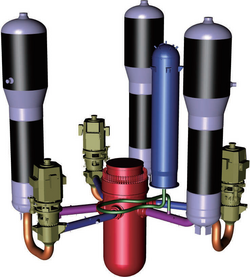
The hot primary coolant is pumped at rates of approximately 100,000 gallons per minute into a steam generator. Here, the primary water flows through thousands of small tubes, transferring its heat to a secondary loop of water kept at a lower pressure. This secondary water vaporizes into steam, which then drives turbines connected to an electric generator.
Because the primary and secondary fluids never mix, the radioactive materials contained within the reactor core remain isolated from the turbine and the rest of the plant.
Fuel and Reactivity Control
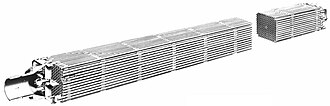
PWRs use enriched uranium dioxide (UO2) powder, which is sintered into hard ceramic pellets. These pellets are encased in Zircaloy, a zirconium alloy chosen for its mechanical strength and low neutron absorption. These rods are grouped into fuel bundles, typically in 14×14 or 17×17 arrays, each about 4 meters long.
To control the nuclear reaction, PWRs use two primary methods:
- Boric Acid: Boron is dissolved in the primary coolant. Since boron absorbs neutrons, varying its concentration allows operators to maintain 100% power as fuel is depleted.
- Control Rods: These are inserted directly into the fuel bundles to start the reactor, shut it down, or handle short-term load changes.
Comparison of PWR Specifications
| Parameter | Typical Value / Detail |
|---|---|
| Primary Pressure | ~155 bar (2,250 psi) |
| Core Inlet Temperature | ~275 °C (548 K) |
| Core Outlet Temperature | ~315 °C (588 K) |
| Power Output | 900 to 1,600 MWe |
| Refueling Cycle | 18–24 months |
| Fuel Material | Enriched Uranium Dioxide (UO2) |
Advantages and Disadvantages
Advantages
- Stability: PWRs are inherently stable; power production tends to decrease as temperature increases.
- Containment: The separate secondary loop prevents radioactive contamination of the turbine system.
- Passive Safety: Control rods are held by electromagnets; if power is lost, they fall by gravity to stop the reaction (passive scram).
- Practicality: Water is non-toxic, inexpensive, and easy to maintain compared to liquid metals or heavy water.
Disadvantages
- Complexity: The need for pressurizers and steam generators increases capital costs and system complexity.
- Tritium Production: The use of boron leads to higher tritium production compared to Boiling Water Reactors (BWRs).
- Fuel Costs: The requirement for enriched uranium increases the cost of fuel production.
- Thermal Limits: Operating temperatures are too low for many high-heat industrial applications (which require >400 °C).
Frequently Asked Questions
How does a PWR differ from a Boiling Water Reactor (BWR)?
The primary difference is the pressure and the number of loops. A PWR maintains high pressure to prevent boiling in the primary loop and uses a secondary loop to create steam. A BWR operates at lower pressure, allowing water to boil directly inside the reactor vessel before sending the steam to the turbine.
What is the purpose of the pressurizer?
The pressurizer ensures the primary coolant remains in a liquid state despite high temperatures. It uses electrical heaters to maintain the water at the saturation temperature for the desired pressure (typically 155 bar), absorbing thermal transients to keep the system stable.
Why is Zircaloy used for fuel cladding?
Zircaloy is used because it possesses excellent mechanical properties and a low absorption cross section, meaning it does not absorb many neutrons, which allows the nuclear chain reaction to proceed efficiently.
How is the reactor shut down in an emergency?
PWRs utilize a passive safety system where control rods are held above the core by electromagnets. In the event of a power loss, the magnets release, and the rods fall by gravity into the core, immediately absorbing neutrons and stopping the fission reaction.
What is the role of boric acid in a PWR?
Boric acid acts as a chemical shim. By adjusting the concentration of boron in the primary coolant, operators can precisely control the reactivity of the core to compensate for fuel depletion over the 18–24 month operating cycle.