President of the Federal Republic of Nigeria
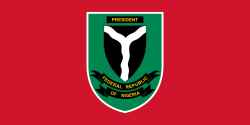
The President of the Federal Republic of Nigeria serves as the head of state, head of government, and Commander-in-Chief of the Armed Forces. This pivotal role represents the apex of the Executive Branch of the Federal Government, merging the duties of state leadership and government administration under a single office as established by the 1979 Constitution.
The current incumbent is Bola Ahmed Tinubu, the 16th president, who assumed office on May 29, 2023. The president operates from the Aso Rock Presidential Villa in Abuja and is a key member of several high-level bodies, including the Federal Executive Council, the National Security Council, and the National Defence Council.
Key Facts
- Current President: Bola Ahmed Tinubu (since May 29, 2023).
- Term Length: Four years, renewable once.
- Official Residence: Aso Rock Presidential Villa (The State House).
- Selection: Direct popular election via a modified two-round system.
- Annual Salary: ₦ 500,000,000 (approximately US$ 310,774).
- Constitutional Basis: Constitution of Nigeria.
Historical Evolution of the Presidency
Ceremonial Presidency and the First Republic (1963–1966)
Following independence from Britain on October 1, 1960, Nigeria initially operated with a prime minister and a governor-general representing Queen Elizabeth II. On October 1, 1963, Nigeria became a federal republic, abolishing the monarchy. Nnamdi Azikiwe became the first president, though the role was primarily ceremonial, focusing on receiving foreign dignitaries and opening Parliament.
Military Rule and the Transition to Executive Power (1966–1979)
Nigeria experienced a long period of military governance between 1966 and 1979. Key figures during this era included General Yakubu Gowon and Brigadier Murtala Mohammed. Following Mohammed's assassination in 1976, General Olusegun Obasanjo took office and eventually oversaw the transition back to civilian rule.
This transition culminated in the 1979 Constitution, which transformed the presidency into an executive post with powers similar to the U.S. President, supported by a bicameral National Assembly consisting of a Senate and a House of Representatives.
The Second and Third Republics (1979–1999)
The Second Republic began on October 1, 1979, with the election of Shehu Shagari. However, this era ended on December 31, 1983, when Major General Muhammadu Buhari seized power. This initiated another cycle of military rule involving General Ibrahim Babangida, an interim government under Ernest Shonekan, and General Sani Abacha.
The Fourth Republic (1999–Present)
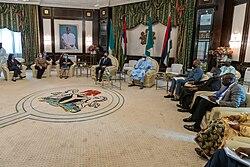
The current democratic era began on May 29, 1999, when Olusegun Obasanjo was elected president. This period has seen the first successful democratic transitions of power, including the handover to Umaru Musa Yar'Adua in 2007, Goodluck Jonathan in 2010, Muhammadu Buhari in 2015, and Bola Tinubu in 2023.
Selection Process and Eligibility
The Electoral System
Nigeria employs a modified two-round system that can extend to three rounds. To win in the first round, a candidate must secure a plurality of votes and at least 25% of the vote in 24 of the 36 states and the Federal Capital Territory. If no one meets this threshold, a second round occurs between the top two candidates. If a winner is still not determined, a third round is held where a simple majority suffices.
Eligibility Requirements
To be eligible for the presidency, a candidate must:
- Be a Nigerian citizen by birth.
- Be at least 35 years of age.
- Be sponsored by a political party.
Disqualifications include having already served two terms in office, being declared of unsound mind, or being a member of a secret society.
Powers and Privileges
Administrative and Military Authority
As the Commander-in-Chief, the president oversees the High Command of the Armed Forces, including the Chief of Defence Staff and the chiefs of the Army, Air, and Naval staffs. Administratively, the president appoints the Secretary to the Government of the Federation, presidential aides, and heads of diplomatic missions.
Official Residence and Transport
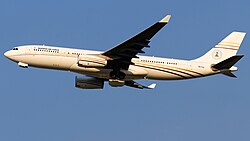
The president resides at the Aso Rock Presidential Villa in Abuja, completed in 1991. For ground transport, President Bola Tinubu utilizes an armored Cadillac Escalade. Aerial transport is provided by the Nigerian Air Force, which maintains a fleet including a Boeing Business Jet (BBJ 737), a Dassault Falcon 7X, Gulfstream jets, and an Airbus A330.
Post-Presidency Benefits
Former presidents are entitled to several lifelong privileges, including a diplomatic passport, a modestly furnished office of their choice, 30 days of annual paid vacation, and a monthly upkeep allowance of 350,000 Nigerian naira.
Summary of Presidential Office
| Feature | Details |
|---|---|
| Official Title | Mr. President / His Excellency |
| Term Limit | 4 years (Maximum 2 terms) |
| Removal Ground | Gross Misconduct (Requires 2/3 National Assembly majority) |
| Key Residence | Aso Rock Presidential Villa |
| First Holder | Nnamdi Azikiwe (1963) |
Frequently Asked Questions
How is the President of Nigeria removed from office?
Under Section 143 of the 1999 Constitution, a president can be removed solely on the grounds of "gross misconduct." This process requires a two-thirds majority vote of the National Assembly.
What are the requirements to run for President?
A candidate must be a Nigerian citizen by birth, at least 35 years old, and be sponsored by a political party. They must not have served as president twice before and must not be a member of a secret society.
Where does the President live and work?
The president lives and works at the Aso Rock Presidential Villa, also known as The State House, located in the capital city of Abuja.
What happens to a president after their term ends?
Former presidents receive a diplomatic passport for life, a monthly upkeep allowance of 350,000 naira, an office of their choice, and 30 days of annual paid vacation.
How many rounds are there in a presidential election?
There can be up to three rounds. The first two rounds require a plurality of votes and 25% support in at least 24 states; the third round requires only a simple majority.