President of Iceland
The President of Iceland (Icelandic: Forseti Íslands) serves as the head of state of the Icelandic Republic. While the role is primarily ceremonial and not involved in the day-to-day administration of the country, the president holds significant symbolic importance and specific constitutional powers that can influence the nation's political landscape.
The current incumbent is Halla Tómasdóttir, who assumed office on August 1, 2024. The presidency is established under the Constitution of Iceland (1944), which replaced the monarchy when Iceland became a republic.
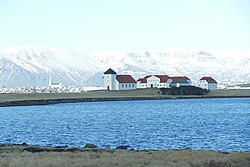
The official residence of the president is Bessastaðir, located in Garðabær near the capital city of Reykjavík.
Key Facts
- Incumbent: Halla Tómasdóttir (since August 1, 2024).
- Term Length: Four years with no term limits.
- Election Method: Popular vote via plurality voting.
- Residence: Bessastaðir, Garðabær.
- Annual Salary: €289,000.
- Historic Milestone: Iceland elected the world's first female head of state, Vigdís Finnbogadóttir, in 1980.
Etymology and Origin
The Icelandic word for president, forseti, literally translates to "fore-sitter" or "one who sits foremost" in Old Norse. This term is also the name of the Norse god of justice and reconciliation, who is often identified with the Frisian god Fosite.
The office was created on June 17, 1944, when Iceland transitioned from a kingdom to a republic. To ensure a smooth transition, the first president, Sveinn Björnsson, was elected by Parliament rather than by popular vote.
Powers and Duties
Executive and Cabinet Roles
The president formally appoints the ministers of the Cabinet and determines their number and assignments. While the president is vested with executive power, they are not responsible for exercising it independently; every presidential act requires the countersignature of a minister, who then assumes political responsibility for that act.
Following general elections, the president designates a party leader—typically the person most likely to form a majority coalition—to begin government negotiations. Historically, some presidents have been active in this process, while others have remained strictly neutral.
Legislative Authority
Legislative power is exercised jointly by the president and the Parliament (Althingi). The president signs bills into law but possesses the power to veto them. If a bill is vetoed, it still takes effect unless the Parliament withdraws it, but it must then be confirmed by a national referendum. Ólafur Ragnar Grímsson is the only president to have exercised this veto, doing so three times between 2004 and 2011.
Additionally, the president can issue provisional laws when Parliament is not in session, provided they conform to the constitution and are later confirmed by Parliament.
The State Council and Legal Powers
The president meets with the Cabinet in the State Council, where they are informed of important state matters and drafted bills. The president also holds the authority to grant pardons, amnesty, or decide that the prosecution for an offense be discontinued.
Eligibility and Succession
To be eligible for the presidency, a candidate must be at least 35 years old, meet the qualifications for members of the Althingi, and obtain at least 1,500 commendations.
In the event of a vacancy due to death, resignation, or inability to perform duties, the powers of the office are collectively assumed by the Prime Minister, the President of the Parliament, and the President of the Supreme Court until a new president is elected or the incumbent returns.
Presidential Summary Table
| Feature | Detail |
|---|---|
| Constituting Instrument | Constitution of Iceland (1944) |
| Term | 4 Years (Unlimited re-election) |
| Primary Residence | Bessastaðir |
| Key Legislative Power | Veto (subject to referendum) |
| Ceremonial Role | Grand Master of the Order of the Falcon |
Frequently Asked Questions
Who is the current President of Iceland?
The current president is Halla Tómasdóttir, who took office on August 1, 2024.
Can the President of Iceland veto a law?
Yes. If the president refuses to sign a bill, it is effectively vetoed. However, the bill still becomes valid unless the Parliament withdraws it, but it must be submitted to a secret ballot referendum for final approval or rejection by the public.
How is the President of Iceland elected?
The president is elected by a popular vote using a plurality voting system for a four-year term.
What happens if the president cannot perform their duties?
The powers of the office are jointly assumed by the Prime Minister, the President of the Parliament, and the President of the Supreme Court.
Who was the first female president of Iceland?
Vigdís Finnbogadóttir became the first elected female head of state in the world when she assumed the presidency on August 1, 1980.