President of the Federative Republic of Brazil
The President of the Federative Republic of Brazil serves as the central figure of the Brazilian government, embodying a triple role as the head of state, head of government, and commander-in-chief of the Brazilian Armed Forces. This powerful executive position was established in 1889 following a military coup that ended the reign of Emperor Pedro II and proclaimed the republic.
Since its inception, the Brazilian presidency has evolved through six different constitutions, navigating three democratic periods and three dictatorships. Today, the office is governed by the Constitution of 1988, which defines the strict requirements, legal powers, and electoral processes that shape the nation's leadership.
The current incumbent is Luiz Inácio Lula da Silva, the 39th president, who assumed office on January 1, 2023.

Key Facts
- Current President: Luiz Inácio Lula da Silva (since Jan 1, 2023).
- Term Length: Four years, with a limit of two consecutive terms.
- Election Method: Direct popular vote (two rounds if no candidate wins a majority).
- Official Workplace: Palácio do Planalto.
- Official Residence: Palácio da Alvorada.
- Annual Salary: R$ 402,151 (including the 13th-month salary).
Constitutional Powers and Responsibilities
Brazil utilizes a presidential system that grants the executive significant authority. The president controls the executive branch, represents Brazil in international diplomacy, and appoints the cabinet. With the approval of the Senate, the president also appoints judges to the Supreme Federal Court.
Lawmaking and Provisional Measures
Beyond proposing laws to the National Congress, the president possesses a unique legislative tool known as Medidas Provisórias (provisional measures). These are instruments with the force of law enacted in cases of urgency and necessity. While they cannot alter criminal or electoral laws, they take effect immediately.
A provisional measure remains active for 60 days, extendable once to 120 days. If the National Congress approves the measure, it becomes permanent law; otherwise, it expires or is rescinded.
Executive Authorities under Article 84
According to Article 84 of the Federal Constitution, the president's duties include:
- Appointing and dismissing ministers of state.
- Vetoing bills, either in whole or in part.
- Concluding international treaties (subject to Congressional ratification).
- Decreeing states of defense or siege under specific constitutional procedures.
- Granting pardons and reducing sentences.
- Managing the federal administration and submitting budget proposals to Congress.
Election and Eligibility
To run for the presidency, a candidate must meet several strict constitutional requirements. They must be a native-born Brazilian citizen, at least 35 years old, a resident of Brazil, and a registered voter in full exercise of their electoral rights. Additionally, candidates must be affiliated with a political party, as independent or write-in candidacies are prohibited.
Term Limits and Succession
The president serves a four-year term and may be re-elected once consecutively. After serving two consecutive terms, a former president must wait one full term before they are eligible to run again. If a vice president succeeds to the presidency, they are subject to the same consecutive term limits.
Any sitting president wishing to run for a different office must resign at least six months before the election.
Compensation, Residences, and Logistics
The president receives a monthly salary of R$ 30,934.70. Because Brazilian law mandates a "thirteenth salary" (an extra month's pay at the end of the year), the total annual compensation is R$ 402,151.10, supplemented by an undisclosed expense account for official travel and services.
Official Residences and Offices
- Palácio do Planalto: The primary workplace in Brasília.
- Palácio da Alvorada: The official primary residence.
- Granja do Torto: A country retreat on the outskirts of the capital.
- Palácio Rio Negro: A summer retreat located in Petrópolis, Rio de Janeiro.
To facilitate governance, the presidency maintains regional offices in major cities, including São Paulo, Porto Alegre, and Belo Horizonte.
Presidential Transport
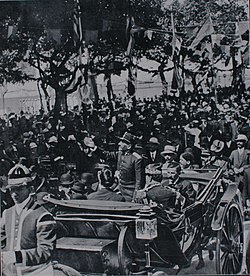
For official travel, the president utilizes a fleet of high-security vehicles and aircraft. Ground transport includes an armored Chery Tiggo 8 Max Drive for daily use and a 1952 Rolls-Royce Silver Wraith for ceremonial events. Air travel is conducted via the KC-30 (an Airbus A330-200), Embraer 190 jets (VC-2), and Eurocopter Super Puma helicopters (VH-34). When the president is aboard, the aircraft uses the call sign "Brazilian Air Force One."
Removal from Office
A president can be removed through impeachment. This requires two-thirds of the Chamber of Deputies to accept the charges. If the Senate accepts the investigation, the president is suspended for up to 180 days. The trial venue depends on the nature of the offense:
- Common criminal offenses: Tried by the Supreme Federal Court.
- Crimes of malversation: Tried by the Federal Senate.
Malversation crimes are categorized into seven areas, including threats to the existence of the Union, internal security, budgetary law, and probity in administration.
Summary of the Presidency
| Feature | Details |
|---|---|
| Official Title | President of the Federative Republic of Brazil |
| Term | 4 years (max 2 consecutive) |
| Eligibility | Native-born citizen, 35+ years old, party member |
| Key Powers | Head of State, Government, and Armed Forces |
| Succession | Vice President |
Frequently Asked Questions
Who is the current president of Brazil?
The current president is Luiz Inácio Lula da Silva, who took office on January 1, 2023.
Can a Brazilian president serve more than two terms?
A president can serve a maximum of two consecutive terms. However, they may run for office again after a break of at least one term.
What are Medidas Provisórias?
These are provisional measures issued by the president that have the force of law for 60 to 120 days in urgent cases, pending approval by the National Congress.
What happens if a president is impeached?
If the Chamber of Deputies and Senate initiate the process, the president may be suspended for 180 days. If convicted by the Supreme Federal Court (for common crimes) or the Senate (for malversation), they are removed from office and succeeded by the vice president.
What are the requirements to become president?
Candidates must be native-born Brazilians, at least 35 years old, residents of the country, registered voters, and members of a political party.