Precession of the Equinoxes: A History of Astronomical Discovery
The precession of the equinoxes is the slow, continuous change in the orientation of Earth's rotational axis. To an observer on the ground, this manifests as a gradual shift in the positions of the stars relative to the equinoxes over thousands of years. While it is a subtle phenomenon, its discovery marked a pivotal moment in the history of astronomy, challenging early perceptions of a static universe.
Key Facts
- Hipparchus is generally credited with the discovery of precession around 190–120 BC.
- Precession is the difference between the tropical year (Sun's return to an equinox) and the sidereal year (Sun's return to a fixed star).
- Ptolemy estimated the rate of precession at 1° per 100 years; the modern accepted rate is approximately 1° every 72 years (50" per year).
- Trepidation was a competing historical theory suggesting the equinoxes oscillated back and forth rather than moving in a full circle.
- Nicolaus Copernicus was the first to identify precession as a result of the Earth's own axial motion.
The Hellenistic Discovery
The discovery of precession is traditionally attributed to the Greek astronomer Hipparchus (190–120 BC). By comparing his own measurements of the longitude of the star Spica with data recorded by his predecessors, Timocharis and Aristillus, Hipparchus noticed that Spica had shifted by 2° relative to the autumnal equinox.
Hipparchus further analyzed the discrepancy between the tropical year and the sidereal year. He concluded that the equinoxes were "precessing" through the zodiac at a rate of at least 1° per century, implying a full cycle would take no more than 36,000 years. Because he operated within a geocentric framework, he likely viewed this as a motion of the celestial sphere rather than the Earth itself.
Ptolemy and the Refinement of Precession
In the second century AD, Ptolemy expanded upon Hipparchus's work. He developed a lunar method to measure the longitudes of bright stars like Regulus and Spica without needing eclipses. By measuring the arc between the Moon and the Sun before sunset, and the arc between the Moon and a star after sunset, he could calculate stellar positions while correcting for parallax and lunar motion.
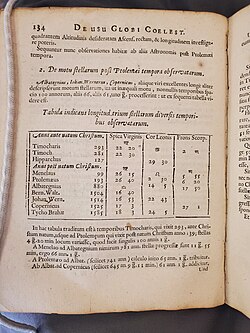
Ptolemy compared his data with that of Hipparchus and other astronomers, concluding that over roughly 265 years, the stars had moved 2°40'. This reinforced the rate of 1° per 100 years. He confirmed that this motion affected all fixed stars, regardless of their proximity to the ecliptic.
Alternative Theories and Global Perspectives
The Theory of Trepidation
Not all ancient scholars accepted a linear precession. Some proposed trepidation, the idea that the equinoxes moved back and forth over a small arc. Theon of Alexandria mentioned a theory where solstitial signs moved 8° in one direction before reversing. In India, the Surya Siddhanta (c. 400 AD) described a complex cycle where the equinox librated 27° in both directions over a 7,200-year period.
Claims of Independent Discovery
There are various claims that other civilizations discovered precession independently, though many remain controversial among scholars:
- Babylonians: Some suggest Chaldean astronomers distinguished between tropical and sidereal years by 330 BC, though evidence is limited.
- Maya: Some archaeologists speculate that the Long Count calendar's 30,000-year cycle involving the Pleiades was an attempt to calculate precession.
- Ancient Egyptians: Claims exist that the Dendera Zodiac records precession, and some writers suggest Egyptians re-oriented temples to account for stellar shifts, though this is not documented in surviving astronomical texts.
Asian Astronomy
In China, Yu Xi (fourth century AD) was the first to mention precession, estimating the rate at 1° every 50 years. In India, later astronomers like Bhāskara II (c. 1150) calculated precession rates near 60" per year, based on the number of revolutions occurring within a Kalpa (a vast cosmic age).
From the Middle Ages to Modern Physics
Medieval Islamic astronomy played a crucial role in refining precession values. Al-Battani measured the rate at 1° per 66 solar years, and the Zij-i Ilkhani from the Maragheh observatory eventually calculated a rate of 51" per annum—remarkably close to the modern value of 50.2".
The conceptual understanding of precession shifted dramatically during the Renaissance. In 1543, Nicolaus Copernicus published De revolutionibus orbium coelestium, which correctly identified precession as a motion of the Earth's axis rather than a movement of the stars.
Finally, in 1687, Isaac Newton provided a physical explanation for the phenomenon in Philosophiae Naturalis Principia Mathematica, attributing precession to the effects of gravitation. While Newton's initial equations required later revision by scientists like Jean le Rond d'Alembert, the gravitational foundation remains central to modern astrophysics.
Summary of Precession Rates
| Astronomer/Source | Estimated Rate | Cycle Duration |
|---|---|---|
| Hipparchus / Ptolemy | 1° per 100 years | 36,000 years |
| Yu Xi | 1° per 50 years | 18,000 years |
| Al-Battani | 1° per 66 years | ~21,600 years |
| Zij-i Ilkhani | 51" per year | ~25,200 years |
| Modern Value | ~50.2" per year | ~25,772 years |
Frequently Asked Questions
What is the difference between a tropical year and a sidereal year?
A tropical year is the time it takes for the Sun to return to the same equinox, which governs our seasons. A sidereal year is the time it takes for the Sun to return to the same position relative to the fixed stars. Precession causes a slight difference between these two measurements.
What is the theory of trepidation?
Trepidation was an early astronomical theory suggesting that the equinoxes did not move in a continuous circle, but instead oscillated or "shook" back and forth over a specific arc of degrees.
How did Ptolemy measure the stars without eclipses?
Ptolemy used a variation of the lunar method. He measured the longitudinal arc between the Moon and the Sun before sunset, and then measured the arc between the Moon and a specific star after sunset, applying corrections for parallax and the Moon's motion.
Who first explained precession as a motion of the Earth?
Nicolaus Copernicus was the first to definitively describe precession as the result of the Earth's axis moving, characterizing it as the third motion of the Earth.
What physical force causes precession?
As explained by Isaac Newton and later refined by other scientists, precession is a consequence of gravitation acting upon the Earth.