Post-Captain: The Prestigious Rank of the Royal Navy
In the annals of maritime history, few terms evoke the prestige and tension of naval command quite like the post-captain. While the word "captain" is used broadly today, in the 18th and 19th-century Royal Navy, being a post-captain represented a definitive turning point in an officer's professional life and social standing.
The term "post-captain" was a descriptive label rather than a formal title. For instance, an officer would be addressed as Captain John Smith, but referred to as a post-captain to distinguish his permanent rank from those who held the title of captain merely by virtue of their current command or as a courtesy.
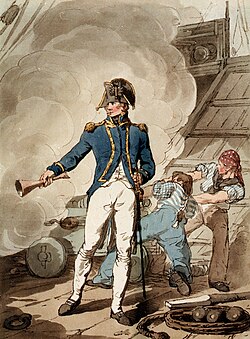
Key Facts
- Definition: A descriptive term for officers who held the permanent rank of captain in the Royal Navy.
- The "Post": An officer "took post" when commissioned to command a rated vessel, with their name published in The London Gazette.
- Promotion: Once promoted to post-captain, further advancement to admiral was based strictly on seniority.
- Uniforms: Epaulettes were used after 1795 to distinguish seniority between commanders and post-captains.
- Command: Junior post-captains typically commanded frigates, while seniors commanded larger ships.
Distinguishing Rank from Command
To the modern ear, the distinction between a captain's rank and a captain's role may seem redundant, but in the Royal Navy, it was critical. The term post-captain separated true captains from two other groups:
- Officers in Command: Any officer commanding a naval vessel was addressed as "captain," regardless of their actual rank.
- Commanders: These officers often received the title of captain as a courtesy, whether they were currently in command of a ship or not. This custom has since become defunct.
The Path to "Taking Post"
The transition from commander to captain was the most pivotal moment in a naval officer's career. An officer might be promoted to the rank of captain but remain "on the beach"—meaning they were without a command and receiving only half-pay.
An officer was officially "made post" when they were commissioned to command a vessel, usually a rated vessel (a ship deemed too significant for a lower-ranked commander). This appointment was formalized when the officer's name was "posted" in The London Gazette. Once this milestone was achieved, the officer's trajectory was largely set; provided they avoided disgrace or death, they would eventually rise to the rank of admiral through seniority, even if they only reached the status of a "yellow admiral."
Command Structures and Flag Captains
The type of ship a post-captain commanded generally reflected their seniority. While senior captains handled the largest vessels, junior post-captains typically commanded frigates. However, there was a notable exception: the flag captain.
An admiral might appoint a very junior post-captain to command his flagship—usually a large ship of the line—to keep the junior officer under direct supervision. A prominent example is Alexander Hood, who was appointed to command HMS Barfleur, the flagship of his cousin, Admiral Sir Samuel Hood.
The First and Second Captains
In some instances, a high-ranking admiral employed two post-captains on a single flagship:
- The Second Captain: The junior officer, serving as the flag captain, who managed the day-to-day operations of the vessel.
- The First Captain: The senior officer, known as the captain of the fleet, who acted as the admiral's chief-of-staff.
Visual Distinctions: The Role of Epaulettes
Starting in 1795, the Royal Navy introduced epaulettes to uniforms to visually signal rank and seniority:
- Commanders: Wore a single epaulette on the left shoulder.
- Junior Post-Captains: Those with less than three years of seniority wore a single epaulette on the right shoulder.
- Senior Post-Captains: Those with three or more years of seniority wore epaulettes on both shoulders.
| Rank/Seniority | Epaulette Position | Typical Command |
|---|---|---|
| Commander | Left shoulder only | Unrated vessels |
| Post-Captain (< 3 years) | Right shoulder only | Frigates / Flagships |
| Post-Captain (3+ years) | Both shoulders | Larger ships of the line |
Frequently Asked Questions
Was "Post-Captain" used as a formal title?
No. It was a descriptive term used to distinguish rank. An officer would be addressed as "Captain," but described as a "post-captain" in a professional or social context.
What does it mean to be "on the beach"?
This term referred to a captain who had the rank but did not currently have a command, resulting in them receiving only half-pay.
How did a post-captain become an admiral?
Once an officer was made post, further promotion was based strictly on seniority. As long as the officer remained in good standing and survived, they would eventually move up the list to become an admiral.
What is a flag captain?
A flag captain is a post-captain who commands an admiral's flagship. This role was often given to junior captains so the admiral could supervise them closely.
What was the significance of The London Gazette?
The London Gazette served as the official record where an officer's name was "posted" upon their first commission to command a vessel, marking their official transition to post-captain.