Poor Things: The Creative Journey from Development to Production
The creation of Poor Things was a decade-long odyssey of artistic collaboration and meticulous planning. Produced by Film4 Productions, Element Pictures, and Searchlight Pictures, the film represents a bold fusion of surrealism and Victorian aesthetics, bringing the imaginative world of author Alasdair Gray to the silver screen.
Development and Early Origins
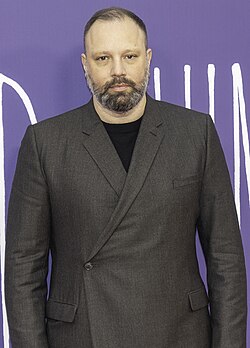
The seeds for the project were sown as early as 2009. Director Yorgos Lanthimos traveled to Scotland to meet Alasdair Gray to discuss acquiring the rights to the novel. Lanthimos recalls Gray as an energetic man in his 80s who had already seen Lanthimos's film Dogtooth and recognized his talent. During this visit, Gray provided a personal tour of Glasgow, highlighting the specific locations that inspired the story.
The project gained significant momentum following the success of The Favourite (2018). Lanthimos noted that the film's success gave him more creative freedom and the financial backing to pursue the unconventional vision of Poor Things. During this period, Lanthimos and lead actress Emma Stone further strengthened their creative partnership by collaborating on the short film Bleat (2022).
Pre-production and Collaborative Casting
Officially announced in February 2021, the film's pre-production was marked by a deep trust between Lanthimos and Stone. In a departure from her previous roles, Stone served as a producer, contributing to the selection of the cast and department heads during the pandemic.
The Ensemble Cast
The casting process unfolded throughout 2021, bringing together a diverse group of acclaimed actors:
- Willem Dafoe and Ramy Youssef joined in May 2021.
- Mark Ruffalo and Jerrod Carmichael were added shortly after.
- Christopher Abbott joined in September.
- Margaret Qualley, Suzy Bemba, and Kathryn Hunter rounded out the cast in November.
Character Preparation
Preparation for the film was as unconventional as the story itself. Emma Stone took dance lessons and accidentally dyed her hair black—a look Lanthimos decided to keep to contrast with her fair complexion. Stone viewed the character of Bella as a metaphor for a woman reborn, free from societal pressures and shame, allowing her to explore sexuality, power, and choice from a fresh perspective.
To ensure authenticity in their roles, Willem Dafoe and Ramy Youssef attended mortician school. Dafoe also endured a rigorous daily beauty regimen, spending four hours in the makeup chair for extensive prosthetics and two hours for their removal.
Filming and Technical Execution
Principal photography took place from August to December 2021, primarily on soundstages at Origo Studios in Budapest, Hungary. The production utilized various Budapest locations to stand in for the film's settings, including the Metropolitan Ervin Szabó Library for Alfie Blessington's house and a local church for the London sequences.
Technically, the film is a milestone in cinematography. It is the first feature film to partially use Kodak Ektachrome color reversal motion picture film stock since the stock's revival in 2018.
Artistic Influences and Design
Visual and Cinematic Inspiration
Cinematographer Robbie Ryan cited Francis Ford Coppola's Bram Stoker's Dracula (1992) as the primary inspiration. Other influences included Black Narcissus (1947), Federico Fellini's And The Ship Sails On (1983), and the works of Roy Andersson.
Costume Evolution
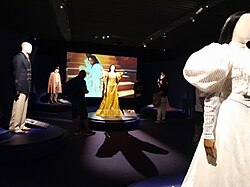
Costume designer Holly Waddington used wardrobe to mirror Bella's psychological growth. Her clothing evolved from puffy, childlike silhouettes to more bizarre combinations as she gained independence, eventually culminating in structured, military-looking dresses that signaled her self-actualization.
Musical Score
The film features its first score by pop musician Jerskin Fendrix. The soundtrack, released by Milan Records on December 8, 2023, included the singles "Bella" and "Lisbon," which were released earlier in November.
Key Facts
- Development Period: Began in 2009; principal photography occurred in 2021.
- Lead Collaboration: Emma Stone acted as both the lead actress and a producer.
- Technical Milestone: First feature to use revived Kodak Ektachrome film stock.
- Filming Location: Primarily shot at Origo Studios and various sites in Budapest, Hungary.
- Preparation: Lead actors Willem Dafoe and Ramy Youssef attended mortician school.
| Category | Details |
|---|---|
| Director | Yorgos Lanthimos |
| Production Companies | Film4, Element Pictures, Searchlight Pictures |
| Cinematographer | Robbie Ryan |
| Costume Designer | Holly Waddington |
| Composer | Jerskin Fendrix |
Frequently Asked Questions
How did the author of the original book influence the film?
Yorgos Lanthimos met author Alasdair Gray in 2009, who gave him a personal tour of Glasgow and showed him the real-life locations that inspired the story's setting.
What was unique about the film's cinematography?
The film is notable for being the first feature to partially utilize Kodak's 35mm Ektachrome color reversal motion picture film stock since its 2018 revival.
How did Emma Stone's role differ from her previous work with Lanthimos?
Unlike her role in The Favourite, Stone served as a producer on Poor Things, involving her in casting and the selection of department heads.
How did the costumes reflect the character of Bella?
The costumes evolved from childlike, puffy silhouettes to more structured and form-fitting military-style dresses, symbolizing Bella's growth, agency, and self-discovery.
What preparation did the male actors undergo?
Willem Dafoe and Ramy Youssef attended mortician school to prepare for their roles, and Dafoe spent six hours daily in hair and makeup for prosthetic application and removal.