Polyvinyl Chloride (PVC): Properties, Applications, and Sustainability
Polyvinyl Chloride, commonly known as PVC or poly(1-chloroethylene), is one of the most versatile synthetic polymers in modern industry. From the rigid pipes that form the backbone of urban sewage systems to the flexible materials used in medical gloves and clothing, PVC is defined by its adaptability. Its unique chemical structure, characterized by a high chlorine content, grants it properties that distinguish it from other common plastics like polyethylene.
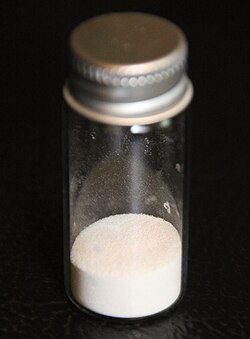
In its pure powder form, PVC is a white, brittle, and odorless solid. It is insoluble in water and ethanol, though it shows slight solubility in tetrahydrofuran. Because it can be modified with various additives, it exists in a spectrum from completely rigid to extremely flexible.
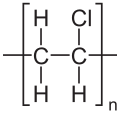
Key Facts
- Chemical Formula: (C2H3Cl)n
- Chlorine Content: Approximately 57% of the mass of PVC is chlorine.
- Density: 1.4 g/cm3 (higher than polyethylene and polymethylmethacrylate).
- Thermal Properties: Glass transition temperature of 82 °C and a melting point range between 100 °C and 260 °C.
- Versatility: Can be engineered as rigid (uPVC), semi-rigid, flexible, or extremely flexible.
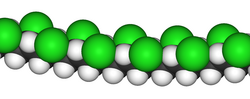
Chemical Structure and Physical Properties
The presence of chloride groups in the polymer chain significantly alters the material's behavior compared to structurally related plastics. This chemical makeup results in a higher density and specific resistance profiles. PVC is characterized by a dielectric breakdown voltage of 40 MV/m and a specific heat of 0.9 kJ/(kg·K).
The material's physical state is heavily influenced by the addition of plasticizers—substances added to the polymer to increase flexibility and durability. Without these, the material is known as unplasticized PVC (uPVC), which is prized for its strength and rigidity.
The Role of Additives and Plasticizers
To tailor PVC for specific uses, manufacturers incorporate various additives. Plasticizers, such as phthalates, are used to shift the material from a hard plastic to a soft, pliable one. While bis(2-ethylhexyl) phthalate was once common, it is increasingly being replaced by higher molecular weight phthalates.

Heat Stabilizers
PVC requires heat stabilizers to prevent degradation during processing. Historically, lead- and cadmium-based stabilizers were used. However, industry initiatives in Europe have led to a significant shift. Cadmium was eliminated across Europe by 2007, and lead-based stabilizers saw a 75% reduction between 2000 and 2010, replaced largely by calcium-based alternatives.
Applications of PVC
The utility of PVC is divided by its level of flexibility, which is determined by the percentage of plasticizer (such as DINP) by weight.
| Grade | Plasticizer (%) | Shore Hardness (A) | Tensile Strength (MPa) | Common Applications |
|---|---|---|---|---|
| Rigid (uPVC) | 0 | 900 | 41 | Window frames, rigid pipes, doors |
| Semi-rigid | 25 | 94 | 69 | Vinyl flooring, advertising banners |
| Flexible | 33 | 84 | 12 | Cable insulation, flexible pipe |
| Very Flexible | 44 | 66 | 3.4 | Boots, clothing, inflatables |
| Extremely Flexible | 86 | < 10 | — | Fishing lures, polymer clay, inks |
Construction and Infrastructure
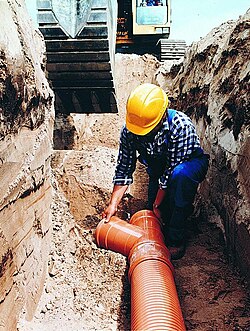
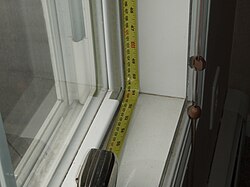
Due to its low cost, chemical resistance, and ease of jointing, PVC is used extensively in sewage and water piping. In residential construction, uPVC is a standard for gutters, downspouts, and window frames.

Consumer Goods and Healthcare
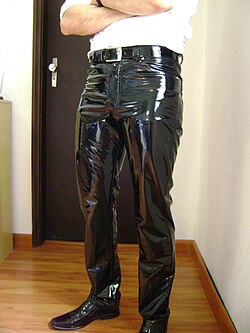
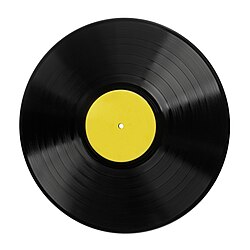
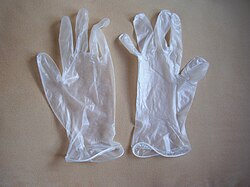
Flexible PVC is found in a wide array of consumer products, including vinyl records, clothing, and footwear. In healthcare, it is used for gloves and various medical tubing, although some providers have moved toward PVC-free alternatives to avoid specific plasticizers.
Health, Safety, and Environmental Impact
PVC is managed under strict safety guidelines. The NFPA 704 fire diamond classifies its hazards, and exposure limits are set by NIOSH, with a Permissible Exposure Limit (PEL) of 15 mg/m3 for inhalable particles.

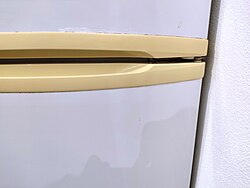
One known issue is polymer degradation caused by UV light exposure, which leads to the yellowing of white PVC elements over time.
Sustainability and Recycling
The PVC industry has implemented several initiatives to improve waste management. Vinyl 2010 aimed to recycle 200,000 tonnes of post-consumer PVC per year in Europe. This was succeeded by VinylPlus, which set a more ambitious target of 800,000 tonnes per year by 2020. In 2020, approximately 731,461 tonnes of PVC were recycled in Europe, a slight dip from 2019 attributed to the COVID-19 pandemic.
Frequently Asked Questions
What is the difference between PVC and uPVC?
PVC (Polyvinyl Chloride) is a general term for the polymer, which can be made flexible with plasticizers. uPVC stands for unplasticized PVC, which contains no plasticizers, making it rigid and strong, ideal for window frames and pipes.
Why does white PVC turn yellow over time?
White PVC elements yellow due to UV light exposure, which causes the polymer to degrade chemically.
Are lead stabilizers still used in PVC?
While they were common in the past, there has been a major industry shift toward calcium-based stabilizers. In Europe, lead-based stabilizers saw a 75% reduction between 2000 and 2010.
Is PVC recyclable?
Yes, PVC is recyclable. Programs like VinylPlus and facilitators like Recovinyl work to collect and mechanically recycle hundreds of thousands of tonnes of PVC waste annually in Europe.
What are the common solvents used in PVC adhesives?
Common solvent cements for PVC may contain ethyl acetate, acetone, butanone (MEK), methyl acetate, polyurethane, and toluene.