Political Union Movement in Upper Canada
In the early 19th century, Upper Canada became a battleground for political reform. Driven by a desire to challenge the entrenched power of the Family Compact—the small, elite group that dominated the colony's government—a series of voluntary political organizations emerged. These groups sought to transform the colony's governance through electoral reform, democratic principles, and economic support for the working class.
The Upper Canada Central Political Union
Organized between 1832 and 1833 by Thomas David Morrison, the Upper Canada Central Political Union arose while the prominent reformer William Lyon Mackenzie was in England. Inspired by British radicalism, specifically the Metropolitan Political Union and the Owenite National Union of the Working Classes, this organization was more radical than most reform groups of its time.
Rather than acting as a traditional electoral machine to nominate candidates, the Union functioned as a voluntary organization dedicated to influencing the legislature. One of its most significant achievements was collecting 19,930 signatures by May 1833 for a petition protesting the unjust expulsion of Mackenzie from the House of Assembly. Despite its impact, the Union dissolved shortly after this victory.
The Children of Peace and the Grand Convention
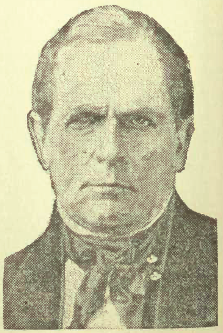
With Mackenzie absent, the village of Hope (now Sharon) became the epicenter of reform activity. This shift was led by the Children of Peace, a branch of Quakerism. Under the leadership of David Willson, the group integrated spiritual beliefs with political activism.
Samuel Hughes, a member of the group and president of Canada's first farmers' cooperative (the Farmers' Storehouse), established a "committee of vigilance" in June 1832 to nominate independent members for the Assembly. When Mackenzie returned from London in August 1833, David Willson proposed expanding this model to all four Ridings of York through a "General Convention of Delegates." This was a pioneering attempt to create a permanent political party in Upper Canada.
On February 27, 1834, the Convention took place, preceded by a "Grand Procession" featuring the province's first civilian band. While the convention successfully nominated four Reform candidates who all won their seats, it stopped short of forming a formal party, instead establishing another Political Union.
Shepard's Hall and the Reform Infrastructure
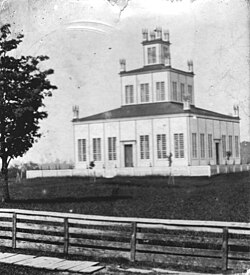
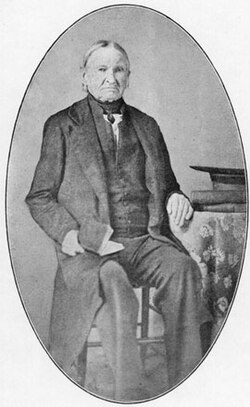
To protect their meetings from the violence of the Orange Order (a Protestant fraternal organization), reformers built a dedicated meeting space called Shepard's Hall, named after organizer Joseph Shepard. The hall moved several times, eventually settling in Turton's Building, where it shared space with Mackenzie's newspaper, The Constitution, and William O'Grady's The Correspondent & Advocate.
The reform movement rested on three pillars: the political union, the Children of Peace, and the Mechanics' Institute—a working-class educational center based on Owenite radicalism from London. Opponents of the movement mockingly referred to this coalition as the "Holy Alliance Hay Loft."
The Canadian Alliance Society and Constitutional Goals
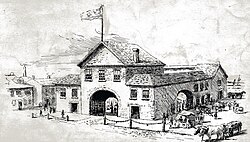
In January 1835, the movement reorganized as the Canadian Alliance Society, led by Alderman James Lesslie and Timothy Parsons. This society adopted radical platforms from England, including universal suffrage (the right of all adult citizens to vote) and the secret ballot.
The Children of Peace formed a branch of the society under Samuel Hughes, who advocated for a written provincial constitution. This proposed document aimed to make the legislative council elective and responsible, while prohibiting government officers and ecclesiastics from holding seats in the council.
The Provincial Loan Bank Proposal
One of the most practical initiatives of the Canadian Alliance Society was the call for a "Provincial Loan Office." Inspired by a credit union created by the Children of Peace in 1832, this proposed bank aimed to help pioneer farmers struggling with expenses.
Unlike the Bank of Upper Canada, which offered short-term 90-day loans, the Provincial Loan Office would provide small loans (£1 or £2) secured by the farm, with a 15-year term at 6% simple interest. This structure aligned with the agricultural cycle, allowing farmers to repay yearly after their harvest. Although a bill was drafted by Samuel Lount, Charles Duncombe, and Thomas D. Morrison, the legislative session ended before it could be passed.
The Toronto Political Union and the Road to Rebellion
The movement underwent several final transformations: it became the Constitutional Reform Society in 1836 under William W. Baldwin, and then the Toronto Political Union in October 1836. By March 1837, moderate reformers withdrew, leaving William Lyon Mackenzie to lead the remaining radicals.
The Toronto Political Union focused on the fallout of the financial panic of 1836, specifically the bankrupt Bank of Upper Canada suing indebted farmers. As the Orange Order's violence escalated, peaceable meetings were replaced by military drilling. This trajectory culminated in the Rebellion of December 7, 1837, which effectively ended the Political Union movement.
Key Facts
- Primary Goal: To achieve electoral reform and challenge the power of the Family Compact.
- Key Figures: William Lyon Mackenzie, David Willson, Thomas David Morrison, and Samuel Hughes.
- Major Organizations: Upper Canada Central Political Union, Canadian Alliance Society, and Toronto Political Union.
- Economic Innovation: Proposed a Provincial Loan Office to provide long-term, low-interest credit to farmers.
- Radical Influence: Heavily inspired by British Owenite and Chartist movements.
- Outcome: The movement's escalation and the failure of peaceful reform led to the Rebellion of 1837.
| Organization | Approx. Date | Key Leader(s) | Primary Focus |
|---|---|---|---|
| Upper Canada Central Political Union | 1832–1833 | Thomas D. Morrison | Electoral reform and petitions |
| General Convention of Delegates | 1834 | David Willson / W.L. Mackenzie | Common political platform |
| Canadian Alliance Society | 1835 | James Lesslie / Timothy Parsons | Universal suffrage and secret ballots |
| Toronto Political Union | 1836–1837 | William W. Baldwin / W.L. Mackenzie | Constitutional convention and resistance |
Frequently Asked Questions
What was the purpose of the Upper Canada Central Political Union?
It was a voluntary political organization dedicated to electoral reform and influencing the legislature, rather than simply electing candidates. It was notably radical for its time and drew inspiration from British reform movements.
Who were the Children of Peace?
The Children of Peace were a branch of Quakerism based in the village of Hope (Sharon). They provided critical leadership, organizational skills, and financial models (like credit unions) that supported the broader Reform movement.
How did the proposed Provincial Loan Bank differ from existing banks?
While the Bank of Upper Canada offered short-term 90-day loans, the proposed Provincial Loan Office offered long-term loans (up to 15 years) with yearly repayments, specifically designed to match the annual harvest cycle of pioneer farmers.
What role did the Orange Order play in this movement?
The Orange Order acted as an antagonist to the reformers, frequently attacking their public electoral meetings. This violence eventually forced reformers to seek private meeting spaces like Shepard's Hall and later contributed to the shift toward armed resistance.
What led to the end of the Political Union movement?
The movement ended following the Rebellion of December 7, 1837. The combination of electoral losses, financial panic, and increasing violence made peaceful reform appear impossible to the radical wing led by William Lyon Mackenzie.