Political Prisoners: Definitions, History, and Global Impact
A political prisoner is an individual incarcerated primarily for their political activities, beliefs, or ideas. While the official reason for their detention may be listed as a criminal offense, the underlying motivation is often the suppression of thoughts and actions that challenge existing power structures. Because there is no single, internationally recognized legal definition, the status of a political prisoner is frequently determined on a case-by-case basis by non-governmental organizations (NGOs) and scholars.
This phenomenon often intersects with the concept of a prisoner of conscience (POC), a term popularized by Amnesty International to describe individuals prosecuted specifically for their personal beliefs, without having used or advocated for violence.
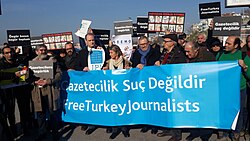
Key Facts
- Lack of Legal Consensus: There is no universally accepted legal definition of a political prisoner in international law or human rights treaties.
- State Denial: Governments accused of holding political prisoners typically deny judicial bias and claim the detainees violated codified laws.
- Advocacy Role: Organizations like Amnesty International play a critical role in identifying and advocating for the release of these individuals.
- Historical Surge: Modern political imprisonment matured between the 1860s and 1910s as global political movements became more articulated.
- Global Scale: Human rights groups report significant numbers of political prisoners in various nations, such as approximately 60,000 in Egypt.
Defining the Political Prisoner
Defining who qualifies as a political prisoner is a complex task in social science. Scholars Helen Taylor Greene and Shaun L. Gabbidon noted in 2009 that while standard legal definitions remain elusive, there is a general consensus that these individuals are sanctioned not for violating laws, but for challenging power relations.
Institutional Perspectives
Different organizations apply different criteria to identify political prisoners:
- Parliamentary Assembly of the Council of Europe: Defines a political prisoner as someone deprived of liberty for purely political reasons without a connection to any offense, or someone detained in a discriminatory manner due to political motives.
- Amnesty International: Focuses heavily on the distinction of the "prisoner of conscience," emphasizing the non-violent nature of the prisoner's beliefs.
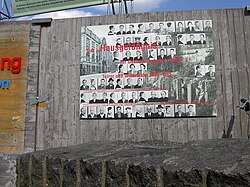
Academic Critiques
In 2020, academic Christoph Valentin Steinert reviewed 366 definitions of political prisoners. He argued that the term should be reserved exclusively for victims of state repression and politically biased trials. Steinert cautioned against defining political prisoners simply as those who commit "politically motivated actions," as this could erroneously include extremists, such as neo-Nazis or jihadist terrorists, thereby delegitimizing the term.
Historical Context and Legal Frameworks
The rise of the modern political prisoner coincided with the maturation of political movements between 1860 and 1910. During this era, movements with clear social and political programs emerged, prompting less liberal regimes to respond with incarceration rather than dialogue. For example, in Poland, these traditions became prominent during the Russian partition in the late 19th century.
While not legally binding, the Universal Declaration of Human Rights (UDHR) of 1948 serves as a global standard. Articles 5, 6, 9, and 18 are particularly relevant to the rights of political prisoners. Along with the 1975 Helsinki Accords, the UDHR provides the foundation for NGOs to argue that certain detentions are politically motivated.
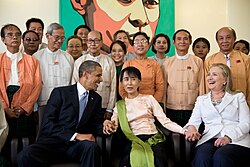
Notable Political Prisoners and Prisons
Throughout history, many individuals have been imprisoned for their activism, some later achieving significant leadership roles.
| Name | Country/Region | Context of Imprisonment |
|---|---|---|
| Nelson Mandela | South Africa | Anti-apartheid activism |
| Aung San Suu Kyi | Myanmar | Opposition to military rule |
| Jawaharlal Nehru | India | Nationalist activism against British Raj |
| Liu Xiaobo | China | Pro-democracy activism |
| Ales Bialiatski | Belarus | Human rights work (Viasna Centre) |
| Rubin "Hurricane" Carter | United States | Wrongful conviction driven by racism |

Global Examples of State Repression
Modern instances of political imprisonment continue worldwide. In Russia, individuals like Ilya Yashin and Dmitry Ivanov have been sentenced under war censorship and "fake news" laws. In Saudi Arabia, activists such as Loujain al-Hathloul have been detained for advocating women's rights.

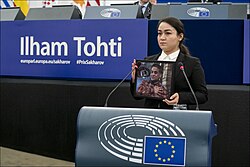
Other significant cases include Ilham Tohti, a Uyghur minority advocate serving a life sentence in China, and Hossein Rajabian, an Iranian filmmaker imprisoned in Evin Prison.

Notorious Political Prisons
Certain facilities have become symbols of political repression due to their harsh conditions and the profile of their inmates:
- Evin Prison: Iran
- Peniche Fortress: Portugal (Estado Novo)
- Peter and Paul Fortress: Imperial Russia
- Spaç Prison: Albania (forced labor camp)
- Bereza Kartuska: Interwar Poland
Frequently Asked Questions
What is the difference between a political prisoner and a prisoner of conscience?
While a political prisoner is anyone imprisoned for political activity, a prisoner of conscience is a specific subset: someone imprisoned for their beliefs who has not used or advocated for violence.
Is there an international law that defines political prisoners?
No, there is no internationally recognized legal definition. Instead, definitions are provided by various NGOs, academic scholars, and regional bodies like the Council of Europe.
Why do governments deny that they hold political prisoners?
Governments typically deny these claims to avoid international condemnation and to maintain the appearance that their judicial systems are impartial and based solely on codified law.
How do human rights organizations identify political prisoners?
Organizations like Amnesty International evaluate cases individually, looking for evidence of political bias in trials, the nature of the prisoner's activities, and whether the detention violates international human rights standards.