Plessy v. Ferguson: The Rise and Fall of 'Separate but Equal'
In 1896, the United States Supreme Court delivered a decision that would shape American society for over half a century. Plessy v. Ferguson established the legal doctrine of "separate but equal," ruling that racial segregation did not violate the U.S. Constitution as long as the facilities provided for each race were equal in quality. This ruling provided the legal foundation for the Jim Crow laws—a system of state and local laws that enforced racial segregation in the American South following the Reconstruction era.
Key Facts
- Decision Date: May 18, 1896.
- Core Doctrine: "Separate but equal" facilities are constitutional.
- Legal Basis: Upheld the Louisiana Separate Car Act of 1890.
- Court Vote: 7–1 majority against Plessy.
- Long-term Impact: Legitimized systemic segregation until the mid-20th century.
- Overruled: Effectively overturned by Brown v. Board of Education (1954).
The Incident: A Planned Challenge
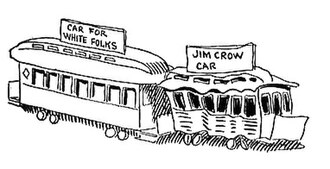
The case began in 1892 with a deliberate act of civil disobedience. Homer Plessy, a man of mixed race (identified as an "octoroon," meaning seven-eighths white and one-eighth black), boarded a whites-only train car in New Orleans. Plessy was recruited by the Comité des Citoyens (Committee of Citizens), a civil rights group composed of black, creole of color, and white creole residents dedicated to repealing the Separate Car Act of 1890.
The Separate Car Act required railroad companies to provide equal but separate accommodations for white and black passengers. Violating this act was a misdemeanor punishable by a $25 fine (approximately $895.83 in 2025) or up to 20 days in prison. Plessy was arrested and charged under this law, sparking a legal battle intended to prove the Act unconstitutional.
The Legal Journey to the Supreme Court
Plessy's legal team first challenged the ruling of Judge John Howard Ferguson. When the Louisiana Supreme Court upheld the conviction, the case was appealed to the U.S. Supreme Court. Plessy's attorneys, including Albion W. Tourgée and Samuel F. Phillips, argued that the law violated both the 13th Amendment (which abolished slavery) and the 14th Amendment (which guarantees equal protection under the law).
Tourgée specifically argued that forcing black citizens into separate cars implied a status of inferiority, which constituted a deprivation of "property" in the form of one's reputation. Conversely, the state of Louisiana, represented by Attorney General Milton Joseph Cunningham, argued for the maintenance of white supremacy.
The Supreme Court Decision
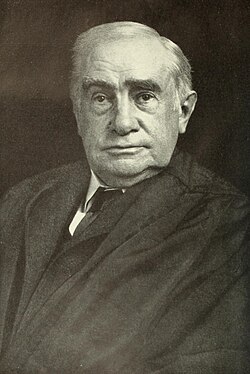
On May 18, 1896, the Supreme Court ruled 7–1 against Plessy. The majority opinion, written by Justice Henry Billings Brown, concluded that segregation did not necessarily imply the inferiority of African Americans. The Court held that as long as the facilities were equal, the 14th Amendment was not violated.
The Great Dissenter
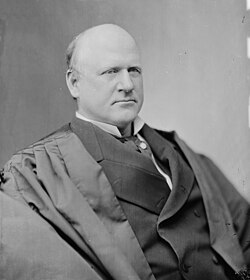
Justice John Marshall Harlan provided the sole dissenting vote. Harlan argued that the Constitution is "color-blind" and that the law should not recognize a citizen's race. He warned that the decision would lead to the encroachment of civil rights and the further marginalization of black citizens.
Aftermath and Societal Impact
Following the ruling, Homer Plessy pleaded guilty and paid the $25 fine. However, the legal precedent had a devastating effect. Southern states used the "separate but equal" doctrine to justify a wide array of segregated public spaces, from water fountains to schools.
![An Oklahoma City streetcar terminal's "colored" drinking fountain, 1939[37]](/images/58/3f/583f2c5f350a7cea86cd84f9e92dda2b063dff4e84c1f2f22509b91834af9124.jpg)
Between 1890 and 1908, many Southern states also amended their constitutions to disenfranchise black voters and poor whites through literacy tests, poll taxes, and complex registration rules. In reality, the "equal" part of the doctrine was rarely honored; facilities for African Americans were consistently inferior to those for white citizens.
| Category | Details |
|---|---|
| Case Citation | 163 U.S. 537 (1896) |
| Primary Law at Issue | Louisiana Separate Car Act of 1890 |
| Constitutional Amendments | 13th and 14th Amendments |
| Majority Opinion | Justice Henry Billings Brown |
| Dissenting Opinion | Justice John Marshall Harlan |
| Final Outcome | Upheld segregation ("Separate but Equal") |
The Path to Overturning the Precedent
The legacy of Plessy v. Ferguson began to crumble in the mid-20th century. In 1954, the landmark case Brown v. Board of Education ruled that segregation in public schools was unconstitutional, effectively killing the "separate but equal" precedent. This was followed by the Civil Rights Act of 1964 and the Voting Rights Act of 1965, which prohibited segregation in public places and ensured federal oversight of voting rights.
In a final act of historical reconciliation, the Louisiana Board of Pardons unanimously approved a posthumous pardon for Homer Plessy, which was granted by Governor John Bel Edwards on January 5, 2022.
Frequently Asked Questions
What was the "separate but equal" doctrine?
It was a legal principle established by Plessy v. Ferguson stating that racial segregation did not violate the U.S. Constitution as long as the facilities provided for each race were equal in quality.
Who was Homer Plessy?
Homer Plessy was a mixed-race man who deliberately violated Louisiana's Separate Car Act of 1890 to challenge the constitutionality of segregation in a planned test case.
Why is Justice John Marshall Harlan significant in this case?
Justice Harlan was the only Supreme Court justice to dissent, arguing that the Constitution should be color-blind and that the majority's decision would lead to systemic injustice.
When was Plessy v. Ferguson finally overturned?
While not explicitly overruled in every single context immediately, it was effectively overturned by the 1954 decision in Brown v. Board of Education, which ruled that "separate educational facilities are inherently unequal."
What were Jim Crow laws?
Jim Crow laws were state and local laws passed primarily in the American South that mandated racial segregation in all public facilities and disenfranchised black voters.