Understanding Plant Roots: The Hidden Engine of Vegetation
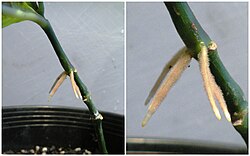
Beneath the surface of the earth lies a complex and invisible network that sustains almost every plant we see. In vascular plants, roots are specialized organs modified to provide essential anchorage and to absorb the water and nutrients necessary for the plant to grow taller and faster. While we typically associate roots with the soil, some species have evolved aerial or aerating roots that grow above the ground or water to meet specific environmental challenges.

Key Facts
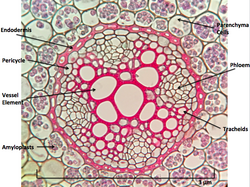
- Primary Purpose: Roots provide mechanical support and absorb water and minerals from the substrate.
- Extreme Depth: Some roots can reach depths of 68 meters, particularly in desert environments.
- Ancient Origins: The fossil record suggests roots evolved approximately 430 million years ago during the late Silurian period.
- Environmental Sensing: Roots can detect soil compaction via ethylene gas and respond to light ratios sensed by the plant's shoots.
- Symbiotic Power: Many roots form mutualistic relationships with fungi (mycorrhizae) or bacteria to enhance nutrient uptake.
The Primary and Secondary Functions of Roots

The most immediate role of a root system is anchorage. By fixing the plant firmly in its substrate, roots allow the plant to resist mechanical forces such as wind and water flow. This stability is critical for crops to prevent "lodging," which occurs when a plant is knocked over.
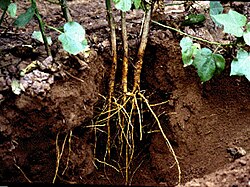
Beyond physical support, roots perform several specialized biological functions:
- Hormone Synthesis: Roots produce and modulate growth regulators, such as cytokinins and auxins, which influence the development of the shoots and overall plant physiology.
- Nutrient Acquisition: Through symbiotic interactions, such as nitrogen-fixing nodules or mycorrhizae (fungal associations), roots significantly increase their ability to acquire nutrients and tolerate environmental stress.
Root System Architecture (RSA)

Root System Architecture (RSA) refers to the spatial configuration of the root system. This layout is not random; it is designed to support the plant structurally and allow it to compete effectively with neighboring plants for nutrients. RSA is dynamic, meaning plants can adapt their root growth based on seasonal changes or soil conditions, such as shifting from dry to flooded soil.
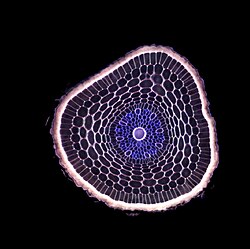
Components of Root Architecture
Scientists classify root architecture using several key metrics:
- Branching Patterns: These can be Radial, Dichotomous, or Herringbone.
- Root Angle: This includes the angle of a lateral root relative to its parent root and the overall spread of the system.
- Link Radius and Length: The diameter of the roots and the distance between branching points.
Hormonal Regulation of Growth
The growth and direction of roots are governed by a delicate balance of plant hormones:
- Auxin: Essential for the formation of lateral roots and maintaining apical dominance.
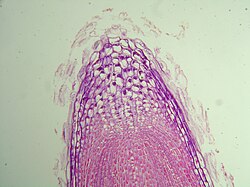
- Cytokinins: These regulate the size of the root apical meristem (the growth tip) and promote the elongation of lateral roots.
- Ethylene: Promotes the formation of crown roots and helps the plant sense soil compaction.
- Gibberellins: Work with ethylene to promote crown primordia growth and with auxin to encourage root elongation, though they can inhibit the initiation of lateral root primordia.
Growth Responses and Environmental Adaptation

Roots are highly sensitive to their environment. Through gravitropism, roots are directed to grow downward during germination. In cereal crops like wheat and barley, this process is regulated by a specific gene called Enhanced Gravitropism 1 (EGT1).
The Shade Avoidance Response
Plants have a remarkable ability to adjust their root architecture to escape shade. When a plant is surrounded by dense vegetation, it senses a lower ratio of Red to Far-Red light via photoreceptors called phytochromes. Specifically, the PhyA located in the shoot (not the root) detects this change.
Once the shoot senses shade, it stabilizes a transcription factor called HY5, which is transported to the roots via the phloem. In the roots, HY5 inhibits a response factor (ARF19), which in turn reduces the activity of auxin transporters (PIN3 and LAX3). This results in fewer lateral roots and increased downward elongation, pushing the plant to grow vertically to reach more sunlight.
Specialized Types of Roots
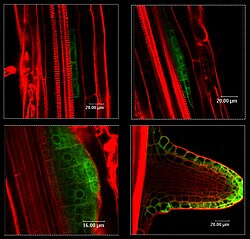
While a basic root system consists of primary and secondary (lateral) roots, many plants have evolved specialized structures for survival.
Support and Aeration
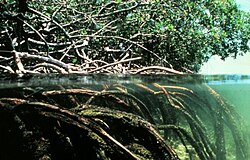
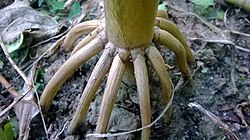
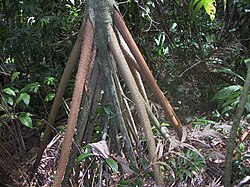
- Stilt Roots: Adventitious roots that grow from lateral branches into the soil for extra support, common in mangroves.
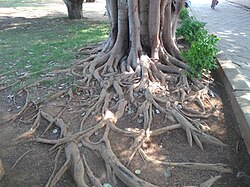
- Buttress Roots: Large, wide roots that provide mechanical stability to massive woody trees.
- Aerating Roots (Pneumatophores): Roots that grow upward out of the water or soil to allow gas exchange through breathing pores.

Storage and Nutrition
- Storage Roots: Modified to store water and food, such as the taproots of carrots and beets.
- Tuberous Roots: Fleshy lateral roots used for storage, such as sweet potatoes.
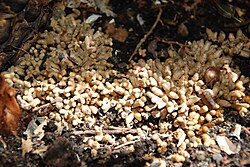
- Root Nodules: Small, rounded growths found in legumes that harbor nitrogen-fixing bacteria.
- Coralloid Roots: Branched roots found in cycads that harbor nitrogen-fixing cyanobacteria.

Other Specialized Forms
- Haustorial Roots: Used by parasitic plants (like mistletoe) to steal nutrients from a host plant.
- Photosynthetic Roots: Green roots that can produce sugar, found in some orchid species.
- Fine Roots: Roots under 2mm in diameter primarily responsible for water and nutrient uptake.
Root Depth and Global Records
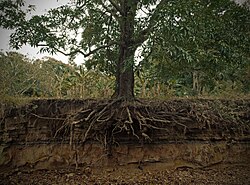
The depth of a root system depends on the plant species, soil properties, and the availability of water. While most roots remain near the surface for better aeration and nutrient access, some species in arid regions dive deep into the earth to find water.
| Species | Location | Maximum Depth (m) |
|---|---|---|
| Boscia albitrunca | Kalahari desert | 68 |
| Juniperus monosperma | Colorado Plateau | 61 |
| Eucalyptus sp. | Australian forest | 61 |
| Acacia erioloba | Kalahari desert | 60 |
| Prosopis juliflora | Arizona desert | 53.3 |
Evolution and Environmental Impact

Roots evolved from modified horizontal stems called rhizomes and simple filamentous outgrowths known as rhizoids. This evolutionary leap allowed plants to colonize land more effectively by securing themselves and accessing underground water sources.
Beyond the plant's own survival, roots play a vital role in the ecosystem. They protect the environment by binding the soil together, which significantly reduces soil erosion and stabilizes slopes prone to landslides.

Frequently Asked Questions

How do roots know to grow downward?
Roots exhibit a behavior called gravitropism, which is the growth response to gravity. This mechanism ensures that roots grow toward the earth's center to access water and nutrients, while shoots grow upward toward the light.
What is the difference between a taproot and a fibrous root system?
A taproot system features one primary, dominant root that grows deep into the soil, with smaller secondary roots branching off it. A fibrous root system consists of many thin, moderately branching roots that grow in a dense mat close to the soil surface.
How do parasitic plants get nutrients?
Parasitic plants use specialized structures called haustorial roots. These roots penetrate the tissues of a host plant, allowing the parasite to absorb water and nutrients directly from the host's vascular system.
Can roots actually "see" light?
While roots are generally not photosynthetic, they can respond to light. Research shows that light can inhibit root elongation and that some roots exhibit negative phototropism (growing away from light). However, complex responses like shade avoidance are triggered by phytochromes in the shoots, not the roots themselves.
Why do some plants have roots that grow above ground?
Aerial or aerating roots (pneumatophores) evolve in environments where the soil is waterlogged and lacks oxygen. These roots grow upward to reach the air, allowing the plant to "breathe" through specialized pores.