Plains Indians: The Evolution of Horse Culture and the Bison Slaughter
The history of the Great Plains is a saga of adaptation, resilience, and profound transformation. Long before the arrival of Europeans, the earliest inhabitants of the region balanced a lifestyle of hunting and gathering with the development of horticulture and agriculture. By approximately 700 CE, maize—originally from Mesoamerica—had spread from the Southwest to become a staple crop in the southern Plains, supporting the growth of sedentary villages and towns.
Central to the survival of these peoples was the American bison (or buffalo). These animals provided nearly everything necessary for daily life, including food, clothing, and tools. To keep pace with the seasonal migrations of the herds, many tribes adopted a nomadic existence, living in tipis—conical tents that could be easily disassembled and transported.
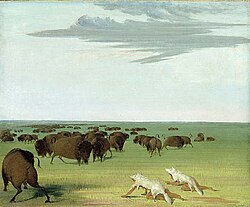
Key Facts
- Maize Integration: Agriculture became widespread in the southern Great Plains around 700 CE.
- The Horse Revolution: Reintroduced by the Spanish in the 16th century, horses transformed nomadic efficiency and social structures.
- Bison Dependency: Bison provided food, shelter, and tools, forming the economic backbone of Plains cultures.
- Devastating Disease: Smallpox is estimated to have killed between one-half and two-thirds of the Plains Indian population prior to the Louisiana Purchase.
- Systemic Slaughter: The U.S. government promoted the extermination of bison to weaken Native American resistance and clear land for cattle.
Early Encounters and Tribal Migrations
The first European account of Plains culture came from Spanish explorer Francisco Vásquez de Coronado. In 1541, while searching for the wealthy land of Quivira, Coronado encountered the Querechos (later known as the Apache) in the Texas panhandle. He documented their use of skin tepees, travois (sleds pulled by dogs), and staple foods like pemmican (a concentrated mixture of fat and protein) and jerky.
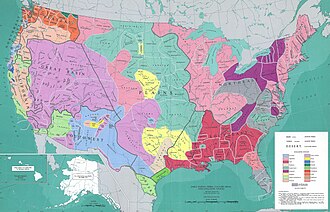
Tribal territories shifted over centuries due to migration and conflict. The Siouan speakers, possibly originating in the lower Mississippi region, were pushed west by the Ojibwe and Cree in the 17th century, leading to the rise of the Lakota (Teton Sioux). Similarly, the Shoshone moved from the Great Basin into the Plains by 1500; pressure from other tribes eventually pushed some south, where they emerged as the Comanche by 1700.
The Impact of the Horse
Horses had gone extinct in the Americas roughly 13,000 to 15,000 years prior, making their 16th-century reintroduction a cultural catalyst. While Hernán Cortés brought a few horses in 1519, it was Juan de Oñate's 1592 expedition—which included mares—that provided the foundation for breeding herds.
The Pueblo Revolt of 1680 served as a turning point, as thousands of horses were captured and traded north. By the 1730s, the Comanche had fully committed to a mounted nomadic lifestyle, allowing them to dominate the southern Plains. The horse increased the ease of bison hunting and the ability to transport goods, though it also introduced social stratification. Wealthy men often acquired multiple wives and captives to help manage large herds, shifting previously egalitarian societies toward a wealth-based hierarchy.
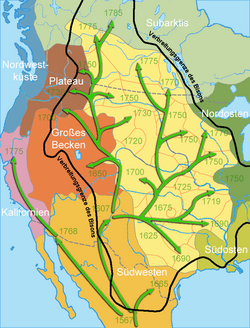
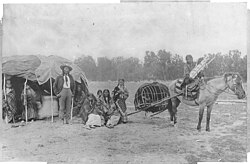
Regional Variations in Horse Culture
- Southern Plains: Milder winters supported large pastoral economies. Comanche and Kiowa families averaged 35 horses and mules each.
- Northern Plains: Severe winters limited herd sizes, leaving some tribes more dependent on dogs and foot-hunting, which increased raiding for surviving horses.
- The Lakota: Occupying a middle ground, the Lakota maintained moderate herds and controlled prime bison ranges, trading furs for European guns to become a dominant power by the mid-19th century.
The Systematic Slaughter of the Bison
For the Lakota and other tribes, life revolved around the communal bison hunt. Large gatherings in June and July featured the Sun Dance and political councils, while autumn was dedicated to procuring winter meat. However, this way of life was targeted by the U.S. government.
![This painting by Alfred Jacob Miller portrays Plains Indians chasing buffalo over a small cliff.[14] The Walters Art Museum.](/images/a3/2a/a32ab9f0b2d7698e448f7a916ee19e3a409e8ddaacdae47f688d06910fbbabac.jpg)
The federal government encouraged the mass killing of bison to force Native Americans onto reservations by destroying their primary food source. Additionally, the railroad industry sought to eliminate herds that blocked tracks or damaged locomotives. Bison were slaughtered primarily for their skins, while their bones were later collected and shipped east.
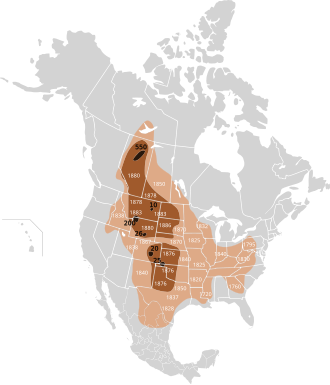
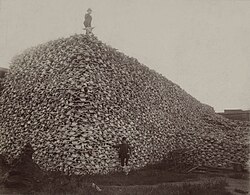
Despite warnings from figures like Buffalo Bill Cody, protection efforts were blocked. In 1874, President Ulysses S. Grant vetoed a protection bill, and General Philip Sheridan advocated for the slaughter to deprive the Plains Indians of sustenance. By the early 1900s, millions of bison had been reduced to a few hundred.
| Metric | Effect on Bison-Reliant Nations | Comparison to Non-Bison Nations |
|---|---|---|
| Child Mortality | Increased | Lower in non-reliant nations |
| Employment | Higher unemployment | Lower unemployment |
| Per Capita Income | 25% lower (late 20th century) | Higher |
| Physical Stature | Loss of height advantage | Maintained relative height |
The Indian Wars and Wounded Knee
The late 19th century was marked by the Indian Wars, including the Dakota, Great Sioux, Snake, and Colorado Wars. As the U.S. government seized more land, desperation grew. This led to the Ghost Dance movement, founded by the Northern Paiute leader Wovoka. The ritual promised that righteous living would cause colonists to vanish, the bison to return, and the dead to be reunited with the living.
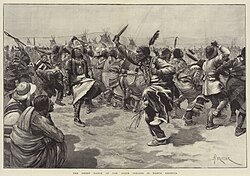
This spiritual movement was viewed as a threat by the U.S. Army. On December 29, 1890, at Wounded Knee, South Dakota, gunfire erupted during an attempt to subdue the Lakota. The resulting massacre left up to 300 Indians dead, the majority of whom were women, children, and elderly men.
Frequently Asked Questions
How did the horse change the social structure of Plains tribes?
The horse introduced wealth disparity into previously egalitarian societies. Men who owned large herds gained prestige and power, often taking multiple wives and captives to assist in managing their livestock.
Why did the U.S. government want the bison exterminated?
The government aimed to weaken the Plains Indians by destroying their primary food and economic source, thereby forcing them to move onto reservations. Railroad companies also wanted them removed to prevent delays and accidents on the tracks.
What was the Pueblo Revolt of 1680?
It was an uprising in New Mexico that resulted in the capture of thousands of Spanish horses. These animals were then traded north, accelerating the spread of horse culture across the Great Plains.
What was the purpose of the Ghost Dance?
The Ghost Dance was a religious movement intended to bring peace and prosperity. Practitioners believed it would reunite the living with the dead, bring back the bison, and cause European American colonists to disappear.
Which tribe first fully adopted the mounted nomadic lifestyle?
The Comanche were among the first to commit to a fully mounted lifestyle by the 1730s, using their horses to dominate the southern Great Plains south of the Arkansas River.