Pink Lady and Jeff: The Chaotic Production of a Cult Variety Show
In the late 1970s, the American television landscape was dominated by the variety show format. When Fred Silverman, then president and CEO of NBC, sought to replicate his previous successes at ABC and CBS, he looked toward an unlikely source of inspiration: the Japanese pop duo Pink Lady. After seeing a news segment featuring the duo on the CBS Evening News, Silverman believed their massive success in Japan could be translated for an American audience.
To bring this vision to life, NBC enlisted the production expertise of Sid and Marty Krofft. At the time, Pink Lady had achieved a modest breakthrough in the U.S., with their song "Kiss in the Dark" peaking at no. 37 on the Billboard Hot 100 in August 1979. However, the production was plagued by misconceptions from the start, most notably the false belief that the duo was fluent in English.
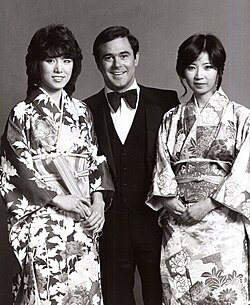
Key Facts
- Origin: Conceived by NBC CEO Fred Silverman and produced by Sid and Marty Krofft.
- Language Barrier: Mie and Kei were not fluent in English, requiring on-set translators and phonetic lip-syncing.
- Host: Comedian Jeff Altman was hired to carry the show's comedy due to the leads' language limitations.
- Musical Hit: The duo's only U.S. top-40 hit was "Kiss in the Dark" (No. 37, 1979).
- Recurring Gag: Every episode ended with Jeff Altman being pushed or pulled into a hot tub.
Production Challenges and Creative Friction
The Language Gap
The most significant obstacle during production was the language barrier. Mie and Kei relied on translators for all English conversations. This created a rigid environment for the writing staff, led by head writer Mark Evanier; once dialogue was learned by the performers, it could not be altered. This lack of flexibility was particularly difficult when guest stars, such as Lorne Greene, were booked only hours before taping.
Furthermore, NBC insisted that the duo perform in English rather than their native Japanese. This forced Mie and Kei to record songs phonetically and use lip-syncing (the act of matching lip movements to a pre-recorded track), a common practice at the time that became glaringly obvious due to the language difference.
Identity and Performance
The network attempted to force separate stage personalities onto Mie and Kei to give them individual identities. However, the duo's established act was based on performing in perfect unison as a single entity, making them uncomfortable with the network's direction. Because they were frequently commuting to Japan for sold-out concerts, their time on set was limited to memorizing routines. Consequently, the comedic heavy lifting fell to Jeff Altman and ensemble members Jim Varney, Cheri Steinkellner, and Anna Mathias.
Guest Stars and Musical Acts
By 1980, the variety show genre was in decline. Because Pink Lady was not yet a household name in the U.S., booking A-list talent was difficult. Some stars, including Larry Hagman, were secured through significant monetary incentives. Others appeared due to previous relationships with the Kroffts, such as Florence Henderson, Donny Osmond, Red Buttons, and Bobby Vinton.
To reduce the need for live performances, the show utilized pre-recorded music videos. Alice Cooper provided an original performance as a favor to the producers, while videos from Cheap Trick ("Dream Police") and Blondie ("Shayla" and "Eat to the Beat") were featured.
| Role/Category | Key Personnel/Details |
|---|---|
| Executive/Producer | Fred Silverman, Sid & Marty Krofft |
| Host | Jeff Altman |
| Head Writer | Mark Evanier |
| Director | Art Fisher |
| Notable Guests | Larry Hagman, Alice Cooper, Lorne Greene |
The Title Controversy and Final Gags
The show suffered from a branding identity crisis. While the onscreen title was simply Pink Lady, it was frequently called Pink Lady and Jeff. Jeff Altman pushed for his name to be included since he carried the majority of the show, and NBC agreed. However, Pink Lady's manager threatened legal action if "and Jeff" appeared in the official title. This resulted in a confusing mix of promos and TV Guide listings where the name varied depending on the medium.
The series also featured a repetitive closing segment where Jeff Altman was lured or pushed into a hot tub by Mie and Kei. This gag was a carry-over from Sid Krofft's work on The Brady Bunch Hour. Despite Altman's attempts to remove the segment, it remained a staple of the show, largely because it allowed the audience to see the duo in bikinis.
Frequently Asked Questions
Why was Jeff Altman hired as the host?
Altman was hired because the lead performers, Mie and Kei, did not speak English. He was brought in to handle the comedic elements and carry the show's dialogue.
How did Pink Lady handle singing in English?
Because NBC insisted they perform in English, the duo recorded the songs phonetically and lip-synced during the taping of the show.
Why was the show's title inconsistent?
There was a conflict between Jeff Altman, who wanted his name in the title, and Pink Lady's manager, who threatened a lawsuit if "and Jeff" was added. This led to different titles being used in promos versus print advertisements.
Who were some of the musical guests featured on the show?
The show featured music videos and performances from artists such as Alice Cooper, Cheap Trick, and Blondie.
What was the recurring ending of each episode?
Each episode concluded with a gag where Jeff Altman was pushed, pulled, or lured into an on-set hot tub by Mie and Kei.