Pierre de Rigaud, Marquis de Vaudreuil: The Last Governor General of New France
Pierre de Rigaud, marquis de Vaudreuil-Cavagnial, was a pivotal figure in the twilight of French colonial power in North America. A career military officer and seasoned administrator, Vaudreuil served as a bridge between the diverse territories of the French Empire, holding high-ranking governorships in Trois-Rivières, Louisiana, and ultimately as the final Governor General of New France.
Born in Quebec on November 22, 1698, Vaudreuil was the son of Philippe de Rigaud Vaudreuil, a former Governor General, and Louise-Élisabeth, daughter of Pierre de Joybert de Soulanges et de Marson. His upbringing in the heart of the colony prepared him for a life of service to the French Crown under King Louis XV.
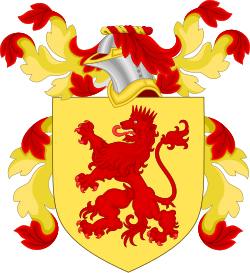
Key Facts
- Roles: Served as Governor of Trois-Rivières (1733–1742), Governor of Louisiana (1743–1753), and Governor General of New France (1755–1760).
- Military Rank: Captain in the French Navy.
- Major Conflict: Led New France during the Seven Years' War (known in the U.S. as the French and Indian War).
- Final Act: Surrendered Montreal to Major-general Jeffrey Amherst on September 8, 1760.
- Honors: Recipient of the Order of Saint Louis Grand-Croix.
Colonial Career and Administration
Vaudreuil's ascent through the colonial hierarchy was steady. After being commissioned into the French Royal Army as a youth, he received the Cross of St. Louis in 1730. His administrative capabilities were first tested as the governor of Trois-Rivières starting in 1733.
From May 10, 1743, to February 9, 1753, Vaudreuil served as the 10th French Governor of Louisiana. During this decade, he established himself as a capable administrator and skilled officer. It was also during his tenure in Louisiana that he married Jeanne-Charlotte de Fleury Deschambault, a widow approximately 15 years his senior.
The Final Governorship of New France
In 1755, King Louis XV appointed Vaudreuil as the 13th Governor General of New France. While he held supreme civil authority and was technically the commander-in-chief of all French forces in the region, his leadership was marred by internal conflict. Vaudreuil frequently clashed with Montcalm, the military commander in the field.
The mutual detestation between Vaudreuil and Montcalm significantly hindered the French war effort. Following the defeat of Montcalm by Major-general James Wolfe at the Battle of the Plains of Abraham in Quebec City, Vaudreuil attempted to organize a continued resistance. However, these efforts failed, leading to the surrender of Montreal to Major-general Jeffrey Amherst in 1760.
Trial, Exoneration, and Later Life
Following the loss of the colony, Vaudreuil became one of several scapegoats for France's failures in the New World. He was imprisoned in the Bastille on March 30, 1762, alongside other officials including Bigot and Cadet. Out of 21 men brought to trial, Vaudreuil was eventually exonerated by a military tribunal in December 1763.
Despite his exoneration and the granting of a pension and military decoration, the legal battles and the loss of his position ruined his personal fortunes. He sold his Canadian seigneuries (land grants) at Vaudreuil and Rigaud to his cousin, Michel Chartier de Lotbinière, and retired to his ancestral estate near Rouen. He passed away in Paris on August 4, 1778, at the age of 79.
Family and Social Legacy
Vaudreuil's family continued to play a role in international affairs; his nephew, Louis-Philippe de Vaudreuil, served as second-in-command of French naval units supporting the Americans during the American Revolution, participating in the victory at the Battle of the Chesapeake in 1781.
Historically, Vaudreuil is also noted as one of three governors-general of Canada to have owned enslaved people. During his time in office, he owned 16 individuals, 13 of whom were Africans.
Summary of Administrative Tenure
| Position | Location | Term | Preceded By | Succeeded By |
|---|---|---|---|---|
| Governor | Trois-Rivières | 1733–1742 | Josué Dubois Berthelot de Beaucours | Claude-Michel Bégon de la Cour |
| Governor | Louisiana | 1743–1753 | Jean-Baptiste Le Moyne | Louis Billouart de Kerlérec |
| Governor General | New France | 1755–1760 | Marquis Du Quesne | Jeffrey Amherst (as Gov. of Quebec) |
Frequently Asked Questions
Who was Pierre de Rigaud, Marquis de Vaudreuil?
He was a French military officer and colonial administrator who served as the final Governor General of New France and previously as the Governor of Louisiana and Trois-Rivières.
Why did Vaudreuil clash with Montcalm?
Vaudreuil held supreme civil authority and was technically the commander-in-chief, while Montcalm was the military commander in the field. Montcalm resented Vaudreuil's oversight, leading to a mutual dislike that negatively impacted the French war effort.
What happened to Vaudreuil after the fall of New France?
He was imprisoned in the Bastille in 1762 as a scapegoat for France's losses. However, he was exonerated by a military tribunal in 1763 and granted a pension before retiring to France.
Did Vaudreuil own enslaved people?
Yes, he was one of three governors-general of Canada known to have owned enslaved people, possessing 16 people, 13 of whom were Africans.
How did Vaudreuil's career end?
His career ended with the surrender of Montreal to the British in 1760, marking the end of French rule in New France.