Picts of Early Medieval Scotland: History, Culture, and Art
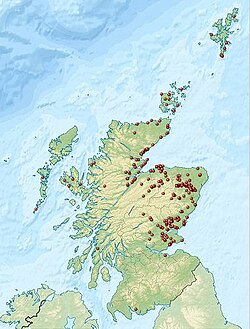
The Picts were a collection of peoples inhabiting the region of modern-day Scotland north of the Firth of Forth during the Early Middle Ages. Known for their enigmatic symbol stones and sophisticated metalwork, the Picts left a lasting imprint on the landscape of northern Britain. While much of their internal history remains a mystery, a combination of early medieval texts and archaeological finds allows historians to reconstruct their journey from tribal chiefdoms to a unified kingdom.
The term Picti first appeared in written records in the late third century AD as an exonym—a name given to them by outsiders. They are widely believed to be the descendants of the Caledonii and other Iron Age tribes of the north. Over time, the territory they occupied became known as "Pictland."
Key Facts
- Location: North of the Firth of Forth in present-day Scotland.
- Origins: Likely descendants of the Caledonii and northern Iron Age tribes.
- Political Evolution: Transitioned from various chiefdoms to the dominant kingdom of Fortriu, eventually merging into the Kingdom of Alba.
- Language: An Insular Celtic language related to Brittonic, later replaced by Middle Gaelic.
- Legacy: Famous for distinct symbol stones and high-status silver craftsmanship.
The Political Evolution of Pictland
Initially, Pictland was composed of several independent chiefdoms. However, by the seventh century, the Kingdom of Fortriu rose to prominence, establishing a hegemony over the region. During this period of Verturian dominance, the name Picti transitioned from an external label to an endonym—a name the people used for themselves.
This political structure persisted for approximately 160 years. The era of independent Pictish rule concluded when the Pictish kingdom merged with the kingdom of Dál Riata to form the Kingdom of Alba, which was governed by the House of Alpin. Although the concept of "Pictish kingship" survived for a few more decades, it was officially abandoned during the reign of Caustantín mac Áeda.
Society and Culture
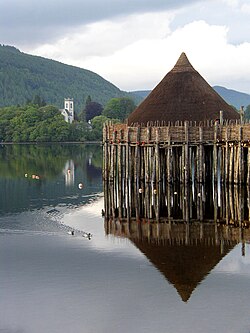
Pictish society mirrored many other early medieval cultures in northern Europe. They lived in various settlements, including crannogs—artificial islands built in lochs for defense and habitation.
Their social structure was typical of the era, with a hierarchy of chiefs and kings. Much of what we know about their daily lives comes from archaeology and the writings of outside observers, such as the historian Bede, the Irish annals, and the hagiographies (biographies of saints) written by Adomnán regarding Saint Columba.
Language and Literacy
Evidence suggests the Picts spoke an Insular Celtic language. This tongue was closely related to the Brittonic languages spoken by the Celtic Britons to the south. However, starting in the late ninth century, the Pictish language was gradually displaced by Middle Gaelic as part of a broader process of Gaelicisation across the region.
Pictish Art and Material Culture
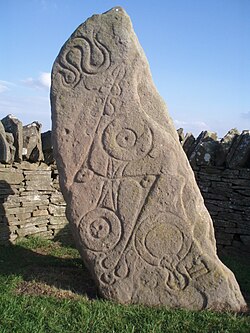
The Picts are most famous for their distinct artistic style, characterized by intricate carvings and high-quality metalwork. Their art is primarily categorized through their stone monuments, ranging from simple symbol stones to complex cross slabs.
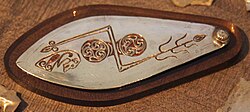
Class I stones feature a unique vocabulary of abstract symbols, such as the serpent, the double disc and Z-rod, and the mirror and comb. These symbols are also found on smaller luxury items, such as silver plaques.
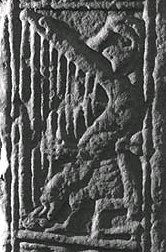
As the culture evolved and Christianity spread, Class II stones appeared, combining traditional Pictish symbols with Christian crosses and figurative scenes.
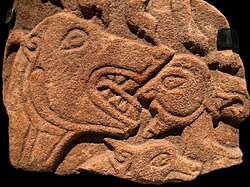
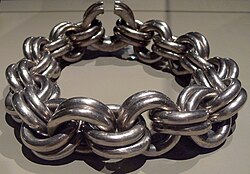
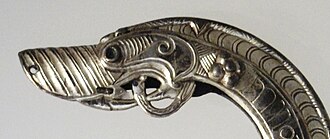
Beyond stone, the Picts were master goldsmiths and silversmiths. Their high-status items include elaborate brooches and rare silver chains, reflecting a society with significant wealth and trade connections.
Summary of Pictish History
| Feature | Details |
|---|---|
| Primary Region | North of the Firth of Forth, Scotland |
| Key Political Entity | Kingdom of Fortriu (dominant from 7th century) |
| Language Family | Insular Celtic (Brittonic related) |
| Successor State | Kingdom of Alba (merged with Dál Riata) |
| Defining Art | Symbol stones and intricate silverwork |
Frequently Asked Questions
Who were the Picts?
The Picts were a group of early medieval peoples living in northern Scotland. They are believed to be descendants of Iron Age tribes like the Caledonii and are known for their unique symbol stones.
What happened to the Pictish language?
The Pictish language, which was an Insular Celtic tongue related to Brittonic, was gradually replaced by Middle Gaelic starting in the late ninth century.
How did the Kingdom of Alba form?
The Kingdom of Alba was created through the merger of the Pictish kingdom and the kingdom of Dál Riata, eventually coming under the rule of the House of Alpin.
What are Pictish symbol stones?
These are stone monuments featuring a specific set of symbols (such as the Z-rod or crescent) used by the Picts. They evolved from simple symbol-only stones (Class I) to those incorporating Christian crosses (Class II).
Where did the Picts live?
They inhabited the area of Scotland north of the Firth of Forth, a region modern historians refer to as "Pictland."