Photovoltaic Power Systems and Components
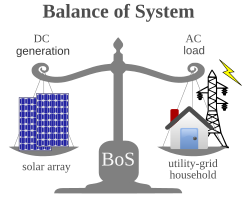
Photovoltaic (PV) power systems convert sunlight directly into electricity using semiconductor materials. These systems range from small, portable chargers to massive utility-scale power plants that feed thousands of homes. At its core, a PV system is a combination of a power-generating subsystem—the solar array—and a Balance of System (BOS), which consists of the electrical components required to make the energy usable for household devices or the utility grid.
Key Facts
- Efficiency: Consumer solar panels typically reach up to 17% efficiency, while commercial panels can reach 27%. Specialized concentrator cells have achieved 44.7% efficiency.
- System Scale: Installations vary from residential rooftops and building-integrated PV (BIPV) to utility-scale solar farms.
- Inverter Types: String inverters hold the largest market share (61.6%), followed by central inverters (36.7%).
- Lifespan: Solar panels generally last between 25 to 30 years, while battery storage systems typically have a shorter lifespan of around 10 years.
The Solar Array: From Cells to Modules
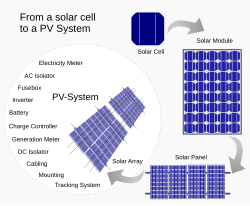
The fundamental unit of a PV system is the solar cell. Because a single cell produces a low voltage (typically around 0.5V), multiple cells are wired in series to create a "laminate." This laminate is then encased in a weatherproof enclosure to form a photovoltaic module, commonly known as a solar panel.
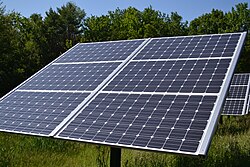
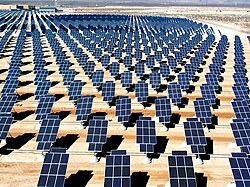
When multiple modules are connected together, they form a photovoltaic array. The performance of these arrays is influenced by several environmental factors:
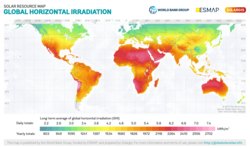
- Insolation: The amount of solar radiation reaching a given area.
- Shading and Dirt: Dust, debris, and shadows can significantly reduce energy output, necessitating regular cleaning.
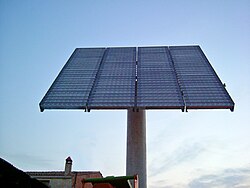
- Mounting and Tracking: While many systems use fixed tilts, dual-axis trackers can follow the sun's movement to maximize energy capture.
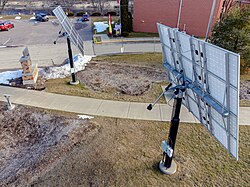
System Scale and Integration
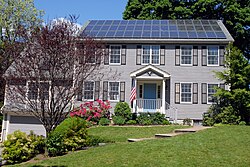
PV systems are categorized by their size and how they are integrated into the environment.
Utility-Scale and Commercial Systems
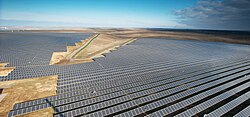
Utility-scale systems are massive power stations, such as the Topaz solar plant, designed to provide power to the grid. These often utilize central inverters and vast arrays of modules.
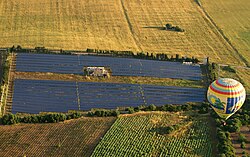
Rooftop and Portable Systems
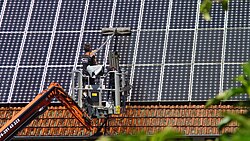
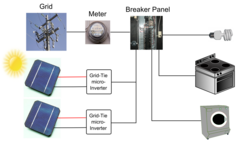
Residential systems are typically installed on rooftops. These can be grid-connected, allowing homeowners to sell excess energy back to the utility, or standalone systems for remote areas.
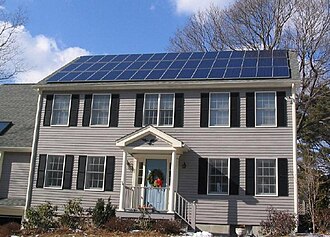
Building-Integrated Photovoltaics (BIPV)
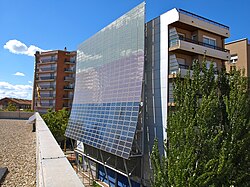
BIPV refers to solar materials used to replace conventional building materials, such as solar shingles or PV-integrated balcony railings, blending energy generation directly into the architecture.
Balance of System (BOS) Components
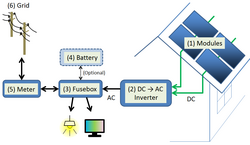
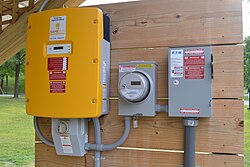
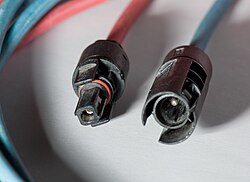
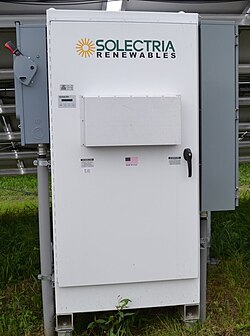
The BOS comprises all components of a PV system other than the solar panels. The most critical component is the inverter, which converts the Direct Current (DC) produced by the panels into Alternating Current (AC) used by most appliances.
Inverter Comparison
| Type | Power Capacity | Efficiency | Market Share | Remarks |
|---|---|---|---|---|
| String Inverter | Up to 150 kWp | 98% | 61.6% | Cost €0.05-0.17/Wp; easy to replace. |
| Central Inverter | Above 80 kWp | 98.5% | 36.7% | Used in large-scale plants. |
| Micro-inverter | Module range | 90–97% | 1.7% | Installed on individual modules. |
| DC/DC Converter | Module range | 99.5% | 5.1% | Also known as power optimizers. |
Specialized PV Technologies
Beyond standard silicon panels, several advanced configurations exist to optimize energy production:
- Concentrator Photovoltaics (CPV): These use lenses or curved mirrors to focus sunlight onto small, highly efficient cells.
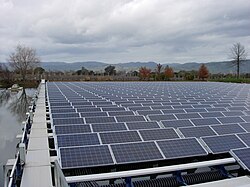
- Floating Solar (Floatovoltaics): Arrays installed on bodies of water, such as irrigation ponds, which can save land space and reduce water evaporation.
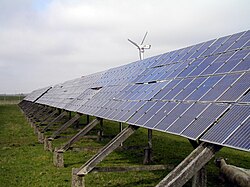
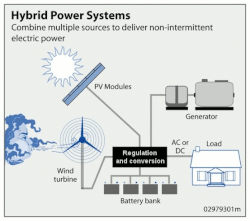
- Hybrid Systems: Systems that combine PV with other energy sources, such as wind turbines, to ensure a more consistent power supply.
Economics and Performance
The financial viability of a PV system depends on the Levelized Cost of Electricity (LCOE) and local insolation levels. In 2013, installation costs varied significantly by region, with Germany showing lower costs per watt compared to the United States and Japan.
For a typical residential system, the return on investment is calculated by comparing the cost of the installation against the annual energy savings. While panels may last up to 30 years, other components like batteries require replacement every decade.
Frequently Asked Questions
What is the difference between a solar module and a solar array?
A solar module (or panel) is a single weatherproof unit made of several connected solar cells. A solar array is a larger collection of these modules linked together to produce a higher total power output.
How does a string inverter differ from a micro-inverter?
A string inverter handles the DC-to-AC conversion for a whole group (string) of panels. A micro-inverter is attached to each individual panel, converting power at the source, which can improve efficiency if some panels are shaded.
What is anti-islanding?
Anti-islanding is a safety feature in grid-connected inverters that automatically shuts down the system if the utility grid fails. This prevents the PV system from feeding electricity into a "dead" grid, which could endanger utility workers.
Can solar panels work in cloudy or dirty conditions?
Yes, but their efficiency drops. Dirt and shading block sunlight from reaching the cells, which is why regular cleaning and strategic placement are necessary to maintain optimal performance.