Philip Jaffe: The Businessman, Journalist, and the Amerasia Affair
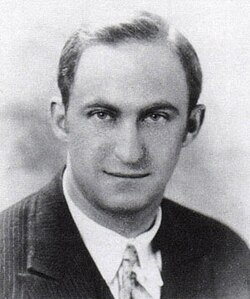
Philip Jaffe lived a life of striking contradictions: a successful American entrepreneur who simultaneously operated as a key conduit for Communist propaganda and a target of federal espionage investigations. From his early years as an immigrant in New York City to his high-stakes travels in revolutionary China, Jaffe occupied a unique space between the corporate world and the radical left during the mid-20th century.
Early Life and Business Success
Born on March 20, 1895, in Mogileb, Russian Empire, Philip Jaffe was the son of Morris Jaffe, a Jewish lumberjack. After experiencing a pogrom in 1905, Philip and his mother joined his father in New York City in 1906. Jaffe was an academically ambitious youth, graduating from the selective Townsend Harris Hall in 1913 before pursuing studies in electrical engineering and English literature at the City College of New York and Columbia University.
While his academic path was interrupted by low grades and military service in 1918, Jaffe found his footing in the business world. After a partnership with Wallace Brown dissolved, Jaffe took full control of the Wallace Brown Corporation. He transformed the company into a profitable stationery and greeting card distributor, utilizing a mail-order system and a door-to-door sales force of housewives. By the late 1940s, his business was grossing between $5 million and $6 million annually.
Political Awakening and the China Connection
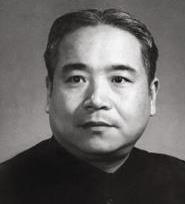
Jaffe's entry into radical politics was catalyzed by his relationship with Chi Ch'ao-ting (Ji Chaoding), a translator for the Chinese delegation to the Communist International and husband to Jaffe's cousin. Chi introduced Jaffe to communism and the complexities of Chinese politics, leading Jaffe to join the International Labor Defense (ILD) in 1931.
Although Jaffe was never a formal member of the Communist Party USA (CPUSA), he became a prominent "fellow traveler"—a term used to describe sympathizers who supported the party's goals without official membership. He maintained close ties with party leader Earl Browder and various pro-communist organizations, including the League of Soviet American Friendship.
China Today and Amerasia
In 1933, Jaffe became the Executive Secretary and editor of China Today, the organ of the American Friends of the Chinese People (AFCP). The publication relied heavily on materials smuggled from the Chinese Communist Party underground in Shanghai. Seeking a more moderate image, Jaffe and Frederick Vanderbilt Field launched Amerasia in 1937. While presented as a less overtly Communist successor to China Today, Jaffe continued to use the journal to promote the party line.
Journey to Yan'an
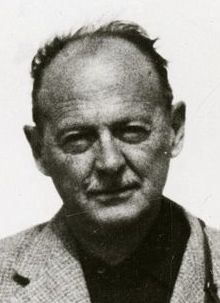
In April 1937, Jaffe traveled to the Far East. In Beijing, he connected with a circle of Westerners interested in the Chinese revolution, including Edgar Snow and Owen Lattimore. In mid-June 1937, Jaffe traveled to Yan'an, the headquarters of the Chinese Communists.
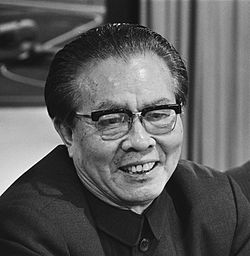
During this visit, Jaffe met with pivotal leaders including Mao Zedong, Zhu De, and Zhou Enlai. He used these meetings to probe Mao's commitment to the party line, later reporting his findings in The New Masses.
The Amerasia Affair and Espionage Charges
The trajectory of Jaffe's career shifted dramatically in 1945. An official noticed that Amerasia had published a verbatim quote from a secret Office of Strategic Services (OSS) report. This discovery led to a series of raids by the OSS and a subsequent FBI investigation involving wiretaps and hidden microphones.
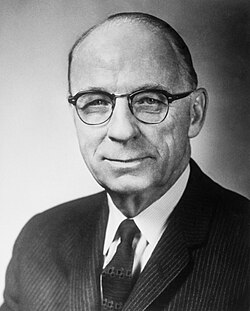
The investigation focused on the leak of classified documents from the U.S. Department of State. A key point of contention was a meeting between Jaffe and State Department official John S. Service, who provided Jaffe with memos regarding the Kuomintang (the Nationalist party of China). While Service claimed the documents were factual and not classified, the FBI viewed the exchange as a security breach.
In June 1945, Jaffe and several others were arrested. Because the OSS had obtained evidence through illegal burglaries, the evidence was considered tainted. Consequently, espionage charges were dropped. Jaffe eventually pleaded guilty to the lesser charge of concealing government documents and paid a $2,500 fine.
Key Facts
- Business Success: Jaffe ran the Wallace Brown Corporation, which peaked at $5–6 million in annual gross revenue.
- Political Role: He edited China Today and Amerasia, promoting the Chinese Communist party line.
- High-Level Access: Jaffe personally met with Mao Zedong, Zhu De, and Zhou Enlai in Yan'an in 1937.
- Legal Conflict: He was central to the "Amerasia affair," resulting in a conviction for concealing government documents.
- Later Works: He authored The Rise and Fall of American Communism (1975).
| Role/Entity | Nature of Activity | Key Period |
|---|---|---|
| Wallace Brown Corp. | President/Owner (Stationery & Greeting Cards) | 1920s – 1950s |
| China Today | Executive Secretary and Editor | 1933 – 1937 |
| Amerasia | Co-founder and Editor | 1937 – 1947 |
| CPUSA Associate | "Fellow Traveler" / Political Ally | 1930s – late 1940s |
Later Years and Reflection
Following the Amerasia scandal and the rise of McCarthyism, Jaffe's public profile declined. He faced further legal challenges, including a contempt of Congress charge in the early 1950s after invoking the Fifth Amendment during congressional hearings. By the late 1940s, he had severed his ties with the CPUSA.
In his final years, Jaffe reflected on his political journey with a critical eye. In his unpublished autobiography, Odyssey of a Fellow Traveler, he admitted that many, including himself, had romanticized the radicalism of the 1930s without acknowledging its "absurdities, illusions and self-deceptions."
Frequently Asked Questions
Was Philip Jaffe ever a member of the Communist Party?
No, Jaffe was never an official member of the Communist Party USA (CPUSA), though he was a close associate of its leaders and a "fellow traveler" who supported its goals.
What was the Amerasia affair?
The Amerasia affair was a 1945 espionage investigation involving the journal Amerasia. It centered on the illegal acquisition and publication of classified U.S. government documents regarding policy in China.
Who did Jaffe meet during his trip to Yan'an?
Jaffe met with the top leadership of the Chinese Communist Party, including Mao Zedong, Zhu De, and Zhou Enlai.
What happened to Jaffe after the espionage investigation?
Jaffe pleaded guilty to concealing government documents and paid a fine. He later faced contempt of Congress charges during the McCarthy era but eventually faded from public life, focusing on his business and writing.
What was the purpose of the journal Amerasia?
Amerasia was established as a more moderate successor to China Today, intended to be less openly Communist while still presenting the Communist party line to a wider audience.