Pharyngeal Slits and Arches: Evolution and Development in Deuterostomes
In the diverse world of deuterostomes—a major group of animals that includes humans, fish, and starfish—one of the most fascinating anatomical features is the pharyngeal slit. These repeated openings, located along the pharynx (the part of the throat behind the mouth), serve as a critical link between ancient filter-feeding ancestors and the complex respiratory and skeletal systems of modern vertebrates.
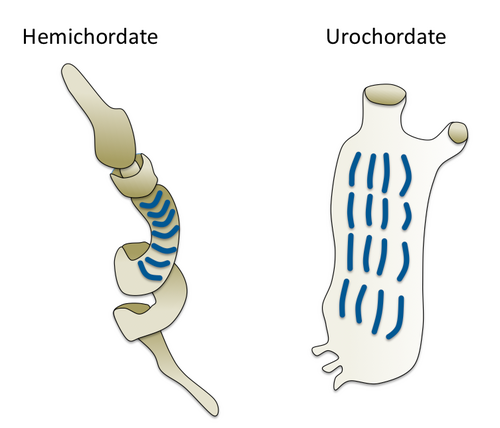
Originally, these slits allowed water to flow from the mouth and out through the pharynx, enabling animals to trap food particles. Over millions of years, the addition of gills along the walls of these slits transformed them into vital organs for respiration in aquatic chordates. While some hemichordate species can possess as many as 200 gill slits, the role of these structures has shifted dramatically across different lineages.
Key Facts
- Function: Originally evolved for filter-feeding; later adapted for respiration (gills) in aquatic chordates.
- Occurrence: Found in all chordates at some stage of their life cycle.
- Development: In vertebrates, they are derived from all three germ layers and shaped by Hox and dlx genes.
- Homology: Molecular evidence (Pax 1 and Pax 9 genes) suggests pharyngeal slits in hemichordates and chordates share a common evolutionary origin.
- Human Embryology: Pharyngeal pouches in human embryos are homologous to the slits of invertebrate chordates.
Pharyngeal Arches in Vertebrates
In vertebrates, the simple slits of ancestors evolved into complex pharyngeal arches. These structures are formed from all three germ layers, with neural crest cells migrating into the arches to create essential craniofacial features, including bone and cartilage. Interestingly, research indicates that some mechanisms for developing these arches existed even before neural crest cells evolved.
The development of these arches follows a specific pattern to create different body parts:
- First Arch: Develops into the oral jaw.
- Second Arch: Becomes the hyoid and provides jaw support.
- Posterior Arches: In fish, these form the brachial skeleton that supports the gills. In tetrapods (four-limbed vertebrates), these anterior arches are repurposed into the thymus, tonsils, and components of the ear.
This patterning is governed by Hox genes and dlx genes, which determine the axes of the arches. Some fish have even evolved "pharyngeal jaws" in their throats, utilizing the same genetic pathways used to build the primary oral jaw.
The Evolution of Pharyngeal Slits
Scientists have long debated whether the slits in hemichordates and chordates evolved independently (convergent evolution) or from a common ancestor. Current evidence suggests the latter: pharyngeal gill slits were likely present in the original deuterostome ancestor. While modern echinoderms (like sea stars) lack these structures, fossil records show that their ancestors once possessed gill-like features.
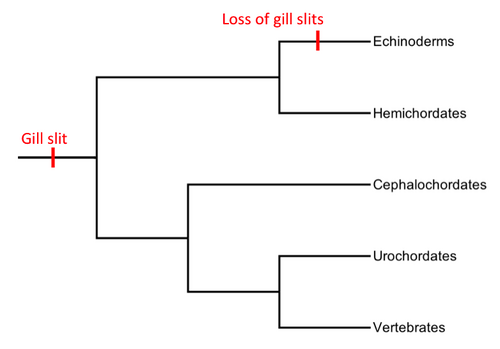
Comparative molecular biology has provided the "smoking gun" for this theory. The Pax 1 and Pax 9 genes, which encode transcription factors, show similar expression patterns in both hemichordates and urochordates. In vertebrates, these same genes are critical for the development of the pharyngeal pouches and the thymus.
Further evidence comes from the study of amphioxi. When exposed to excess retinoic acid—a substance known to cause pharyngeal abnormalities in vertebrates—developing amphioxi fail to develop gill slits. This suggests that the chemical signaling pathways controlling these structures have remained consistent across vast evolutionary distances.
| Group | Primary Function/Form | Key Developmental Feature |
|---|---|---|
| Hemichordates | Filter-feeding (up to 200 slits) | Pax 1 & Pax 9 expression |
| Urochordates | Filter-feeding / Respiration | Homologous molecular markers |
| Fish | Respiration (Gills) / Jaw support | Brachial skeleton; pharyngeal jaws |
| Tetrapods | Ear, tonsils, and thymus | Transient embryonic clefts |
Frequently Asked Questions
Do humans have gill slits?
Humans do not have gill slits as adults. However, during embryonic development, we possess pharyngeal pouches and clefts. These are not "gills" but are homologous structures that develop into other parts of the head and neck, such as the thymus and ear components.
What is the difference between a pharyngeal slit and a pharyngeal arch?
A pharyngeal slit is the actual opening or gap that allows water to pass through the pharynx. A pharyngeal arch is the structural tissue (including bone and cartilage) that surrounds and supports these openings.
How do Hox genes influence these structures?
Hox genes act as a genetic blueprint, providing positional information during development. They help determine the anterior-posterior (front-to-back) and dorsal-ventral (top-to-bottom) axes, ensuring that the correct structures (like the jaw vs. the hyoid) form in the correct location.
What is the "nephridial hypothesis"?
One theory regarding the origin of pharyngeal slits suggests they formed from the fusion of nephridia (primitive excretory organs) that opened both to the outside of the body and the gut, eventually creating the openings between the gut and the environment.
Why is the theory that "ontogeny recapitulates phylogeny" considered false?
Proposed by Ernst Haeckel, this theory suggested that an embryo's development repeats the entire evolutionary history of its species. While it is true that embryos share ancestral traits (like pharyngeal pouches), they do not literally "replay" the adult stages of their ancestors.