Pests: Understanding Organisms That Impact Human Interests
A pest is defined as any organism that is harmful to humans or human concerns. While the term can apply to many things, it is most frequently used to describe creatures that damage crops, livestock, and forestry, or those that cause a nuisance within human homes. The classification of an organism as a pest is often a matter of context; for instance, an elephant is perfectly acceptable in its natural habitat, but becomes a pest the moment it begins to trample agricultural crops.
From biting insects like mosquitoes and ticks to structural threats like termites, pests represent a constant challenge to human stability, health, and economic prosperity.
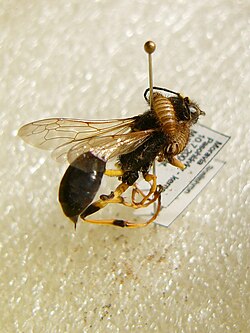
Key Facts
- Definition: Any organism harmful to humans, livestock, crops, or property.
- Climate Impact: Pest ranges are shifting poleward due to climate change at an average rate of 2.7 km per year.
- Historical Control: Humans have used pest control methods, including sulphur and plant-based insecticides, for thousands of years.
- Biological Control: Using natural enemies to manage pest populations is a long-standing scientific practice.
- Urban Threats: Pests in buildings can be managed through sanitation, habitat modification, and chemical treatments.
The Ecology and Movement of Pests
The distribution and behavior of pests are heavily influenced by environmental factors, most notably climate. Rainfall plays a dual role: while drought stress can weaken a plant's resistance to disease, it can also slow the spread of infection.
In recent decades, climate change has rapidly altered pest ranges. Most species are moving toward the North and South poles, shifting at an estimated rate of 2.7 ± 0.8 km per year between 1960 and 2013. Interestingly, viruses and nematodes—microscopic worms—often show the opposite trend, moving toward the equator, potentially due to human-aided dispersal or difficulties in field identification.
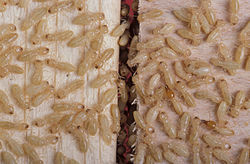
Plant Defenses and Natural Balance
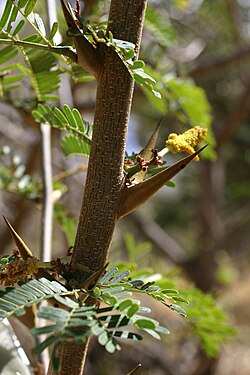
Plants have evolved sophisticated mechanisms to protect themselves from herbivores. Some species, such as Vachellia collinsii, utilize hollow, thorn-like stipules to provide shelter for ants, which in turn protect the plant from being eaten.
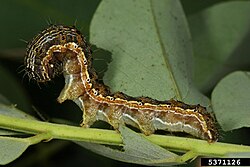
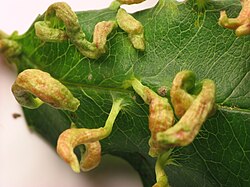
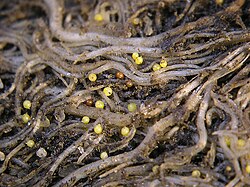
However, these defenses are not always successful. Various organisms can devastate plant life, including caterpillars that consume entire crops, mites that cause galls (abnormal growths) on fruit, and nematodes that reduce crop yields significantly.
Economic Impact Across Industries
Pests cause substantial financial losses across several key sectors:
Agriculture and Horticulture
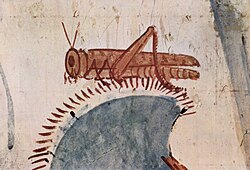
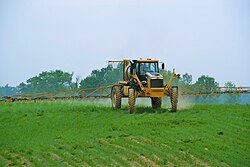
In farming, pests can destroy harvests and reduce the quality of food. This includes everything from locust swarms to invasive weeds like alligator weed, which can disrupt aquatic ecosystems and favor the spread of mosquitoes.
![Alligator weed, a native of South America, is an invasive species in many other countries and is considered a noxious weed as it is harmful to aquatic ecosystems, recreational activities, and favours the spread of mosquitoes. Control is difficult.[39]](/images/70/2c/702c75e48ffc5c2d1c39c15a372fd5197aba5975efa27c7042172d1d80abf694.jpg)
Forestry and Buildings
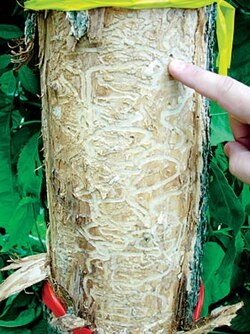
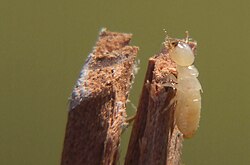
In forestry, specific insects can kill entire stands of trees, such as the emerald ash borer. In urban environments, pests like termites can cause catastrophic structural damage to buildings.
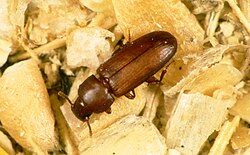
Even in domestic settings, pests like flour beetles can ruin stored grains, while moths and cockroaches threaten hygiene and clothing.
The History of Pest Control
Humanity has fought to manage pests since the dawn of civilization. Early methods were primarily mechanical, such as hand-picking insects or ploughing fields. By 2500 BC in Sumeria, sulphur compounds were being used, and by 1200 BC, ancient China was utilizing plant-derived insecticides to treat seeds.
The agricultural revolution in Europe introduced more potent plant-based extracts like pyrethrum and tobacco. The 19th century saw a major turning point with the discovery of chemical pesticides like Bordeaux mixture and the establishment of biological control—the practice of using a pest's natural enemies to manage its population.
Summary of Pest Categories and Impacts
| Category | Examples | Primary Impact |
|---|---|---|
| Insects | Locusts, Beetles, Moths | Crop destruction, structural damage, food contamination |
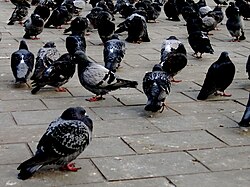
| Vertebrates | Pigeons, Geese | Nuisance, damage to grasslands, aircraft threats |
| Plants | Weeds, Caltrop | Competition with crops, physical injury to humans/animals |
| Microscopic | Nematodes, Mites, Viruses | Reduced crop yields, plant diseases |
![Caltrop, Tribulus terrestris, is sometimes considered a pest plant because of its sharp spiny burrs, shown here in a person's foot.[11]](/images/71/95/7195813fa7e34264eabee9473ce36e767eb52200b7334b27560f8e8db921571d.jpg)
![Due to their aggressive behaviour towards humans and other animals, their habit of begging for food, damaging grasslands and crops through grazing and their excrement, and the threat large flocks pose to aircraft, Canada geese, Branta canadensis, are sometimes considered to be pests.[13]](/images/d2/67/d2674de25274afa4068dc7516d5fafa453fe38d5b796d2a979634a0d9c0f31cf.jpg)
Frequently Asked Questions
How does climate change affect pests?
Climate change is shifting pest ranges toward the poles. Most species are moving at an average rate of approximately 2.7 km per year, which can introduce new pests to regions that previously had no natural defenses against them.
What is biological control?
Biological control is a method of managing pests by using their natural enemies, such as predators or parasites, to reduce their population size without the use of heavy chemicals.
Can I use pesticides to kill insects in my food?
No, insecticides should not be used in food storage areas. For food safety, alternative methods like freezing food at 0 °F (−18 °C) for four days or baking it at 130 °F (54 °C) for half an hour are recommended to kill insects.
Why are some animals considered pests?
An animal is often classified as a pest based on its impact on human objectives. If an animal's behavior—such as grazing on crops, nesting in homes, or threatening aircraft—interferes with human health, economy, or comfort, it is labeled a pest.
What are the most common ways to control pests in a home?
Home pest control includes improving sanitation, managing garbage, modifying the habitat to make it less attractive, and using tools like traps, baits, repellents, or growth regulators.