People-Watching: The Art of Observing Public Interactions
Whether it is from a park bench or a bustling city sidewalk, many of us have engaged in the simple yet fascinating act of people-watching. Also known as crowd watching, this activity involves observing individuals and their interactions in public spaces to interpret their stories, relationships, and emotions based on limited visual and auditory cues.
At its core, people-watching is about picking up on idiosyncrasies—the unique quirks and behaviors of individuals—to guess the narrative unfolding around them. This process involves analyzing a variety of signals, including body language, facial expressions, clothing choices, and general crowd behaviors.
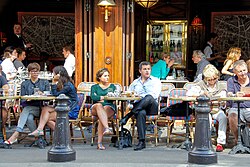
Key Facts
- Definition: The act of observing people and their interactions in public settings.
- Focus Areas: Includes speech, body language, clothing, and relationship dynamics.
- Purpose: Typically used for relaxation, creative inspiration, or casual curiosity.
- Distinctions: Differs from scientific naturalistic observation and artistic street photography.
- Optional Elements: May sometimes include eavesdropping, though it is not a requirement.
The Mechanics of Observation
To effectively people-watch, an observer looks for specific markers that reveal the nature of a social encounter. These markers include speech in action and the way people interact within their relationships. By observing how a person stands or the expressions they make, an observer can attempt to deduce the emotional state or the history between two strangers.
While the primary focus is visual, some people-watchers engage in eavesdropping—listening in on private conversations—to add more context to their observations. This blend of visual and auditory data helps the observer construct a more complete, albeit speculative, story about the subjects.
Distinguishing People-Watching from Similar Activities
While it may seem like a simple hobby, people-watching is distinct from several professional and scientific disciplines.
Naturalistic Observation
Unlike casual people-watching, naturalistic observation is a formal process used for scientific purposes. While both involve watching subjects in their natural environment, the scientific approach follows strict methodologies to gather data, whereas people-watching is generally used for relaxation or as a source of inspiration for writers and artists creating characters.
Street Photography
Street photography also involves observing people in public, but the objective is different. A street photographer observes the crowd specifically to compose images for artistic or documentary purposes. While they must be skilled people-watchers to capture the perfect moment, their end goal is a physical or digital photograph rather than a mental narrative.
| Activity | Primary Purpose | Methodology | Outcome |
|---|---|---|---|
| People-Watching | Relaxation / Inspiration | Casual observation | Mental narratives / Character ideas |
| Naturalistic Observation | Scientific Research | Structured data collection | Scientific findings / Papers |
| Street Photography | Art / Documentation | Visual composition | Photographs |
Frequently Asked Questions
What exactly is people-watching?
People-watching is the casual act of observing people and their interactions in public spaces to interpret their stories and relationships through limited details.
What do people-watchers look for?
They typically focus on body language, facial expressions, clothing, speech, and the general behavior of crowds to guess the dynamics of a situation.
Is people-watching the same as scientific observation?
No. People-watching is a casual activity for leisure or creativity, whereas naturalistic observation is a formal process used for scientific research.
How does it differ from street photography?
While both involve observing people, street photography is specifically focused on composing images for artistic or documentary purposes.
Is eavesdropping a part of people-watching?
It can accompany the activity to provide more information, but it is not a required element of people-watching.