Pentatonic Scales in Global Music and Composition
The pentatonic scale—a musical scale consisting of five notes per octave—is one of the most universal elements in human music. From the earliest Stone Age flutes to the complex improvisations of modern jazz, this five-tone structure appears across nearly every continent and culture, offering a versatile foundation for melody and harmony.
Key Facts
- Universal Presence: Found in traditions ranging from Ancient Greek and Tamil music to Native American and West African music.
- Structure: Consists of five notes, often avoiding the dissonant half-steps found in the standard seven-note (heptatonic) scales.
- Versatility: Used extensively in genres like Blues, Rock, Jazz, and various folk traditions worldwide.
- Classical Application: Employed by composers like Beethoven, Chopin, Debussy, and Ravel to create specific moods or evoke non-Western styles.
Pentatonicism in Classical Music
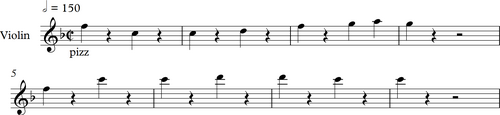
While Western classical music is primarily based on heptatonic scales, many composers have integrated pentatonic structures for artistic effect. Ludwig van Beethoven utilized these scales in the finale of his Quartet in F major, Op. 135.
Frédéric Chopin's Etude in G-flat major, Op. 10, No. 5, famously known as the "Black Key" etude, is written entirely in the major pentatonic scale.

French Impressionist composers Claude Debussy and Maurice Ravel used the pentatonic scale extensively to create atmospheric, floating textures. Additionally, Giacomo Puccini employed pentatonic scales in his operas Madama Butterfly and Turandot to imitate East Asian musical styles, sometimes pairing them with whole-tone scales.
![Pentatonic scale in Debussy's Voiles, Preludes, Book I, no. 2, mm. 43–45.[51]](/images/14/48/1448804ca9f84dfdb5854d7256e07ce6b87a2c47488d00f9e7f2208a4a31976f.png)
![Pentatonic scale in Ravel's Ma mère l'Oye III. "Laideronnette, Impératrice des Pagodes", mm. 9–13.[1]](/images/cb/42/cb42e5faca1e28013f04b24bbbf0e636e6f3f1e9d4b55580b6682f7a94d14962.png)
Global Traditions and Cultural Variations
Asian Musical Systems
The major pentatonic scale serves as the fundamental basis for music in China, Mongolia, and various Southeast Asian traditions, including those of the Karen people and indigenous Assamese groups. In Japan, the shakuhachi (a bamboo flute) produces a minor pentatonic scale through its five holes. Furthermore, the yo scale—an anhemitonic pentatonic scale (meaning it contains no semitones)—is central to gagaku imperial court music and shomyo Buddhist chants.

In Indonesia, Javanese gamelan music utilizes the Slendro scale, which consists of five relatively even intervals. Another system, Pelog, contains seven tones but is typically played using five-tone subsets called pathet (specifically Pathet Nem, Pathet Barang, and Pathet Limå).
Indian Classical Music
Indian classical music, encompassing both Hindustani and Carnatic traditions, features hundreds of ragas (melodic frameworks), many of which are pentatonic. These ragas define specific moods and structures through their unique note selections.
| Raga Name | Note Composition (C-based) |
|---|---|
| Raag Bhupali | C, D, E, G, A |
| Raag Malkauns | C, E-flat, F, A-flat, B-flat |
| Raag Hamsadhwani | C, D, E, G, B |
| Raag Durga | C, D, F, G, A |
| Raag Shivaranjani | C, D, E-flat, G, A |
African and Middle Eastern Traditions
Pentatonic systems are prevalent across the African continent. Somali music uses a distinct modal pentatonic system with characteristically long intervals, sharing cultural links with Ethiopia, Eritrea, Djibouti, and Sudan. Similarly, most Tuareg songs and music from the Sahel region are pentatonic.
Celtic and American Folk
In Scottish and Irish traditional music, the pentatonic scale is ubiquitous. The Great Highland bagpipe scale is designed to facilitate the production of multiple pentatonic scales from its nine notes. In the United States, the minor pentatonic scale is a cornerstone of Appalachian folk music and U.S. military cadences (jodies).
Application in Jazz, Blues, and Rock
For modern improvisers, pentatonic scales are invaluable because they avoid dissonant intervals. In a C major triad (C, E, G), the note F is often avoided because it is a half-step above the major third (E). By using the major pentatonic scale (1, 2, 3, 5, 6), musicians ensure every note is either a triad tone or a consonant extension.
The blues scale is predominantly derived from the minor pentatonic scale, making it a staple for improvisation in blues and rock. This modal ambiguity allows melodies to shift between major (Ionian, Lydian, Mixolydian) and minor (Aeolian, Phrygian, Dorian) modes, providing composers with significant flexibility.
Frequently Asked Questions
What is a pentatonic scale?
A pentatonic scale is a musical scale consisting of five notes per octave. It is found in diverse musical traditions worldwide and is often used because it lacks the dissonant half-steps found in seven-note scales.
How is the pentatonic scale used in jazz and rock?
Musicians use pentatonic scales for improvisation because the notes are consonant over several chords in the same key. The minor pentatonic, in particular, serves as the foundation for the blues scale.
Which classical composers used pentatonic scales?
Notable examples include Beethoven (Op. 135), Chopin (the "Black Key" etude), and Impressionists like Debussy and Ravel. Puccini also used them to evoke East Asian styles in his operas.
What is the difference between Slendro and Pelog in Gamelan music?
Slendro is a five-tone scale with relatively even intervals. Pelog is a seven-tone scale, though it is typically played using five-tone subsets known as pathet.
Why is the pentatonic scale common in folk music?
Its prevalence in Celtic, Native American, and various Asian folk traditions is due to its inherent melodic stability and the way it fits the tuning of traditional instruments, such as the shakuhachi or Highland bagpipes.