Pelé: The Eternal King of Football
Few athletes transcend their sport to become global symbols of excellence, but Pelé did exactly that. Born Edson Arantes do Nascimento, the man known worldwide as "The King" redefined the game of football (soccer) through an unprecedented combination of skill, athleticism, and a prolific scoring ability that remains legendary. From the streets of Brazil to the stadiums of New York, Pelé's journey is a chronicle of sporting dominance.
Pelé's impact was not merely in the goals he scored, but in the way he played. As a forward, he possessed a natural intuition for the game, blending power with grace. His career spanned several decades, leaving an indelible mark on both the South American and North American landscapes of the sport.
Key Facts
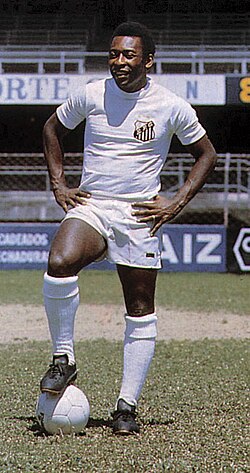
- Full Name: Edson Arantes do Nascimento.
- World Cup Legacy: The only player in history to win three FIFA World Cups (1958, 1962, 1970).
- Career Goals: Credited with 1,283 career goals according to Guinness World Records.
- Club Loyalty: Spent the majority of his career (1956–1974) with Santos FC.
- Global Ambassador: Served as Brazil's first Minister of Sport from 1995 to 1998.
Early Life and the Rise of a Prodigy
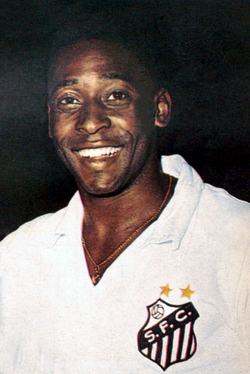
Born in Três Corações, Minas Gerais, Brazil, Edson Arantes do Nascimento showed an early affinity for football. His ascent was meteoric; he debuted for the Brazil national team at just 16 years and 259 days old, becoming the youngest player to ever play for and score for the national side.
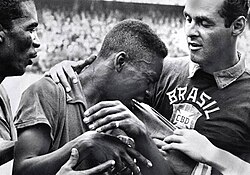
The world first took notice of the teenager during the 1958 FIFA World Cup in Sweden. At 17 years old, Pelé became the youngest player to score in a World Cup final, helping Brazil secure their first title.
Club Career: From Santos to the Cosmos
The Santos Dynasty
Pelé spent nearly two decades with Santos FC, where he transformed the club into a global powerhouse. Between 1956 and 1974, he made 583 league appearances and scored 569 goals. His dominance was absolute, leading Santos to multiple Campeonato Brasileiro Série A titles and two Copa Libertadores trophies in 1962 and 1963.
![Pelé with Santos in October 1962. By this time, he was ranked as the best football player in the world.[29]](/images/f3/77/f377dd300838512d186ec3d2dcb2e720b64cf8b37d531c4c1b1cbd4c72f0429b.jpg)
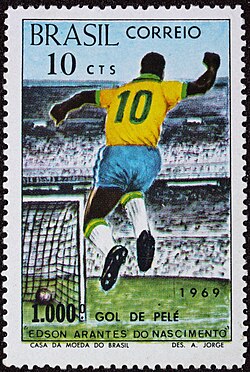
During this era, Pelé became a national treasure in Brazil. He achieved the milestone of 1,000 goals (O Milésimo), a feat commemorated by the Brazilian government with a postage stamp in 1969.
Expanding the Game: New York Cosmos
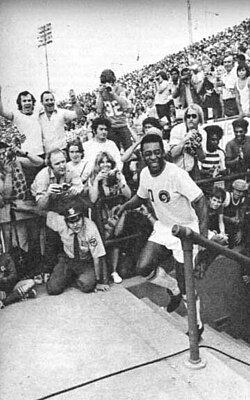
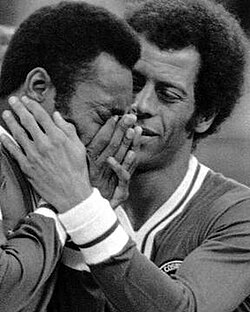
In 1975, Pelé moved to the United States to join the New York Cosmos of the North American Soccer League (NASL). His arrival was a pivotal moment for soccer in North America, bringing unprecedented attention to the sport. He played 64 games and scored 37 goals before his farewell match on October 1, 1977.
International Glory and the 1970 Masterclass
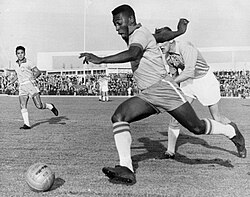
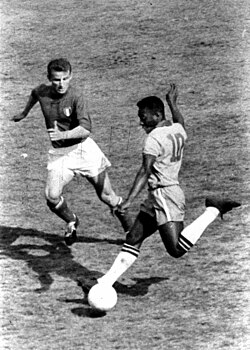
While his club success was immense, Pelé is most revered for his performances with the Brazil national team. After winning in 1958 and 1962, he returned for the 1970 World Cup in Mexico. This tournament is often cited as the pinnacle of his career, where he led one of the greatest teams in history to victory.
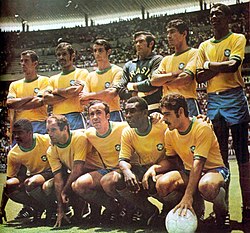
By winning the 1970 final, Pelé cemented his status as the only player to win three World Cups, a record that still stands today.
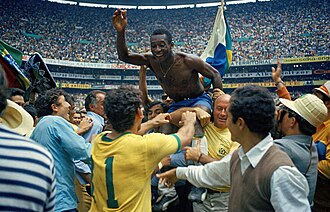
Career Statistics and Achievements
Pelé's statistical record is staggering. He holds the record for the most goals in a calendar year (127 in 1959, recognized by FIFA) and the most goals in the history of the Campeonato Paulista.
| Team/Entity | Period | Appearances | Goals | Major Honors |
|---|---|---|---|---|
| Santos FC | 1956–1974 | 583 | 569 | Copa Libertadores, Intercontinental Cup |
| New York Cosmos | 1975–1977 | 64 | 37 | NASL Soccer Bowl (1977) |
| Brazil National Team | 1957–1971 | 92 | 77 | 3x FIFA World Cup Winner |
Beyond the Pitch: Public Service and Legacy
After retiring from football, Pelé remained a global figure. He transitioned into public service, serving as Brazil's Minister of Sport from 1995 to 1998 under President Fernando Henrique Cardoso. He also acted as a UNESCO Goodwill Ambassador and was recognized by the United Nations as a "Citizen of the World."
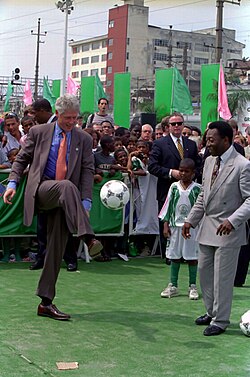
Throughout his later years, he continued to advocate for sports and humanitarian causes, appearing at the World Economic Forum and receiving numerous lifetime achievement awards from organizations like FIFA and the IOC.
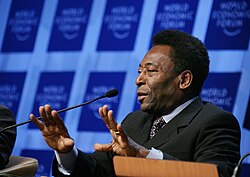
Pelé passed away on December 29, 2022, at the age of 82 in São Paulo. He is laid to rest at the Memorial Necrópole Ecumênica in Santos.
Frequently Asked Questions
How many World Cups did Pelé win?
Pelé won three FIFA World Cups: in 1958, 1962, and 1970. He remains the only player in history to achieve this feat.
How many goals did Pelé score in his career?
According to the Guinness World Records, Pelé scored 1,283 career goals, including friendlies. In competitive league matches for Santos, he scored 569 goals.
Which clubs did Pelé play for?
Pelé spent the vast majority of his professional career with the Brazilian club Santos FC (1956–1974) and finished his playing days with the New York Cosmos (1975–1977).
What was Pelé's role in the Brazilian government?
Pelé served as Brazil's first Minister of Sport from January 1, 1995, to April 29, 1998.
At what age did Pelé first play in a World Cup final?
Pelé played in his first World Cup final in 1958 at the age of 17 years and 249 days, making him the youngest player to do so.