Pelagic Ecosystems: Life in the Open Ocean
The pelagic ecosystem encompasses the vast water columns of the open ocean, distinct from the benthic zone, which refers to the ocean floor. This expansive environment is the heartbeat of marine life, supporting a complex web of organisms that range from microscopic plants to massive predatory fish and wide-ranging seabirds.
At the foundation of this ecosystem are phytoplankton—microscopic organisms that manufacture their own food through photosynthesis. Because they rely on sunlight, these primary producers are concentrated in the epipelagic zone (the upper, sunlit layer), which includes the coastal neritic zone. As one descends into deeper waters, biodiversity drops significantly. This decline is driven by a combination of disappearing light, plummeting temperatures, increasing water pressure, and a scarcity of both food and dissolved oxygen.
![Some representative ocean animals (not drawn to scale) within their approximate depth-defined ecological habitats. Marine microorganisms also exist on the surfaces and within the tissues and organs of the diverse life inhabiting the ocean, across all ocean habitats. The animals rooted to or living on the ocean floor are not pelagic but are benthic animals.[18]](/images/b3/d2/b3d23b745f1fd8dbd2e1753f0d2ad99c516816f61abd464c98fc057859b946f5.jpg)
Key Facts
- Primary Production: The entire ecosystem is powered by photosynthetic phytoplankton in the sunlit epipelagic zone.
- Depth Gradient: Biodiversity decreases with depth as light, oxygen, and food sources diminish.
- Habitat Distinction: Pelagic organisms live in the water column, unlike benthic animals that live on the ocean floor.
- Migration Patterns: Many pelagic fish utilize vertical migration, ascending to feed on prey and descending at night to avoid predators.
- Global Distribution: The yellow-bellied sea snake is the most widely distributed snake species in the world.
Pelagic Invertebrates
The open ocean is home to a diverse array of invertebrates, including krill, copepods, jellyfish, rotifers, cladocerans, hyperiid amphipods, and decapod larvae. The development of these creatures often follows Thorson's rule, which describes a geographical pattern in reproduction.
According to this rule, benthic marine invertebrates in low-latitude (tropical) regions typically produce a high volume of eggs that develop into widely dispersing pelagic larvae. In contrast, organisms at high latitudes tend to produce fewer, larger lecithotrophic eggs—meaning they are yolk-feeding—resulting in larger offspring.
Pelagic Fish and Predators
Pelagic fish inhabit the water columns of lakes, coastal waters, and the open ocean. They are distinct from demersal fish (which live near the bottom) and coral reef fish. This group is generally divided into two categories: migratory forage fish and larger predators.
Forage fish, such as anchovies, herring, menhaden, and capelin, feed on plankton. They are the primary food source for larger pelagic predators, including tuna, billfish, and oceanic sharks. To survive, many of these species migrate to prey-dense areas of the pelagic zone to feed before descending into deeper waters at night for protection.
Pelagic Reptiles
While most reptiles are land-based or coastal, some have adapted entirely to the open sea. The yellow-bellied sea snake (Hydrophis platurus) is unique among the 65 species of marine snakes as the only one to spend its entire life in the pelagic zone. It gives birth to live young at sea and is unable to survive on land. These snakes are known to gather in aggregations of thousands along surface water slicks.
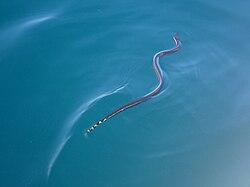
Additionally, many species of sea turtles utilize the pelagic zone during the early years of their lives, only moving toward the shore as they reach maturity.
Pelagic Birds
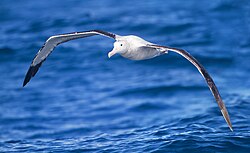
Pelagic birds, also known as seabirds or oceanic birds, spend their lives on the open seas rather than in inland waters or rivers. To sustain long-distance flight, many possess exceptionally long wings. Their diet consists primarily of forage fish, squid, and planktonic crustaceans.
Notable examples include the Atlantic puffin, razorbills, sooty terns, macaroni penguins, and shearwaters. The order Procellariiformes, which includes petrels, Procellariidae, and the albatross, are particularly well-known for their ability to cover immense distances.
Summary of Pelagic Life
| Group | Key Examples | Primary Characteristics |
|---|---|---|
| Primary Producers | Phytoplankton | Photosynthetic; limited to the epipelagic zone. |
| Invertebrates | Krill, Jellyfish, Copepods | Diverse; larval development varies by latitude. |
| Forage Fish | Herring, Anchovies, Capelin | Plankton-feeders; migratory. |
| Apex Predators | Tuna, Sharks, Billfish | Feed on forage fish; highly mobile. |
| Reptiles | Yellow-bellied sea snake, Sea turtles | Specialized for open-ocean survival. |
| Birds | Albatross, Puffins, Petrels | Long-wing adaptations for oceanic flight. |
Frequently Asked Questions
What is the difference between pelagic and benthic animals?
Pelagic animals live in the open water column of the ocean, whereas benthic animals are rooted to or live on the ocean floor.
Why is biodiversity lower in the deeper zones of the ocean?
Biodiversity decreases in deeper zones because there is less light for photosynthesis, lower temperatures, higher water pressure, and a significant reduction in available food and dissolved oxygen.
What is Thorson's rule?
Thorson's rule states that marine invertebrates in low latitudes produce many small, dispersing pelagic larvae, while those in high latitudes produce fewer, larger, yolk-feeding (lecithotrophic) offspring.
Which snake species is most widely distributed in the world?
The yellow-bellied sea snake (Hydrophis platurus) is the world's most widely distributed snake species and the only marine snake to spend its entire life in the pelagic zone.
How do pelagic fish avoid predators while feeding?
Many migratory pelagic fish move to prey-dense areas to feed during the day and descend to deeper waters at night to avoid being seen by predators.