Pecten Oculi: The Unique Vascular Structure of the Avian Eye
In the world of biological engineering, the avian eye is a marvel of precision and clarity. One of the most distinctive features contributing to this efficiency is the pecten oculi (Latin for "comb of the eye"). This specialized, comb-like structure of blood vessels is found exclusively in birds, serving as a critical component of their ocular physiology.
The pecten is a non-sensory, pigmented structure that originates where the optic nerve enters the eyeball. It projects freely into the vitreous humor—the clear, gel-like substance filling the eye—and undulates as the humor moves. By almost entirely covering the optic disc, it plays a pivotal role in maintaining the health of the eye without obstructing the bird's legendary vision.
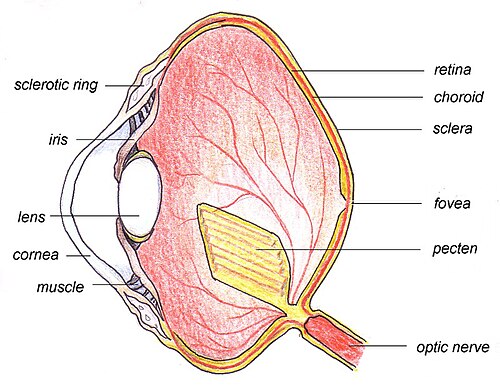
Key Facts
- Exclusive to Birds: The pecten oculi is not found in any other animal species.
- Non-Sensory: It contains no muscle, nerve fibers, or sensory tissues.
- Retinal Support: It provides essential nutrition to the retina, allowing the retina to remain free of blood vessels for sharper vision.
- Vascular Origin: It is supplied by a branch of the hyaloid artery, separate from the general choroidal circulation.
- Protective Pigmentation: Abundant melanin protects the structure from ultraviolet (UV) light damage.
Anatomy and Composition
Histologically, the pecten is composed of three primary tissue types: a plexus of modified blood vessels, darkly pigmented cells interdigitated between those vessels, and supporting glial syncytium tissue derived from the optic disc.
The blood supply is highly specialized. An artery runs along the base of the pecten, sending ascending branches into each of its folds. To protect these delicate vessels, pleomorphic melanocytes produce melanin, which forms incomplete sheaths along the capillaries, particularly at the peripheral and apical regions.
Biological Functions
While over 30 functions have been proposed, the most widely accepted theory is that the pecten provides nutrition to the retina and regulates the pH of the vitreous body. High activity of carbonic anhydrase and alkaline phosphatase helps transport nutrients from the vascularized choroid into the retinal cells.
Interestingly, the pecten works in tandem with saccadic eye movements (rapid, jerky movements of the eye). As the eye moves, the pecten oscillates, effectively "fanning" the vitreous humor to diffuse oxygen and glucose more efficiently throughout the eye.
Furthermore, the absence of blood vessels directly in front of the retina—which is common in other vertebrates—prevents image obstruction. This anatomical arrangement is a primary reason why birds of prey, such as hawks, possess such extremely sharp eyesight. Additionally, the melanin in the pecten may absorb stray light to slightly increase the eye's temperature, optimizing metabolic rates during high-altitude flights in cold environments.
Comparative Anatomy Across Species
The shape and size of the pecten vary significantly depending on the bird species and its lifestyle. These variations are generally categorized into three types:
- Conical Type: A simple, trumpet-shaped cone without folds, found in the brown kiwi (Apteryx mantelli).
- Vaned Type: A thin sheet with 25-30 trapezoidal folds, common in palaeognaths like ostriches (Struthio camelus) and rheas (Rhea americana).
- Pleated Type: An accordion-like structure often featuring a "bridge" at the top. This is the most common form, found in most neognaths and cassowaries.
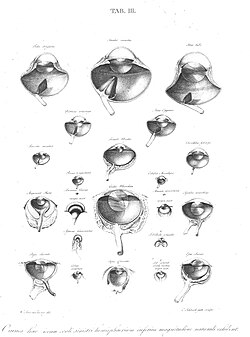
General trends show that diurnal (day-active) birds typically have larger pectens with more folds than nocturnal birds. Predators generally have thicker but fewer folds (13 to 17), while sea-birds and shore-birds often have 12 or fewer pleats.
| Pecten Type | Physical Characteristics | Example Species |
|---|---|---|
| Conical | Trumpet-shaped, no folds, brown-black | Brown Kiwi |
| Vaned | Thin sheet, 25-30 trapezoidal folds | Ostrich, Rhea |
| Pleated | Accordion-like, often with a "bridge" | Most Neognaths, Cassowary |
Evolutionary Context and Other Species
While the pecten oculi is unique to birds, similar structures exist in other vertebrates. Reptiles possess the conus papillaris, which is homologous to the pecten and provides nutrients to an avascular retina. Similarly, teleost fish use a falciform process and choroidal glands for retinal nutrition.
In mammals, the pecten is largely absent. Some primates have a small bump on the optic disc called the papilla nervi optici, and some marsupials show vestiges of a conic structure. Mammals with nearly avascular retinas, such as guinea pigs, rely entirely on the choroid, which results in significantly thinner retinas compared to mammals with vascularized retinas.
Frequently Asked Questions
What is the primary purpose of the pecten oculi?
The primary purpose is to provide nutrients and oxygen to the retina and regulate the pH of the vitreous humor, allowing the retina to remain free of blood vessels for maximum visual clarity.
Why do birds of prey have such sharp vision compared to other animals?
Because the pecten oculi handles nutrient delivery, the retina does not need internal blood vessels that would otherwise partially obscure the image, resulting in a clearer, sharper view.
How do eye movements affect the pecten?
Saccadic eye movements cause the pecten to oscillate. This movement acts as a fan, helping to diffuse metabolites like glucose and oxygen through the vitreous humor to the rest of the eye.
Does every bird have the same type of pecten?
No. Depending on the species, the pecten can be conical (kiwis), vaned (ostriches), or pleated (most other birds), with the number and thickness of folds varying by the bird's diet and activity patterns.
What role does melanin play in the pecten?
Melanin protects the blood vessels from ultraviolet light damage and may help absorb stray light to slightly increase the eye's temperature, which is beneficial for metabolic function during high-altitude flight.