Pearl District History: From Industrial Warehouses to Urban Hub
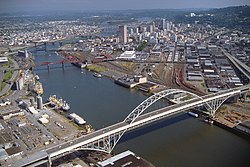
Long before it became a center for high-end dining and modern living, the Pearl District in Portland, Oregon, served a far more utilitarian purpose. The area was originally defined by its industrial grit, housing a sprawling railroad yard, light industrial facilities, and massive warehouses. Today, it stands as a prime example of urban revitalization, where the remnants of a working-class past blend with a contemporary arts and residential scene.
The Naming of a Neighborhood
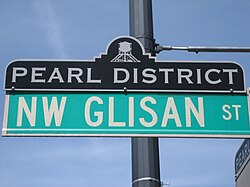
Interestingly, the name "Pearl District" was not an organic evolution but a deliberate branding effort. In March 1987, Terry Hammond published an article titled “The Pearl District” in The Rose Arts Magazine, a free local periodical. Hammond later admitted that he wrote the piece with the express goal of making the name stick, actively promoting it while distributing the paper and selling advertisements.
At the time, city officials referred to the area as the Triangle, though the NW Triangle Planning District specifically designated only the railroad yards east of NW Lovejoy Street. While the NW Triangle Business Association also used the term, they found it unsatisfactory. Other suggestions, such as the "Brewery District," were considered, but Hammond argued that "The Pearl District" best captured the essence of the art and artists inhabiting the interiors of the weathered warehouses.
The name's origin is credited to Thomas Augustine of the Augustine Gallery, which was then located at NW 13th & Hoyt St. The transition from a suggested name to a recognized identity took several years, gaining momentum through local art festivals and media coverage.
The Role of Art and Early Development
The district's identity was forged by a community of creatives. Early profiles in The Rose Arts Magazine highlighted artists such as photographer Hiroshi Iwaya, glass artist Liz Mapelli, sculptor Martin Eichinger, ceramic artist Geoffrey Pagen, and silkscreen printers Elizabeth Harris and Russ Mahler.
The Pearl Arts Festival, organized by Victoria Frey of Quartersaw Gallery, launched in September 1987. This event helped solidify the neighborhood's reputation. By January 1988, Sunset Magazine adopted the name, and by September 1988, the city's daily newspaper, The Oregonian, began using it.
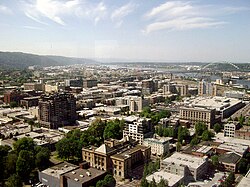
By 1989, the name had moved from the arts community to the business sector. Investors began using "Pearl District" in promotional materials for residential conversions. A key milestone was the Irving Street Lofts (formerly the McKesson Building), which became the first converted warehouse in the area to meet residential building codes.
Urban Transformation and Modern Growth
The physical landscape of the neighborhood changed drastically in the 1990s with the demolition of the Lovejoy Viaduct. This elevated section of NW Lovejoy Street ran from the Broadway Bridge past NW 10th Avenue. Its removal opened dozens of blocks—including several brownfield sites (abandoned or underused industrial properties often contaminated by hazardous waste)—for new development.
The viaduct was well-known for the Lovejoy Columns, which had been painted by a railroad watchman; two of these columns were preserved as historical markers. This period of redevelopment peaked in the 2000s, transforming the area into a dense urban center filled with brewpubs, restaurants, shops, and galleries.
The neighborhood's unique aesthetic has also attracted the film industry, most notably serving as a backdrop for several scenes in Gus Van Sant's 1989 film, Drugstore Cowboy.
Key Facts
- Original Use: Warehousing, light industrial, and railroad yards.
- Naming Origin: Coined by Terry Hammond in The Rose Arts Magazine (1987), inspired by Thomas Augustine.
- First Residential Conversion: The Irving Street Lofts (formerly the McKesson Building).
- Major Infrastructure Change: Demolition of the Lovejoy Viaduct in the 1990s.
- Cultural Catalyst: The Pearl Arts Festival, started in 1987 by Victoria Frey.
| Year/Period | Event/Milestone | Significance |
|---|---|---|
| March 1987 | First mention of "Pearl District" | Terry Hammond introduces the name in print. |
| Sept 1987 | 1st Pearl Arts Festival | Organized by Victoria Frey to promote local art. |
| 1988 | Mainstream media adoption | Sunset Magazine and The Oregonian use the name. |
| 1989 | Investment shift | Investors adopt the name for residential warehouse conversions. |
| 1990s | Lovejoy Viaduct demolition | Opened brownfield sites for massive redevelopment. |
| 2000s | Development peak | High density of shops, galleries, and restaurants established. |
Frequently Asked Questions
Where did the name "Pearl District" come from?
The name was popularized by Terry Hammond in a 1987 article in The Rose Arts Magazine. Hammond credited Thomas Augustine of the Augustine Gallery as the original source of the name "the Pearl."
What was the area called before it was the Pearl District?
The city and the NW Triangle Business Association primarily referred to the area as the "Triangle," though some suggested the "Brewery District."
What was the first warehouse converted for residential use?
The Irving Street Lofts, which was previously known as the McKesson Building, was the first converted warehouse in the district to be brought up to residential code.
What happened to the Lovejoy Viaduct?
The viaduct was demolished in the 1990s to open up surrounding blocks and brownfield sites for development. Two of the Lovejoy Columns, painted by a railroad watchman, were saved.
Which famous movie was filmed in the Pearl District?
Gus Van Sant's 1989 film Drugstore Cowboy featured several scenes shot within the neighborhood.