Partitions of Poland: The Erasure of a Sovereign State
Between 1772 and 1795, the Polish–Lithuanian Commonwealth underwent a series of three territorial seizures known as the Partitions of Poland. This systematic dismantling of the state by neighboring empires resulted in the complete elimination of sovereign Poland and Lithuania for 123 years. The process was carried out by three major powers: the Habsburg monarchy, the Kingdom of Prussia, and the Russian Empire.
While the term "Partitions of Poland" refers to the historical acts of division (known in Polish as rozbiory), it is also used geographically to describe the resulting annexed territories (known as zabory), specifically the Austrian, Prussian, and Russian partitions.
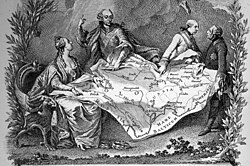
Key Facts
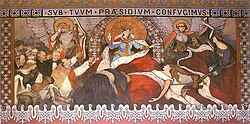
- Duration: The partitions occurred in three stages between 1772 and 1795.
- Partitioning Powers: Russia, Prussia, and Austria.
- Outcome: The Polish–Lithuanian Commonwealth ceased to exist as a sovereign entity.
- Population Loss: By the final partition, Russia controlled 45% of the population, Austria 32%, and Prussia 23%.
- Restoration: Poland was briefly resurrected as the Duchy of Warsaw in 1807 before further divisions in 1815.
The Road to Collapse: Internal Decay and Foreign Influence
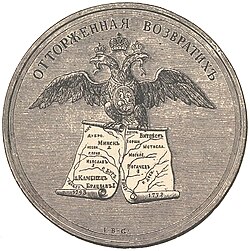
The vulnerability of the Commonwealth was rooted in its political structure. During the reign of Władysław IV (1632–1648), the liberum veto was developed. This parliamentary procedure required unanimous consent for any measure to pass; a single nobleman could strike down an act if he believed it injured his own interests. This created systemic paralysis and allowed foreign diplomats to manipulate the state by bribing nobles to exercise the veto.
By the mid-18th century, the Commonwealth functioned almost as a vassal state. Kings were often chosen through diplomatic maneuvers between France, Russia, Austria, and Prussia. A prime example was King Stanisław August Poniatowski, who had a personal relationship with Russian Empress Catherine the Great.
External pressures mounted after the Seven Years' War (1756–1763). Frederick II of Prussia severely damaged the Polish economy by counterfeiting Polish currency. Meanwhile, Catherine the Great used Ambassador Prince Nicholas Repnin to force a new constitution on the Commonwealth during the Repnin Sejm of 1767. This constitution guaranteed the liberum veto and other abuses as "Cardinal Laws," effectively ensuring the state remained ungovernable.
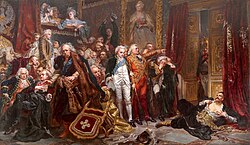
Civil Unrest and Conflict
Russian intervention sparked the War of the Confederation of Bar (1768–1772), an attempt by Polish Roman Catholics and nobles to expel Russian forces. Simultaneously, the Koliyivshchyna—a Ukrainian Cossack and peasant rebellion—erupted in 1768, leading to massacres of Polish noblemen, Jews, and Catholic priests. These internal conflicts invited further intervention from the Ottoman Empire, France, and Austria.
The Three Partitions
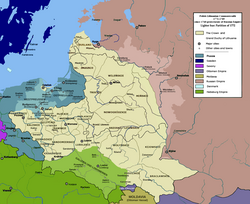
The First Partition (1772)
Following the defeat of the Bar Confederation, the partitioning powers signed an agreement in Vienna. On August 5, 1772, Russian, Prussian, and Austrian troops occupied agreed-upon provinces. Despite resistance in cities like Kraków and Częstochowa, the treaty was ratified on September 22, 1772.
The Second Partition (1793)
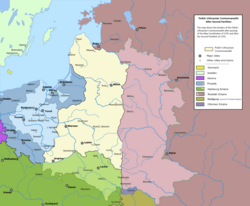
The second wave of annexations followed the Polish–Russian War of 1792 and the Targowica Confederation. Russian and Prussian troops entered the Commonwealth, and a partition treaty was signed during the Grodno Sejm on January 23, 1793. Notably, Austria did not participate in this second division.
The Third Partition (1795)
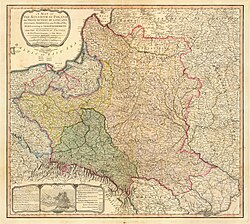
The final blow came in reaction to the unsuccessful Kościuszko Uprising of 1794. On October 24, 1795, the three powers divided the remaining lands. Russia took 120,000 km² (including Vilnius), Prussia took 55,000 km² (including Warsaw), and Austria took 47,000 km² (including Lublin and Kraków). With this act, the Commonwealth ceased to exist.
Territorial and Population Impact
The human and geographic cost of the partitions was staggering. Before the process began, the Commonwealth had a population of approximately 14 million. By the end of the second partition, only about 4 million people remained in a sovereign Polish state.
| Partition Year | Austria (Area/%) | Prussia (Area/%) | Russia (Area/%) | Total Annexed (%) | Remaining (%) |
|---|---|---|---|---|---|
| 1772 | 81,900 / 11.17% | 36,300 / 4.95% | 93,000 / 12.68% | 28.79% | 71.21% |
| 1793 | — | 57,100 / 7.78% | 250,200 / 34.11% | 41.90% | 29.31% |
| 1795 | 47,000 / 6.41% | 48,000 / 6.54% | 120,000 / 16.36% | 29.31% | 0% |
| Total | 128,900 / 17.57% | 141,400 / 19.28% | 463,200 / 63.15% | 100% | 0% |
Aftermath and the "Fourth Partition"
Poland saw a brief resurgence in 1807 with Napoleon's creation of the Duchy of Warsaw. However, the 1815 Congress of Vienna redrew the borders again, creating the Russian-dominated Congress Kingdom of Poland. Over the following decades, the three occupying powers treated their Polish subjects differently:
- Russia: Abolished autonomy after the 1831 insurrection, imposing forced military service and Russification of schools.
- Austria: Established Galicia, where Poles enjoyed more freedom, including representation in Parliament and the establishment of universities in Kraków and Lemberg.
- Prussia: Implemented a strict policy of Germanization across the school system and cultural institutions.
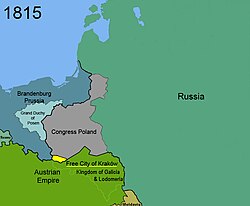
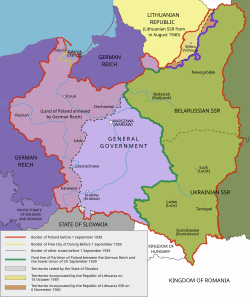
In Polish historiography, the term "Fourth Partition" is used to describe subsequent annexations. This most commonly refers to the 1815 division of the Duchy of Warsaw or the 1939 division of Poland between Nazi Germany and the USSR during World War II.
Frequently Asked Questions
What was the liberum veto and why was it harmful?
The liberum veto was a parliamentary rule requiring unanimous consent for any law to pass. It was harmful because a single member of parliament could block any legislation, leading to political paralysis and allowing foreign powers to bribe nobles to stop necessary reforms.
Which three empires partitioned Poland?
The Polish–Lithuanian Commonwealth was divided by the Russian Empire, the Kingdom of Prussia, and the Habsburg monarchy (Austria).
Did Poland exist at all between 1795 and 1918?
As a fully sovereign state, no. However, there were temporary entities such as the Duchy of Warsaw (1807–1815) and the autonomous Congress Kingdom of Poland (which later lost its autonomy to Russia), as well as the Regency Kingdom of Poland in 1915.
What is the difference between rozbiór and zabór?
In the Polish language, rozbiór refers to the historical process or act of dividing the country, while zabór refers to the specific geographic area or sector that was annexed by one of the partitioning powers.
How did the different partitioning powers treat the Polish people?
Treatment varied: Austria (in Galicia) was relatively lenient, allowing Polish culture and universities to thrive. Russia and Prussia were more oppressive, implementing policies of Russification and Germanization to erase Polish national identity.