Parliamentary Republics: Global Systems and Historical Evolution
A parliamentary republic is a system of government where the executive branch derives its legitimacy from and is accountable to the legislature (the parliament). Unlike presidential systems, where the head of government is often elected independently, parliamentary republics typically feature a division between the head of state and the head of government.
These systems vary widely in their application, ranging from full parliamentary republics—where the head of state holds primarily ceremonial duties—to those with an executive presidency, where the president wields significant political power.
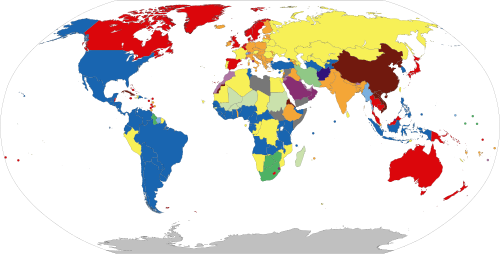
Key Facts
- Accountability: In parliamentary systems, the head of government is elected or nominated by and remains accountable to the legislature.
- Structure: Legislatures may be unicameral (one chamber) or bicameral (two chambers).
- Head of State: Depending on the country, the head of state may be elected by the parliament, a special convention, or via direct popular election.
- Transitions: Many modern parliamentary republics transitioned from one-party states, military dictatorships, or constitutional monarchies.
Types of Parliamentary Republics
Full Parliamentary Republics
In a full parliamentary republic, the head of state typically performs ceremonial functions. Examples include Germany, where the Federal Convention elects the president, and India, where the president is elected by the parliament and state legislatures using an instant-runoff vote.
Parliamentary Republics with an Executive Presidency
Some nations blend parliamentary accountability with a more powerful presidency. In these systems, the president may hold more than just ceremonial duties. Examples include South Africa, which transitioned to an executive presidency in 1984, and Botswana.
Assembly-Independent and Directorial Systems
An assembly-independent republic is one where the head of government is elected by the legislature but is not accountable to it. A directorial system, such as the one used in Yugoslavia between 1980 and 1992, involves a collective executive body rather than a single president.
Historical Transitions and Evolution
The global landscape of governance is fluid, with countries frequently changing their systems due to coups, referendums, or new constitutions. Many Eastern European nations, such as Albania, Bulgaria, and Estonia, adopted parliamentary republics in 1991 following the collapse of one-party states.
Other transitions have been driven by a desire to move away from colonial ties. For instance, Barbados transitioned from a constitutional monarchy (a Commonwealth realm) to a parliamentary republic in 2021.
Summary of Selected Parliamentary Republics
| Country | Head of State Elected By | Structure | Adopted | Previous Form |
|---|---|---|---|---|
| Germany | Federal Convention | Two unicameral institutions | 1949 | One-party state |
| India | Parliament & State Legislatures | Bicameral | 1950 | Constitutional monarchy |
| Barbados | Parliament | Bicameral | 2021 | Constitutional monarchy |
| Finland | Direct election | Unicameral | 2000 | Semi-presidential republic |
| South Africa | Parliament | Bicameral | 1961 | Constitutional monarchy |
Frequently Asked Questions
What is the difference between a unicameral and bicameral legislature?
A unicameral legislature consists of a single house or chamber, whereas a bicameral legislature is divided into two separate houses, such as a lower house and an upper house.
How does a parliamentary republic differ from a presidential republic?
In a parliamentary republic, the head of government is accountable to the legislature and can be removed by it. In a presidential republic, the president is typically elected independently and serves a fixed term regardless of legislative support.
What is a semi-presidential republic?
A semi-presidential republic is a hybrid system where an executive president exists independently of the legislature, but a head of government (such as a prime minister) is appointed by the president and remains accountable to the legislature.
Why do some countries transition from constitutional monarchies to republics?
Countries often make this change to establish full sovereignty, remove hereditary roles from government, or modernize their political structures, as seen in the recent case of Barbados.
What is an instant-runoff vote?
An instant-runoff vote is an election system where voters rank candidates in order of preference. If no candidate wins a majority of first-preference votes, the candidate with the fewest votes is eliminated, and their votes are redistributed to the voters' next choices until a winner is found.