The Life and Legacy of Park Chung Hee: Architect of Modern South Korea
Park Chung Hee remains one of the most influential and polarizing figures in modern history. As the third president of South Korea, his leadership spanned nearly two decades, a period defined by rapid economic transformation and intense political upheaval. While his regime is credited with driving the nation toward industrial prosperity, his tenure as a military leader and dictator continues to spark debate regarding civil liberties and democratic processes.
![Part of Park's childhood home. Park was born in the sarangchae depicted here.[4] He slept and studied here (except while away in secondary school) until 1937.[5]](/images/fa/0c/fa0cd429abb82e40b4464a06f832d7ce9d11748a1990488aa39dc423baf797c3.jpg)
Key Facts
- Term of Office: March 24, 1962 – October 26, 1979
- Political Party: Democratic Republican Party
- Military Rank: General (Republic of Korea Army)
- Major Achievement: Overseeing a period of intense economic growth and national transformation.
- End of Presidency: Assassinated on October 26, 1979.
Early Life and Military Education
Born on November 14, 1917, in Gumi, Korea (then part of the Empire of Japan), Park's early years were shaped by his education in traditional and military settings. He attended Taegu Normal School, a teacher training institution, before pursuing a military path.

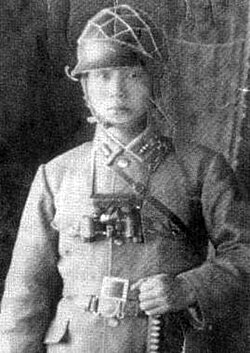
Park's military journey began with significant controversy. He attended the Manchukuo Army Military Academy and the Imperial Japanese Army Academy. During this era, he served as a Lieutenant in the Manchukuo Imperial Army from 1944 to 1945. This period of his life, including a reported blood oath, remains a subject of historical scrutiny.

![Article in the Manshū Shimbun on Park's blood oath.[52][51] (March 31, 1939)](/images/a3/27/a327f88004d36f8d7fe43251004bb26ba18018b85e597f48283985e1d19f1f71.jpg)

Transition to the Republic of Korea
Following the end of World War II, Park transitioned into the Republic of Korea Army. He rose through the ranks, eventually achieving the rank of General. His military experience provided the foundation for his eventual entry into the political arena.


The Rise to Power
Park's ascent to the presidency was not through traditional democratic elections, but through military intervention. On May 16, 1961, he led a coup that established the Supreme Council for National Reconstruction. Initially serving as the Deputy Chairman under Chang Do-yong, Park eventually became the de facto leader of the nation.

By March 24, 1962, he assumed the role of Acting Prime Minister, and he was later formally inaugurated as the third President of South Korea on December 17, 1963. His presidency was divided into two main eras: the Third Republic and the Fourth Republic.
The Presidency and Economic Transformation
During his presidency, Park focused heavily on economic policy, implementing strategies that catalyzed South Korea's industrialization. His administration worked closely with international partners, including the United States and West Germany, to bolster the nation's standing and economy.

His foreign policy was characterized by strengthening ties with the U.S. and managing complex relationships with Japan, China, and North Korea. He also played a role in regional stability during the Vietnam War era.


Domestic Governance and the Fourth Republic
In 1972, Park transitioned the government into the Fourth Republic. This period saw increased centralized control. While the economy flourished, the administration faced criticism for its domestic policies and the suppression of political dissent.


Final Years and Assassination
The final years of Park's presidency were marked by increasing political tension. His rule came to an abrupt and violent end on October 26, 1979, when he was assassinated. This event triggered a period of significant political transition in South Korea.
![Cheongungak, the house where Park stayed while living in Mungyeong.[39] (2024)](/images/07/05/07051903858be7aefa75df962e77cffff4cf40908269829aff8f9adc283f96ea.jpg)

Summary of Leadership Roles
| Role | Period of Office | Context |
|---|---|---|
| Deputy Chairman, Supreme Council for National Reconstruction | May 16, 1961 – July 2, 1961 | Post-coup military leadership |
| Chairman, Supreme Council for National Reconstruction | July 3, 1961 – December 17, 1963 | De facto leader of South Korea |
| Acting Prime Minister | June 18, 1962 – July 9, 1962 | Transitional leadership |
| President of South Korea | March 24, 1962 – October 26, 1979 | Official Head of State |
Frequently Asked Questions
What was the primary impact of Park Chung Hee's presidency?
Park is most noted for overseeing a period of intense economic growth and industrial transformation in South Korea, though his legacy is complicated by his status as a military dictator.
How did Park Chung Hee come to power?
He rose to power following the May 16 coup of 1961, which established the Supreme Council for National Reconstruction.
What were Park's military affiliations?
He served in the Manchukuo Imperial Army (1944–1945) and later in the Republic of Korea Army (1945–1963), eventually reaching the rank of General.
How did Park Chung Hee's presidency end?
His presidency ended abruptly on October 26, 1979, when he was assassinated.
Who succeeded Park Chung Hee?
Following his death, Choi Kyu-hah succeeded him as President.