Paris Stock Market: A History of the Bourse and Its Evolution
The history of the Paris stock market is a narrative of architectural grandeur, regulatory shifts, and technological transformation. From its humble beginnings in the early 18th century to its integration into the global digital network of Euronext, the Paris Bourse has mirrored the economic and political turbulence of France.
Key Facts
- Origins: Gained prominence between 1717 and 1721 through the trading of John Law's Company.
- Market Structure: Historically an order-driven market, meaning intermediaries (brokers) executed trades rather than setting prices.
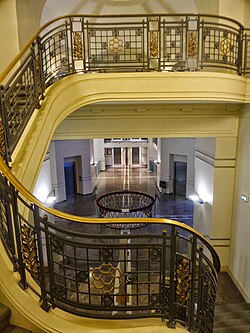
- Iconic Home: The Palais Brongniart served as the primary exchange floor for nearly two centuries.
- Digital Shift: Transitioned from open outcry to fully automated trading by 1989 via the CAC system.
- Modern Era: Merged into Euronext in 2000 after a series of governance reforms in the late 1980s.
The Early Years and the Mississippi Bubble
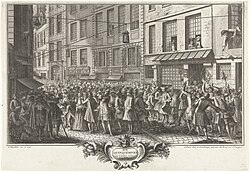
The Paris securities market first emerged in the early 1700s on rue Quincampoix, a small street near les Halles. This period was defined by the trading of John Law's Company from 1717 to 1721, a volatile era that saw the market's first major surge in prominence. However, the instability of Law's system led to the government closing the rue Quincampoix market on March 22, 1720.
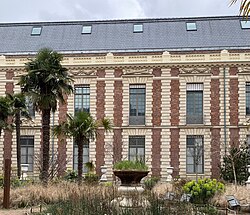
Following this closure, the market became nomadic, relocating to the place Vendôme and the garden of the Hôtel de Soissons before settling in October 1720 at the rear garden of Hôtel Tubeuf. It remained there until the chaos of the French Revolution forced a suspension of operations on June 27, 1793.
The Search for a Permanent Home
After the Revolution, the Bourse experienced a series of short-lived locations. It reopened in May 1795 at the Louvre Palace, moved briefly to the church of Notre-Dame-des-Victoires in 1796, and later occupied the Palais-Royal in 1807 and the Couvent des Filles-Saint-Thomas in 1818.
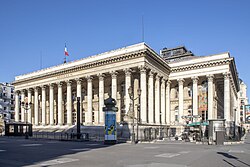
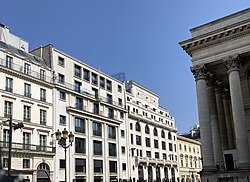
Stability finally arrived with the construction of the Palais Brongniart. Designed by architect Alexandre-Théodore Brongniart as a neoclassical Roman temple with a massive Corinthian colonnade, the project was endorsed by Napoleon. Although Brongniart died in 1813, Éloi Labarre completed the building by 1826. The stock exchange officially moved in on November 6, 1826.
Governance and the Role of the Agents de Change
From the late 19th century, the market was operated by the Compagnie des agents de change. These official stockbrokers were strictly intermediaries; by law, they could not trade for their own accounts or act as counterparts to their clients. This established the Paris Bourse as an order-driven market, distinguishing it from dealer markets where market-makers set the prices.
To become an agent de change, an individual had to be a French citizen, nominated by a former agent or their estate, approved by the Minister of Finance, and appointed by a presidential decree. While the official commission rates were fixed by law, parallel arrangements were often used to favor specific clients.
Modernization and Digital Transformation
For most of its history, the Bourse operated via open outcry, where traders met face-to-face on the floor of the Palais Brongniart. This changed in 1986 with the introduction of the Computer Assisted Trading System (CATS), known in Paris as CAC (Cotation Assistée en Continu). By 1989, the quotation process was fully automated.
The late 20th century brought significant structural changes. In 1988, legislation transferred ownership of the exchange to the brokers' society, which renamed itself the Société des Bourses Françaises (SBF). The SBF later absorbed the financial derivatives exchanges MATIF and MONEP in 1999, becoming Paris Bourse-SBF before merging to form Euronext in 2000.
Summary of Paris Bourse Evolution
| Period/Year | Location/Entity | Key Development |
|---|---|---|
| 1717–1721 | rue Quincampoix | Rise of John Law's Company trading |
| 1826–Late 20th C. | Palais Brongniart | Permanent neoclassical home for the Bourse |
| 1986–1989 | CAC System | Transition from open outcry to automation |
| 1988 | SBF | Governance reform and ownership transfer |
| 2000 | Euronext | Merger into a pan-European exchange |
Frequently Asked Questions
What is an order-driven market?
An order-driven market is one where trades are executed by intermediaries (brokers) based on orders from buyers and sellers, rather than by dealers or market-makers who set their own prices (quote-driven markets).
Who were the agents de change?
The agents de change were official French stockbrokers who acted as intermediaries. They were required to be French citizens, appointed by presidential decree, and were legally prohibited from trading for their own accounts.
What happened to the Palais Brongniart?
After Euronext ceased using the building for trading, the City of Paris, which owns the structure, repurposed it as an events venue.
What was the CAC system?
The CAC (Cotation Assistée en Continu) was the Paris-specific version of the Computer Assisted Trading System (CATS), which fully automated stock quotations by 1989.
What was "La Coulisse"?
La Coulisse was a parallel market that operated alongside the official Bourse until approximately the middle of the 20th century.