Parental Roles and Biological Relationships
Family structures are defined by a complex interplay of genetics, law, and social bonds. While the concept of a parent is universal, the specific roles—whether biological or social—can vary significantly depending on the circumstances of a child's birth and upbringing.
Biological Parents
Biological parents are the individuals from whom a person inherits their genes. In many family dynamics, this term is used specifically to distinguish genetic parents from foster parents or other guardians. For instance, a child may refer to a father's new spouse as a stepmother while maintaining the title of "mother" for their biological parent.
In cases where there has been little to no contact between a child and their biological mother, the child may address their foster parent as "mother" and refer to the biological parent by her first name or as their "biological mother."

Defining the Role of the Mother
A mother is a female who shares a maternal connection with another individual. This connection can arise through several different pathways: conception, the act of giving birth, or the act of raising a child in a parental role. Because social, cultural, and religious definitions vary so widely, there is no single, universally accepted definition of motherhood.
Modern reproductive options can further complicate these definitions. For example, the use of a surrogate mother—a woman who carries a pregnancy for another person or couple—can result in a situation where a child has two biological mothers.
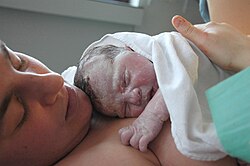
Defining the Role of the Father
A father is a male parent of an offspring. This role is generally defined in two ways: the person who provides the biological material (sperm) that results in the birth of the child, or the person who shares in the active raising of that child.

Grandparents and Genetic Lineage
Grandparents are the parents of an individual's own father or mother. In sexually reproducing creatures that are not genetic chimaeras (organisms containing two or more sets of DNA), the number of genetic ancestors follows a predictable mathematical progression.
Under normal circumstances, an individual has a maximum of four genetic grandparents, eight genetic great-grandparents, and sixteen genetic great-great-grandparents. However, these numbers may be lower in rare instances, such as cases of sibling or half-sibling incest.
Key Facts
- Biological parents are defined by the transmission of genes to their offspring.
- Motherhood can be established through conception, childbirth, or the act of raising a child.
- Surrogacy can lead to the existence of two biological mothers for one child.
- Fatherhood is defined by either biological contribution (sperm) or the role of raising the child.
- The maximum number of genetic grandparents for a non-chimaera is four.
| Role | Primary Definition | Key Distinctions |
|---|---|---|
| Biological Parent | Genetic contributor | Distinguished from foster or step-parents |
| Mother | Female maternal connection | Can be biological, gestational, or social |
| Father | Male parent | Can be biological or a co-raiser |
| Grandparent | Parent of a parent | Maximum of 4 genetic grandparents |
Frequently Asked Questions
What is the difference between a biological parent and a foster parent?
A biological parent is the person from whom an individual inherits their genes, whereas a foster parent is someone who raises a child in a parental role without necessarily sharing a genetic link.
Can a child have more than one biological mother?
Yes, the use of a surrogate mother may result in a situation where there are two biological mothers.
How is a father defined?
A father is a male parent who either provided the sperm that resulted in the child's birth or is involved in raising the child.
Why might someone have fewer than four genetic grandparents?
While the maximum is four, the number of genetic grandparents can be lower in rare cases of sibling or half-sibling incest.
What is a genetic chimaera in the context of ancestry?
A genetic chimaera is an organism that contains more than one set of DNA, which can affect the standard mathematical progression of genetic ancestors.