Paraguayan Indigenous Arts and Crafts
Paraguay possesses a rich heritage of indigenous craftsmanship, blending ancient pre-Columbian traditions with techniques introduced during the Spanish and Jesuit eras. From the intricate geometry of woven baskets to the delicate threads of lace, these art forms reflect the deep connection between the land's natural resources and the cultural identity of its people.
Key Facts
- Ñandutí is a famous fine embroidery meaning "spider web" in Guaraní.
- Piri is the traditional Paraguayan hat woven by indigenous artisans.
- Tacuarembó and caraguatá (indigenous bromeliads) are primary materials for wickerwork.
- Ao poi and povyi are traditional cotton dresses utilizing different thread widths.
- The Gran Chaco region is renowned for high-quality sheep wool ponchos.
The Art of Basket Weaving
Basketry in Paraguay is a functional art form utilizing fibers from canes and various native plants. Artisans create a wide array of items, including hand fans, shades, place mats, and open baskets. A standout piece is the piri, the traditional hat worn by Paraguayan men.
The materials used for this wickerwork are sourced from the environment, specifically pindo palm leaves and indigenous bromeliads such as tacuarembó and caraguatá. Production centers are often found in Limpio and Luque, which are also hubs for leather goods like bags and sacks.
The design of the baskets often corresponds to the local agricultural needs. In communities focused on cassava cultivation, baskets are built for high storage capacity. For example, the ajaka mbya basket typically features a 35-centimeter diameter and rigid supports to handle the weight of heavy cassava crops.
Another specialized form is the ajak, woven from tacuarembo and dark guembepi. These baskets feature braided and geometric figures that align with the Guaraní concept of beauty. In contrast, baskets used for corn production are smaller, lighter, and crafted from pindo palm leaves.
Textile Arts and Embroidery
Textiles serve as both a cultural cornerstone and a vital source of income for the domestic economy. Before Spanish colonization, indigenous people used cotton threads and horizontal looms to create hammocks, fishing nets, hunting nets, and bags for food transport.
The arrival of the Jesuits introduced the vertical frame for threading, expanding the repertoire of tribal artisans to include blankets, towels, sheets, and tablecloths. This evolution led to the creation of specialized hammocks featuring decorative side ornaments.
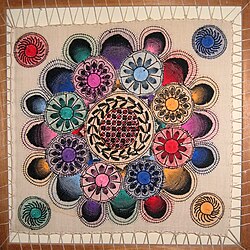
Spanish influence further inspired unique cotton garments. These include the ao poi, crafted with fine thread, and the povyi, which uses a wider weave. One of the most iconic textiles is ñandutí, meaning "spider web" in Guaraní. This delicate embroidery is used for blouses, curtains, and tablecloths, with the most sought-after pieces produced in Itauguá and Guarambaré.
In the Gran Chaco region, ethnic groups including the Lengua, Maskoy, Nivaclé, and Wichí produce high-quality woven ponchos using red-tinted sheep wool. Additionally, the "60 lists" ponchos are crafted in Yataity and Pirayú within the Guairá Department.
Ceramics, Woodcarving, and Rock Art
Ceramics are among the oldest art forms in Paraguay. These works range from utilitarian objects, such as water jugs and cooking vessels, to sacred items like funerary urns, many of which have been preserved for centuries.
Woodcarving is another prominent tradition. Artisans carve apyká (chairs), smoking pipes, ceremonial masks, and effigies that are either anthropomorphic (human-shaped) or zoomorphic (animal-shaped). Gourds are also frequently carved with detailed imagery.
The ancient history of the region is further evidenced by rock art. Indigenous peoples carved petroglyphs—images etched into stone—particularly in the hills of the Amambay Department.
Featherwork
Featherwork is a distinctive pre-Columbian art used for personal adornment. Using brilliantly colored feathers, artisans create bracelets, anklets, collars, and headdresses. The Guaraní specifically create ceremonial headdresses known as jeguaka, while medicine men historically wore full feather cloaks.
Summary of Paraguayan Indigenous Crafts
| Craft Category | Key Materials | Notable Products |
|---|---|---|
| Basketry | Tacuarembó, Caraguatá, Pindo palm | Piri hats, Ajaka mbya, Ajak baskets |
| Textiles | Cotton, Sheep wool | Ñandutí lace, Ao poi, Ponchos |
| Featherwork | Colored feathers | Jeguaka headdresses, Cloaks |
| Wood/Stone | Wood, Gourds, Rock | Apyká chairs, Petroglyphs, Masks |
Frequently Asked Questions
What does the word Ñandutí mean?
Ñandutí is a Guaraní word that translates to "spider web," referring to the intricate, lace-like appearance of the fine embroidery.
Which materials are used for Paraguayan wickerwork?
Wickerwork is primarily made from pindo palm leaves and indigenous bromeliads, specifically tacuarembó and caraguatá.
What is the difference between ao poi and povyi?
Both are traditional cotton dresses, but ao poi is made with a fine thread, while povyi utilizes a wider thread weaving.
Who produces the traditional wool ponchos of the Gran Chaco?
These ponchos are crafted by the Lengua, Maskoy, Nivaclé, and Wichí ethnic groups using red-tinted sheep wool.
What are jeguaka?
Jeguaka are traditional feather headdresses created by the Guaraní people to be worn during ceremonial occasions.