Papacy History: From the Renaissance to the Modern Era
The history of the papacy from the 15th century to the present is a narrative of transformation, shifting from a powerful territorial entity to a global spiritual authority. This era spans the artistic heights of the Renaissance, the theological upheavals of the Reformation, and the complex diplomatic maneuvers that led to the creation of the modern Vatican City state.
The Renaissance Papacy (1417–1534)
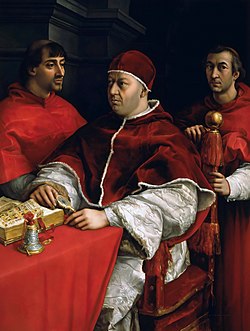
Following the election of Pope Martin V in 1417, Western Christianity entered a period of relative stability, free from the major schisms that had previously plagued the church. Martin V returned the papacy to Rome in 1420, and subsequent leadership was managed through the established procedures of the papal conclave (the private meeting of cardinals to elect a new pope).
During this time, popes often acted as international arbiters. A primary example occurred after Christopher Columbus's 1492 voyage, which strained relations between Portugal and Castile. Pope Alexander VI issued three bulls in 1493, including Inter caetera, which granted Spain the sole right to colonize much of the New World.
Reformation and the Baroque Era (1517–1689)
The 16th century brought the Reformation, led by figures such as Martin Luther, who criticized the sale of indulgences (payments made to the church for the remission of temporal punishment for sins) and challenged the papacy's authority. The Catholic Church responded with the Counter-Reformation, spearheaded by Pope Paul III and the Council of Trent (1545–1563), which aimed to eliminate corruption and reaffirm core doctrines.
By the late 16th century, the papacy entered the Baroque stage. Pope Sixtus V (1585–1590) shifted the church's approach from compulsion to attraction, focusing on rebuilding Rome as a grand European capital. This architectural renewal served as a visual symbol of the church's enduring power and beauty.
The Age of Revolution and the Roman Question
The 19th century was marked by intense political instability. Pope Leo XIII emerged as a skilled diplomat, improving ties with major powers like Russia, England, and France. However, he faced a hostile anti-Catholic environment in Italy. The tension peaked on July 13, 1881, when anticlerical groups attempted to throw the body of the deceased Pope Pius IX into the Tiber river.
Despite these conflicts, Leo XIII expanded the church's moral scope. His 1891 encyclical Rerum novarum addressed social inequality and the rights of workers, establishing a foundation for Catholic social teaching that would be continued by subsequent popes, including Pius XI, Pius XII, John XXIII, Paul VI, and John Paul II.
The Creation of Vatican City (1929)
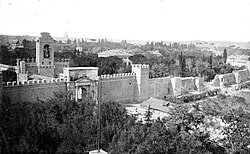
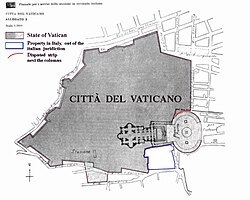
The "Roman Question"—the dispute over the temporal power of the pope in Italy—was finally resolved with the Lateran Treaty of 1929. Negotiated by Cardinal Pietro Gasparri and signed by Pope Pius XI and Prime Minister Benito Mussolini, the treaty established Vatican City as an independent, sovereign state.
The treaty ensured the Holy See's full sovereignty and the pope's perpetual neutrality in international affairs. In exchange, Catholicism was recognized as the official religion of Italy, and a financial settlement was provided to compensate for the loss of the Papal States in 1870.
The Papacy in the 20th and 21st Centuries
The mid-20th century saw the papacy navigate the horrors of World War II. Pope Pius XII maintained neutrality during the conflict and later focused on aiding 15 million displaced persons in Europe. He also began the internationalization of the church, appointing cardinals from Asia, Australia, and South America.
In 1962, Pope John XXIII convened the Second Vatican Council (Vatican II), which modernized church practices and emphasized a universal call to holiness. This spirit of openness continued under Pope Paul VI, who became the first pope to visit all five continents and worked to lift mutual excommunications with the Orthodox Church in 1965.
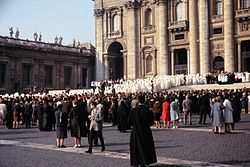
The election of Pope John Paul II in 1978 marked the first non-Italian pope since the 16th century. He is widely credited with helping to dismantle communism in Eastern Europe, particularly in his native Poland, through his support of the Solidarity movement.
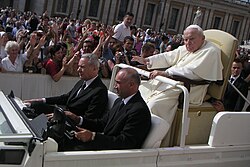
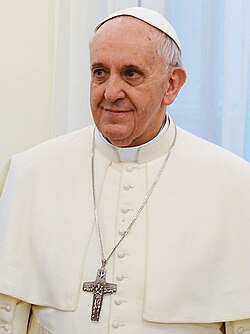
Following the brief papacy of John Paul I and the long reign of John Paul II, Pope Benedict XVI was elected in 2005. In a historic move, Benedict XVI resigned on February 28, 2013. He was succeeded by Pope Francis, the first Jesuit and the first pope from the Americas. Following the passing of Pope Francis on April 21, 2025, Pope Leo XIV—an Augustinian and the first American citizen (of Peruvian nationality)—was elected on May 8, 2025.
Key Facts
- Lateran Treaty (1929): Established Vatican City as a sovereign state, ending the "Roman Question."
- Rerum novarum (1891): The first major papal encyclical to address social justice and workers' rights.
- Vatican II (1962–1965): A landmark ecumenical council that modernized the Catholic Church.
- Internationalization: The papacy shifted from an Italian-centric leadership to a global one, notably under Pius XII, Paul VI, and John Paul II.
- Recent Successions: Pope Benedict XVI's 2013 resignation led to the election of Pope Francis, followed by the election of Pope Leo XIV in 2025.
| Era/Event | Time Period | Key Focus/Outcome |
|---|---|---|
| Renaissance Papacy | 1417–1534 | Return to Rome; colonial arbitration (Tordesillas/Castile). |
| Counter-Reformation | 1517–1580 | Council of Trent; response to Martin Luther. |
| Baroque Papacy | 1585–1689 | Urban renewal of Rome as a visual symbol of faith. |
| Lateran Treaty | 1929 | Creation of the independent Vatican City State. |
| Vatican II | 1962–1965 | Modernization and ecumenical outreach. |
Frequently Asked Questions
What was the "Roman Question"?
The Roman Question refers to the political dispute between the papacy and the newly unified Italian state over the loss of the Pope's temporal power and territories in 1870, which remained unresolved until the Lateran Treaty of 1929.
How did the Lateran Treaty change the papacy?
It created the sovereign state of Vatican City, granting the Holy See independence and neutrality while establishing Catholicism as the state religion of Italy.
What was the significance of the encyclical Rerum novarum?
Issued by Pope Leo XIII in 1891, it was the first official papal teaching to address the plight of the working class, social inequality, and the limitations of private property.
Who was the first non-Italian pope in the modern era?
Pope John Paul II, elected in 1978, was the first non-Italian pope since Pope Adrian VI in the 16th century.
What did the Second Vatican Council achieve?
Vatican II emphasized the universal call to holiness, modernized church practices, and fostered ecumenical dialogue, including the lifting of mutual excommunications with the Orthodox Church.