Panama Canal: Engineering Marvel and Global Trade Gateway
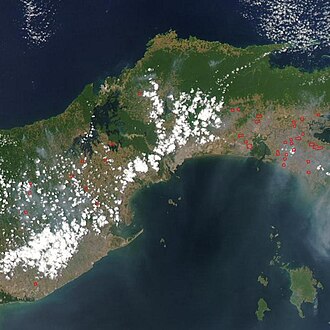
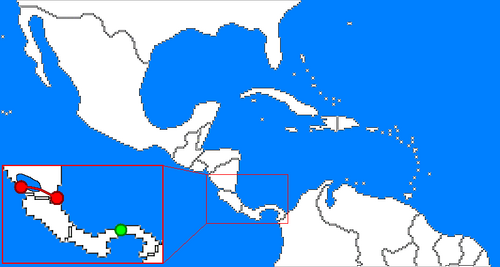
The Panama Canal is one of the most significant engineering achievements in human history, serving as a vital artery for global maritime trade. By carving a path through the Isthmus of Panama, the canal connects the Atlantic Ocean (via the Caribbean Sea) to the Pacific Ocean, eliminating the need for ships to navigate the perilous journey around the southern tip of South America.
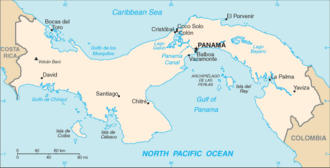
Key Facts
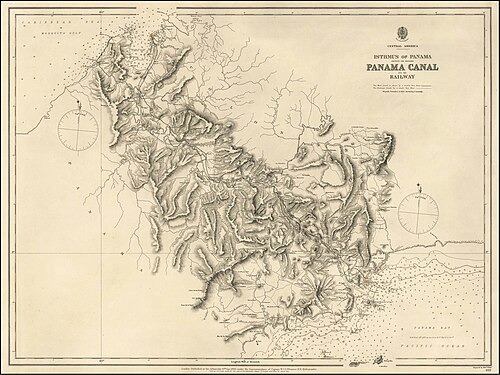
- Total Length: 82 km (51 miles).
- Opened: August 15, 1914.
- Expansion: New locks opened on June 26, 2016.
- Maximum Draft: 15.2 m (50 ft).
- Governing Body: Panama Canal Authority.
- Key Feature: Uses a system of locks and Gatun Lake to lift ships over the continental divide.
A History of Ambition and Struggle
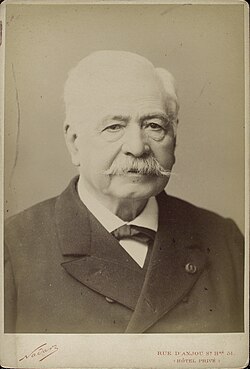
The dream of a canal across Panama began long before the first shovel hit the ground. Early proposals sought to bridge the two oceans, but the first major attempt was led by the French in 1881. Ferdinand de Lesseps, who had successfully completed the Suez Canal, spearheaded the project.
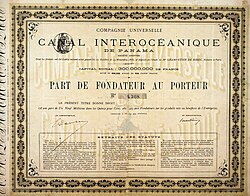
The French effort, funded by the Compagnie Universelle du Canal Interocéanique de Panama, ultimately failed due to engineering challenges and devastating tropical diseases. By 1899, the French attempt had collapsed, leaving behind a legacy of unfinished excavations.
The American Era
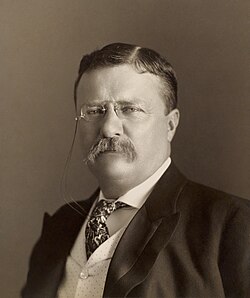
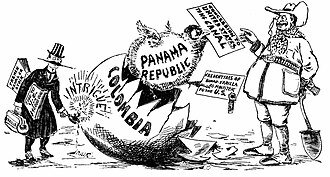
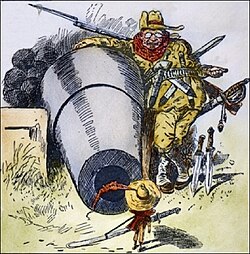
The United States, under the leadership of President Theodore Roosevelt, recognized the strategic and economic importance of the waterway. To secure the rights to build the canal, the U.S. supported Panama's separation from Colombia in 1903.
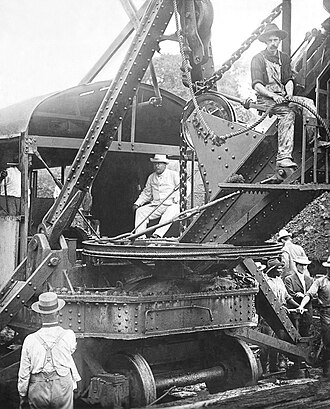
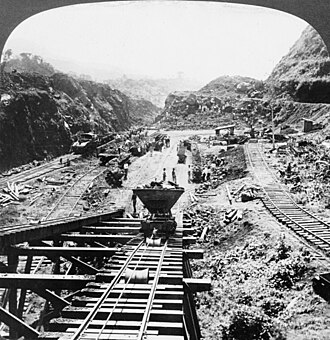
Construction began in 1904. The project faced immense hurdles, including the excavation of the Culebra Cut (later renamed the Gaillard Cut), a massive trench through the continental watershed. Under the direction of chief engineer George Washington Goethals, the U.S. utilized massive steam shovels and a disciplined workforce to complete the task.
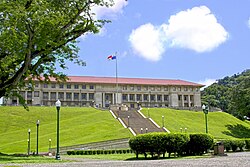
The canal officially opened on August 15, 1914, fundamentally altering global shipping routes. Control of the canal remained with the U.S. until it was handed over to Panama in 1999.
How the Canal Works: Engineering and Layout
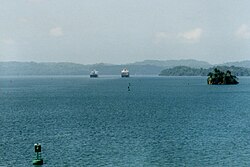
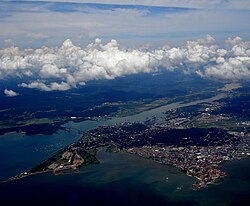
The Panama Canal does not simply cut a sea-level trench through the land. Instead, it functions as a water bridge. Ships are lifted from sea level to the height of Gatun Lake—a massive artificial reservoir—and then lowered back down on the other side.
The Lock System
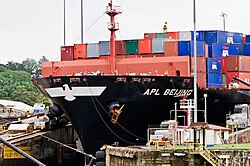
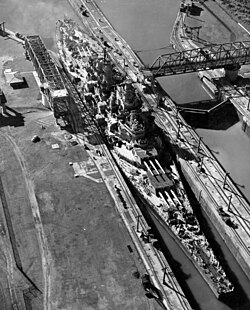
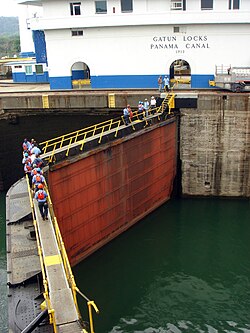
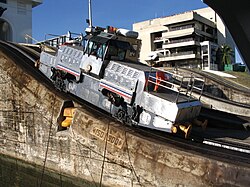
Locks act as water elevators. A ship enters a lock chamber, the gates close, and water is gravity-fed into the chamber to raise the vessel. To ensure stability and precision, "mule" locomotives tow the ships through the locks.
Key Geographical Points
- Gatun Lake: The central reservoir providing the water necessary for lock operations.
- Culebra Cut: The narrowest and most difficult section to excavate, cutting through the mountains.
- Miraflores and Pedro Miguel Locks: The systems that manage the descent into the Pacific Ocean.
Modernization and the 21st Century Expansion
As global shipping evolved, ships became larger—specifically the Neopanamax class. The original locks, designed in the early 20th century, became a bottleneck for modern trade. This led to a massive expansion project completed in 2016.
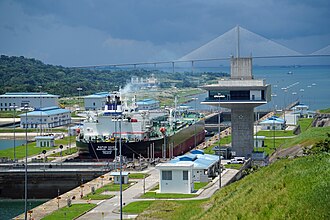
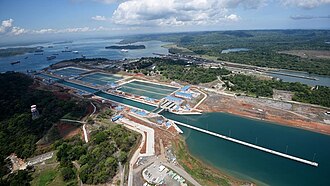
The expansion added a third set of locks (Agua Clara on the Atlantic and Cocolí on the Pacific), which are significantly wider and deeper. These new locks utilize water-saving basins to reduce the amount of fresh water required for each transit.
Canal Specifications Summary
| Feature | Measurement/Detail |
|---|---|
| Total Length | 82 km (51 miles) |
| Maximum Boat Length | 366 m (1,200 ft 9 in) |
| Maximum Boat Beam | 49 m (160 ft 9 in) |
| Maximum Boat Draft | 15.2 m (50 ft) |
| Maximum Air Draft | 57.91 m (190.0 ft) |
| Lock Configuration | 3 locks up, 3 down per transit |
Current Challenges and Competition
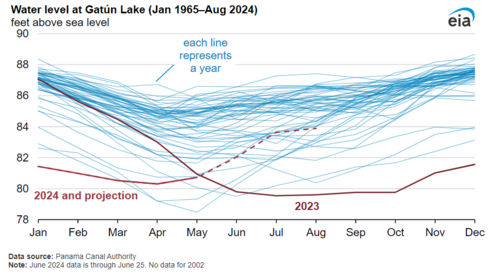
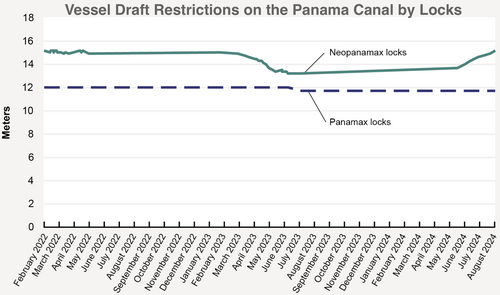
Despite its success, the canal faces modern threats. Water scarcity in Gatun Lake, driven by changing weather patterns, has led to draft restrictions, limiting the amount of cargo ships can carry.
Additionally, the canal faces potential competition from other proposed routes, such as the Nicaragua Canal, and rail links in Colombia, as nations seek more efficient ways to move goods between the two oceans.
Frequently Asked Questions
![Maximum ship sizes for the Panama and Suez canals, as well as the Strait of Malacca[149]](/images/cc/ce/ccced05c8a06f7f8e48dcefb497704e46e38a321bbae0a690f6472642b24c7ab.png)
How does the Panama Canal lift ships?
The canal uses a series of locks that act as water elevators. Water is gravity-fed from Gatun Lake into the lock chambers to raise ships to the lake's level and then released to lower them to sea level on the opposite side.
Who currently manages the Panama Canal?
The canal is managed by the Panama Canal Authority (ACP), an autonomous agency of the Panamanian government, following the handover from the United States in 1999.
What are Neopanamax ships?
Neopanamax ships are a class of larger vessels designed specifically to fit through the expanded locks completed in 2016, allowing for significantly more cargo per transit than the original locks permitted.
Why is water level in Gatun Lake important?
Gatun Lake provides the water used to operate the locks. If water levels drop due to drought, the canal must impose draft restrictions, meaning ships cannot carry as much weight without risking grounding.
How long does it take for a ship to transit the canal?
While transit times vary by vessel size and scheduling, the canal spans 82 km (51 miles) and requires a sequence of three locks up and three locks down for a full transit.