PALOP: The Portuguese-Speaking African Countries
Across the African continent, a distinct linguistic and cultural bond unites a group of nations known as Lusophone Africa. These are the countries where Portuguese serves as an official language, creating a bridge between diverse regions through a shared colonial history and a commitment to mutual development.
These nations are collectively referred to as the PALOP (Países Africanos de Língua Oficial Portuguesa), which translates to the African Countries of Portuguese Official Language. While their geographies vary from the Atlantic coast to the Indian Ocean, they are linked by their status as former colonies of the Portuguese Empire.
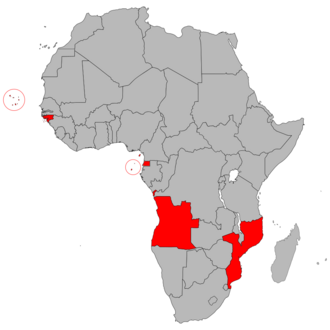
The Member Nations of PALOP
The group consists of six African nations. While most were exclusively Portuguese colonies, some have more complex colonial histories. For example, Equatorial Guinea was a colony of the Spanish Empire from 1778 until its independence, before officially joining the Lusophone group in 2011.
- Angola
- Cape Verde
- Guinea-Bissau
- Mozambique
- São Tomé and Príncipe
- Equatorial Guinea
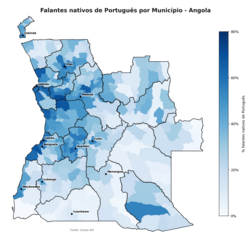
In countries like Angola, the distribution of native speakers varies significantly across different regions and municipalities.
Institutional Cooperation and Global Alliances
To strengthen their ties, five of these nations formed an interstate organization in 1992 using the colloquial acronym PALOP. This organization focuses on the preservation of the Portuguese language and the advancement of education and culture. To achieve these goals, the PALOP countries have established official agreements with the United Nations, the European Union, and Portugal.
The Community of Portuguese Language Countries (CPLP)
In 1996, the scope of cooperation expanded with the creation of the CPLP (Comunidade dos Países de Língua Portuguesa). This broader community includes the PALOP nations along with Portugal and Brazil. The organization continued to grow as East Timor joined in 2002 and Equatorial Guinea became a member in 2014.
Key Facts
- Composition: Six African countries share Portuguese as an official language.
- Origins: Most member states are former colonies of the Portuguese Empire.
- Organization: The PALOP interstate organization was established in 1992.
- Global Reach: The CPLP connects African nations with Brazil, Portugal, and East Timor.
- Future Projection: By the end of the 21st century, Africa is projected to house the majority of the world's Portuguese speakers.
| Country | Official Language | CPLP Join Date |
|---|---|---|
| Angola | Portuguese | 1996 (Founding) |
| Cape Verde | Portuguese | 1996 (Founding) |
| Guinea-Bissau | Portuguese | 1996 (Founding) |
| Mozambique | Portuguese | 1996 (Founding) |
| São Tomé and Príncipe | Portuguese | 1996 (Founding) |
| Equatorial Guinea | Portuguese | 2014 |
Frequently Asked Questions
What does PALOP stand for?
PALOP is an acronym for Países Africanos de Língua Oficial Portuguesa, which means African Countries of Portuguese Official Language.
Which African countries are part of the PALOP?
The six member countries are Angola, Cape Verde, Guinea-Bissau, Mozambique, São Tomé and Príncipe, and Equatorial Guinea.
How does the CPLP differ from PALOP?
While PALOP is an interstate organization specifically for Portuguese-speaking African countries, the CPLP (Community of Portuguese Language Countries) is a broader global community that includes Portugal, Brazil, and East Timor.
Was Equatorial Guinea always a Portuguese colony?
No. From 1778 until its independence, Equatorial Guinea was a colony of the Spanish Empire, though it later adopted Portuguese as an official language and joined the Lusophone community.
What is the future of the Portuguese language in Africa?
Projections from 2016 suggest that by the end of the 21st century, the majority of all Portuguese speakers in the world will reside in Africa.