Pakistani Rock: The Evolution of a Musical Revolution
Pakistani rock is a dynamic genre that blends the energy of British and American rock with the rich traditions of Pakistani classical music. While primarily performed in Urdu, the genre has expanded to include songs in Punjabi, Pashto, Sindhi, and English, creating a diverse sonic landscape that reflects the country's cultural complexity.
From its underground beginnings in the 1980s to the stadium-filling anthems of the 1990s and the technical precision of modern heavy metal, Pakistani rock has served as more than just entertainment; it has been a vehicle for cultural revival and national expression.
Key Facts
- Origins: Emerged in the 1980s, influenced by Western bands like Pink Floyd and Led Zeppelin.
- Pioneers: Vital Signs and Junoon are regarded as the foundational acts of the genre.
- Language: Predominantly Urdu, with significant contributions in English and regional languages.
- Sub-genres: Spans progressive rock, hard rock, heavy metal, and the unique fusion known as Sufi rock.
- Cultural Impact: Acted as a symbol of modernism and patriotic spirit during periods of political tension.
The New Wave (1980–1989)
The roots of rock in Pakistan were planted in the 1980s, fueled by the arrival of Western music cassettes. During the ultraconservative regime of President Zia-ul-Haq—who denounced Western influences such as jeans and rock music—the genre thrived in the underground. Local groups began performing at university campuses and five-star hotels, creating a clandestine scene that appealed to the urban middle and lower-middle classes.
By mid-1985, this underground movement began to capture public attention. Cultural critics note that the youth culture of this era launched the first waves of modern Pakistani pop and rock. The political climate shifted slightly in 1986 with the return of Benazir Bhutto, which weakened the conservative grip and allowed for a steady outpouring of new bands seeking a sound distinct from the pop stars of the time.
A pivotal moment occurred in 1986 when the pop-rock band Vital Signs released "Do Pal Ka Jeevan." The song's massive success helped legitimize the scene, leading to the rise of other influential acts like Strings, The Barbarians, The Final Cut, Jupiters, and Junoon. This era also saw the launch of the "Music Channel Charts" on NTM, which provided a platform for new talent to reach the youth.
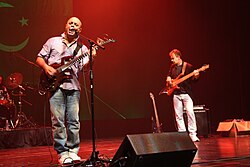
Continuing Success and Modernization (1990–Present)
The 1990s marked a period of maturation for the genre. The arrival of American satellite television expanded the reach of rock music, and bands like Junoon, Awaz, Strings, Karawan, and Jupiters pushed the boundaries of pop, rock, and heavy metal. This era saw rock music evolve into a tool for expressing patriotic and nationalist spirit, with anthems such as "Dil Dil Pakistan" and "Jazba Junoon" keeping national spirits high amidst social challenges.
The turn of the millennium brought further liberalization under President Musharraf's "enlightened moderation" campaign. Cities like Karachi, Lahore, and Islamabad became hubs for massive concerts. A significant turning point occurred in 2002 with the Pepsi Battle of the Bands, which introduced technically proficient acts such as Aaroh, Mizraab, Entity Paradigm (EP), and Mekaal Hasan Band to the mainstream.
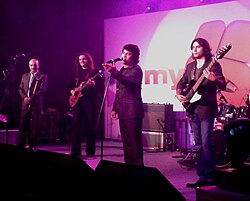
By 2006, the influence of Pakistani rock began to cross borders, exemplified by the success of Raeth's debut song "Bhula Doh." The genre's ability to compete with the encroaching Indian entertainment industry made it a vital cultural asset for the country.
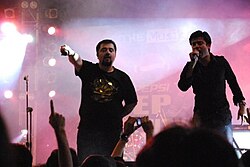
The Rise of Heavy Metal and Progressive Rock
While pop-rock dominated the early years, heavy metal began to surge after the 1997 general elections. Early influences can be traced back to the New Wave of British Heavy Metal (NWOBHM) in the late 80s, with bands like The Final Cut and The Barbarians paving the way.
The genre reached new heights with Mizraab, led by guitarist Faraz Anwar. Anwar, often dubbed "Pakistan's master of progressive-metal rock," brought a level of technical sophistication to the scene. His album Panchi is considered a landmark in the genre. Other notable metal acts include Black Hour, Ehl-e-Rock, Inferner, and Black Warrant.
Economic liberalization in 2004 under Prime Minister Shaukat Aziz led to the creation of new TV and music video channels, further fueling the underground metal movements in major urban centers. Today, heavy metal remains one of Pakistan's most popular genres, frequently broadcast on FM radio.
Summary of Pakistani Rock Evolution
| Era | Key Characteristics | Notable Bands/Acts |
|---|---|---|
| 1980s | Underground scene, Western influence, resistance to conservatism | Vital Signs, Strings, The Barbarians |
| 1990s | Mainstream success, patriotic themes, satellite TV influence | Junoon, Awaz, Karawan |
| 2000s+ | Technical proficiency, progressive metal, liberalized media | Mizraab, EP, Mekaal Hasan Band, Noori |
Frequently Asked Questions
What are the primary influences of Pakistani rock?
Pakistani rock is a fusion of British and American rock styles combined with traditional Pakistani classical music elements.
Which bands are considered the pioneers of the genre?
Vital Signs and Junoon are widely regarded as the pioneers who helped launch and popularize rock music in Pakistan.
What role did the Pepsi Battle of the Bands play?
The 2002 competition marked a major shift toward higher technical standards in instrumentation, bringing bands like Mizraab and Entity Paradigm into the spotlight.
Who is Faraz Anwar and why is he significant?
Faraz Anwar is the leader of the band Mizraab and is recognized as a master of progressive-metal rock in Pakistan, known for his technical guitar work.
In what languages is Pakistani rock performed?
While the majority of songs are in Urdu, many bands also record in English, Punjabi, Pashto, and Sindhi.