Pagers: The Evolution and Resilience of Wireless Paging Technology
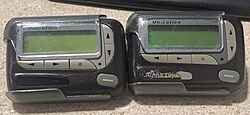
Long before the era of smartphones and instant messaging, the pager—also known as a beeper—served as the primary tool for urgent wireless communication. From their inception as specialized tools for physicians to their peak as a cultural phenomenon in the 1990s, pagers provided a critical link between senders and receivers when mobile phones were either non-existent or prohibitively expensive.
While the rise of cellular networks has diminished the commercial pager industry, these devices remain indispensable in specific high-stakes environments. Their unique technical architecture allows them to operate where modern smartphones often fail, ensuring that critical messages reach their destination during disasters or within the thick walls of large medical complexes.
Key Facts
- Inventor: Patented by Al Gross in 1949.
- Primary Use: Originally designed for physicians; now primarily used by emergency services and public safety personnel.
- Technical Advantage: Higher transmitter power (up to 1000 watts) compared to cellular towers, providing superior building penetration and wider coverage.
- Resilience: Capable of receiving messages at very low signal levels without requiring a transmission acknowledgement.
- Modern Application: Still widely used in restaurant queue management and by specialized hobbyists like birdwatchers.
The History of Paging Technology
Early Innovations (1949–1960s)
The first telephone pager system was patented in 1949 by Al Gross. Initially intended for doctors, the technology faced early resistance from physicians who were reluctant to be permanently on-call. By 1950, a practical service launched in New York City via the Reevesound Company and Telanswerphone, charging physicians $12 per month for a 200-gram device with a 40-kilometer range.
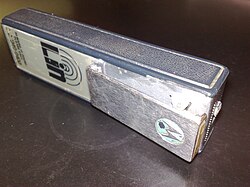
A major leap occurred in 1960 when John Francis Mitchell created the first transistorized pager by combining Motorola's walkie-talkie and automobile radio technologies. In 1962, the Bell System introduced the Bellboy, the first commercial personal paging system. The Bellboy utilized solid-state circuitry—a pioneering consumer application of the transistor—allowing the device to fit in a pocket. It used three reed receiver relays tuned to 33 frequencies to alert users via a buzz, signaling them to find a telephone and call a service center for their message.
Mainstream Adoption and the 1990s Boom
By the mid-1980s, tone and voice paging became standard for professionals and emergency responders. In the 1990s, pagers transitioned into the general public's hands as a reliable, affordable alternative to early mobile phones. This era saw the development of the ReFLEX protocol and the rise of alphanumeric paging.
The Shift to Cellular and Modern Decline
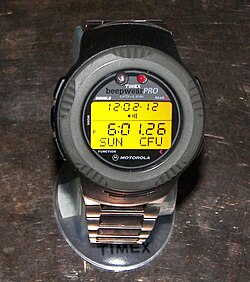
The decline of the pager began in the late 1990s as mobile phones became smaller and more affordable, with the introduction of devices like the Motorola StarTAC and Nokia Series 40. The adoption of text messaging (SMS) led most general users to migrate away from pagers. Motorola ceased manufacturing new pagers in 2001, though the industry persisted in specialized sectors.
Global usage has plummeted over the last two decades. Japan terminated its last paging service on October 1, 2019, and Russia's last provider closed in November 2021. In the UK, the National Health Service (NHS) historically operated a vast network of approximately 130,000 pagers, though efforts to phase them out in favor of modern clinical tools accelerated during the COVID-19 pandemic.
Technical Design and Operation
Paging Protocols and Signal Strength
Pagers operate using various protocols, including POCSAG, FLEX, ReFLEX, and ERMES. In the United States, the 900 MHz band using the FLEX protocol is common. A defining technical characteristic of paging is the power of the transmitters; commercial paging towers typically radiate 1000 watts of effective power, whereas mobile phone transmitters radiate approximately 0.6 watts per channel. This results in significantly better in-building coverage.
One-Way vs. Two-Way Systems
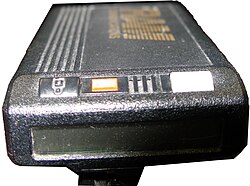
Most traditional pagers are one-way devices. They lack transmitters, meaning they cannot send a signal back to the network to confirm a message was received. If a one-way pager is off or out of range, the message is lost unless the provider offers a numeric callback service. In contrast, response pagers (or two-way pagers) include built-in transmitters, allowing users to acknowledge messages or send pre-programmed "canned" responses.
Types of Paging Devices
| Type | Capability | Primary Feature |
|---|---|---|
| Tone-only (Beepers) | Alert only | Audible signal/buzz to notify user |
| Numeric | Numbers only | LCD display for phone numbers or pre-defined codes |
| Alphanumeric | Text and numbers | Full text messages on a screen |
| Response/Two-Way | Bi-directional | Ability to acknowledge or reply to messages |
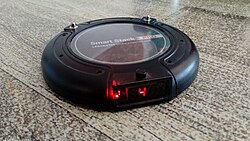
Beyond professional use, specialized pagers remain common in the service industry. Restaurant pagers use local receivers to alert customers when their order is ready or a table is available.
Pagers in Culture and Security
Cultural Impact
In the 1990s, pagers became symbols of status and professional urgency, frequently referenced in hip-hop music by artists such as A Tribe Called Quest, Ice Cube, and Destiny's Child. However, they also gained a reputation as tools for illicit activity; drug dealers used them to coordinate meetings, leading some schools to ban the devices during that era.
Security Vulnerabilities
The inherent simplicity of paging technology can be a vulnerability. On September 17, 2024, a massive infiltration attack occurred in Lebanon and Syria, where pagers used by Hezbollah members were simultaneously detonated. This attack resulted in 42 deaths and over 3,000 injuries, highlighting the risks of hardware-level infiltration.
Frequently Asked Questions
Why do some hospitals still use pagers instead of smartphones?
Pagers are often preferred in hospitals because their signals penetrate thick walls and floors more effectively than cellular signals. Additionally, they are highly reliable during network congestion and have longer battery lives than smartphones.
What is the difference between a numeric and an alphanumeric pager?
A numeric pager can only display numbers (such as a phone number to call back), while an alphanumeric pager can display full text messages.
Are pagers more reliable than cell phones during disasters?
Yes, in many cases. Pagers can operate on very low signal levels and do not require a two-way "handshake" with a tower to receive a message, making them less likely to fail when cellular networks are overloaded during emergencies.
What is a "response pager"?
A response pager is a device equipped with a transmitter that allows the user to send a confirmation or a short, pre-programmed reply back to the sender, bridging the gap between one-way and two-way communication.