Oxford University Press: A Legacy of Scholarly Publishing
As the largest university press in the world, Oxford University Press (OUP) stands as a titan of global knowledge. Serving as the publishing house for the University of Oxford, it has evolved from a local printing operation into a massive international institution. While its roots trace back to the first books printed in Oxford around 1480, the Press was officially granted its legal right to print by decree in 1586, making it the second-oldest university press in existence.
Key Facts
- Founded: 1586 (officially granted legal rights)
- Parent Organization: University of Oxford
- Status: Largest university press in the world
- Headquarters: Oxford, England
- Key Imprints: Clarendon Press, Blackstone Press
- Global Reach: Operates worldwide with approximately 6,000 employees
The Evolution of a Printing Powerhouse
Early Origins and Royal Privileges (1480–1668)
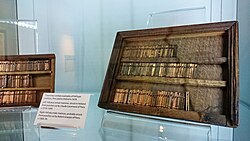
In its earliest centuries, the university focused on essential texts such as Bibles and prayer books. A pivotal moment occurred in the 1630s when Archbishop William Laud, the university's chancellor, secured a succession of royal grants. Most notably, the "Great Charter" of 1636 granted the university the right to print "all manner of books." Laud also secured the exclusive privilege to print the King James Version of Scripture, a right that provided significant financial stability for the next 250 years.
Establishment of the Central Print Shop (1668–1830)
The modern structure of the Press began to take shape in 1668 when Vice-chancellor John Fell established the university's first central print shop. Fell was a visionary who drafted a formal program for the university's printing, which included everything from the Greek Bible and Coptic Gospels to works on mathematics and even a history of insects. One of his most enduring legacies was the Oxford Almanack, an annual broadsheet that was published without interruption from 1674 until 2019.
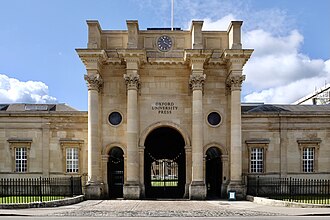
As the business expanded, the Press required more permanent facilities. In 1825, the Delegates purchased land on Walton Street, and by 1830, the Press had moved into new buildings designed by Daniel Robertson and Edward Blore.
Commercial Growth and the Modern Era (1830–1900)
The 19th century brought immense transformation. Under the leadership of Thomas Combe and later Bartholomew Price, the Press transitioned from a small-scale academic operation into a modern, efficient publisher. Price, appointed in 1868, was instrumental in professionalizing the business and introducing the Clarendon Press imprint for affordable school books.
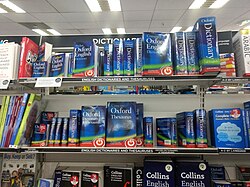
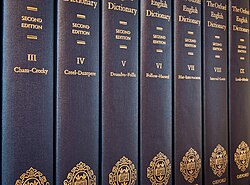
During this era, OUP expanded its scope to include massive scholarly undertakings. In 1879, the project that would become the Oxford English Dictionary (OED) was undertaken. Though initially estimated to take ten years and cost £9,000, the monumental task actually took until 1928 to complete, with total costs reaching approximately £375,000.
The Clarendon Press and Scholarly Identity
The name Clarendon Press originated in 1713 when printing moved to the Clarendon Building in Broad Street. While the name was used broadly for many years, it eventually became a specialized imprint. Today, OUP reserves the Clarendon Press name specifically for publications of significant academic importance.
| Period/Year | Key Development |
|---|---|
| 1480s | Initial printing begins in Oxford |
| 1586 | Official legal right to print granted |
| 1636 | The "Great Charter" grants rights to print all books |
| 1668 | First central print shop established by John Fell |
| 1830 | Move to Walton Street premises |
| 1884 | Oxford English Dictionary begins appearing in print |
| 1928 | Completion of the first edition of the OED |
Contemporary Operations and Global Impact
In the 20th and 21st centuries, OUP has maintained a massive global footprint. Despite economic challenges like the 1929 Depression, the Press found strength in international markets, particularly in India, which served as a vital hub for distribution to Africa and Australasia. By the end of 2021, OUP USA had published eighteen Pulitzer Prize–winning books, highlighting its continued excellence in high-quality publishing.
While the Press has recently transitioned away from physical manufacturing—closing its printing division, Oxuniprint, in 2021—it remains a leader in academic journals, books, and sheet music.
Frequently Asked Questions
What is the relationship between OUP and the University of Oxford?
Oxford University Press is the official publishing house of the University of Oxford. It is owned wholly by the university.
What is the significance of the Clarendon Press imprint?
Clarendon Press is an imprint used by OUP to designate publications of particular academic importance.
How long did it take to complete the first Oxford English Dictionary?
The project began printing in 1884 and was not completed until 1928, spanning 44 years.
What types of materials does Oxford University Press publish?
OUP publishes a wide variety of materials, including academic journals, books, and sheet music.
Is Oxford University Press still a printing company?
While OUP has a long history of printing, it closed its printing division, Oxuniprint, in August 2021, marking the end of its centuries-long history of in-house printing.